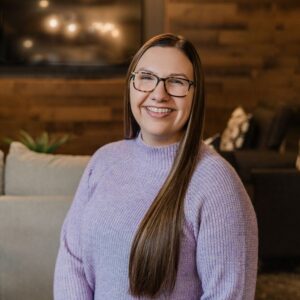
Bri Conn, CFP®: Welcome to Childfree Life by Design. Today we’re talking about access to capital and the power of women-centric banking, and what it means for people who are building a Childfree life on their own terms. I’m Bri Conn here with Ilaria Rawlins, and in this episode we’re covering how to navigate historical capital barriers. The backstory of Fortuna Bank and why designing a life requires a bank that understands your unique trajectory. If you’ve ever wondered how to find a financial partner that actually supports your entrepreneurial vision without traditional hurdles, this conversation will give the clarity and tools to make intentional decisions that the life you want.
Intro: From Childfree Insights, this is Childfree Life By Design, the go-to resource for building the Childfree life you want. Every episode gives you practical guidance, clear direction, and meaningful conversations to help you live intentionally and design a future on your terms. This podcast is for educational and entertainment purposes only. Please consult your advisor before implementing any ideas heard on this podcast.
Bri Conn, CFP®: Today I’ve got Ilaria Rawlins here with me. She is the CEO of Fortuna Bank, a newly launched women owned bank dedicated to breaking glass ceilings and expanding access to capital. With over 30 years of industry experience and the title of 2025 CEO of the Year by Columbus, CEO magazine, Ilaria is a powerhouse and community impact and a leading advocate for entrepreneurs who have historically faced financial barriers. We’re thrilled to have her here today to talk about the backstory of Fortuna and why women centric Banking is a game changer for designing your future. Ilaria, welcome to the show.
Ilaria Rawlins: Thank you so much. It’s great to be here.
Bri Conn, CFP®: I am excited to have this conversation with you today after I’d heard about Fortuna previously, and now to meet you and have this conversation. Can we start by just giving how you got into banking? We’ll start with you and then we’ll transition into how Fortuna got started.
Ilaria Rawlins: Fantastic, thanks, yeah. How I got into banking was really by accident. I went to college going after a communications degree in the middle of my junior year, I started taking some economics classes and loved him. I was fascinated by the movement of money and the impact of supply and demand. I thought it was really interesting to see all those effects. So I ended up graduating with a communications and economics degree. My first job outta college was in the bank. Never in my wildest dreams did I think that I would be there 30 plus years later. But I really enjoyed working with people and that’s really stayed true throughout my entire career. Good bankers know that their biggest asset is building those relationships with individuals and that their job is to really create this bond between themselves and their consumers or their clients or people that they’re talking with. Because we get to be at the some of the biggest moments of people’s lives, whether it’s buying a house, whether it’s saving for retirement, building a business, selling a business, and to have a banker by your side, that’s just an important facet that’s really needed in those moments. And again, good bankers know that, and so they really work on building those relationships with people.
Bri Conn, CFP®: And it’s interesting to me that you have a communications background. That’s my background as well. It really comes in so helpful in having and building those relationships. ’cause you’re right, having a good banker that you trust and you feel confident in can make things a lot easier when you get to those big moments that sometimes are a little intimidating for people.
Ilaria Rawlins: Absolutely, and I think on top of that, I think it’s so much about, a lot of times you don’t know you need a banker until it’s too late, and then sometimes you are walking into a bank not knowing what questions to ask, not knowing the person across the desk. And so I’m forever an advocate of if you don’t know your banker’s name and you only know where you bank, go find a banker and make sure that you start building a relationship with one.
Bri Conn, CFP®: Exactly. Getting that person to person, especially in a now such a digital world, can be incredibly helpful. And when we first met, you had talked about many times, I can’t remember the stat exactly, but you should shared a stat about access to credit, especially for women who are trying to build a business. And you said, well, many times, guys will just say, oh, I’ve got a buddy who can help you. Can you start diving deeper into that and share if you’ve got that stat that I’m referencing but cannot remember?
Ilaria Rawlins: It really goes along with why Fortuna and why we built the bank. And why we were very intentional wanting to be women owned and female focused from especially a philanthropic standpoint. So we know women-owned businesses are growing at two times the national average, but the stat you’re looking for is female entrepreneurs are denied three times more often than their male counterparts for commercial loan. And it’s not because banks are intentionally discriminatory or even discriminatory at all. But back to what you had mentioned, if you think about the commercial lenders out there, 75% of them are men. If you’re a guy starting a business, it’s very likely you have a buddy in your network that you can text or call and say, Hey, this is what I’m thinking of doing. Can you help me with my loan package? Can you help me understand what questions a loan officer might ask? What hurdles may I potentially face? And what obstacles might be in my way? And instead, and this is a hyper generalized statement, but instead, if you’re a female who doesn’t have that banker in your pocket, you might be walking into a banking center. You don’t know the person across the desk from you. They don’t have a vested interest in your success. You ask them a couple of questions, maybe they’ll give you a checklist, and then it’s your off on your own, back to figuring out how to get it done. And so, we believe that women at this point are not necessarily set up for success and that they don’t have the community surrounding them to support them in that way. And so we knew as a community bank we would have the time and the capacity and the passion about wrapping our arms around the female entrepreneur and really being very intentional in, we are here for the journey, not just for the transaction. And so how can we help build it? How can we help get you from point A to point Z and be successful? Because if you’re successful, we’re successful and then the community is successful because successful businesses are what help communities grow.
Bri Conn, CFP®: Yes, there’s a fantastic quote, and I cannot remember who it’s by, but it goes along the lines of you can never go wrong by investing in communities and human beings within them.
Ilaria Rawlins: Yes.
Bri Conn, CFP®: It really is the heart of what you guys are doing. Walk me through, let’s pretend I am a woman who I know that I might wanna start a business in the future. I don’t know how to build a relationship with a banker, but I recognize that might be helpful for me to start up, start doing, how do I make that first step and walk through that process?
Ilaria Rawlins: I think most importantly, and at Fortuna we really talk a lot about a community. So we really try to be more than just a bank. We try to really be a community that consists of not only our bankers, but of our stakeholders, of our existing clients, of potential clients that we’ve run into. Now all of a sudden, it’s not just 10 people that you might have access to. Maybe it’s 300 people that you had might have access to. And so if I were looking to start a business, I guess my first step would be talk to people in your community and ask them who’s their favorite banker? Is there someone that they actively work with? Because I think in the research that we’ve done, the most successful bankers will have clients or people that they’ve worked with in the past that give them glowing reviews. And then there are others where they’ll just say, Hey, I’m just working with X Bank, and they’ve been fine, but they don’t necessarily do anything special. And so I think there’s a lot to be said about word of mouth and really gaining some knowledge in that space because it does make a difference. That’s the person that can single-handedly really help you get off that launching pad with direction and guidance and support and connectivity. So I would ask around in the community who maybe peers of yours are or friends of yours are, what bankers they like, what commercial bankers they like. And asked to be introduced or asked to be connected to the lender. And then I would also start to do maybe just some research, once you get a couple of lenders names, be open to talking to two or three. It’s just like, what might work for you may not work for me, and the personalities may not jive. And so, depending on what their area of expertise is and maybe what you’re looking to do. I think it’s plan on going into it with just a lot of questions and a little bit of patience and trying to find that best fit for you. And then I would research the bank as well. Because there are some banks that might be a little bit more niche specific or maybe more aligned in what you are looking at doing. Here in Columbus, Ohio, we’ve have cute, large national banks. We have some great regional banks, and we also have a number of startup community banks like Fortuna. And each bank really plays a great role in its lane. So it’s just making sure you understand maybe what area of expertise that bank may have and then connecting with that bank.
Bri Conn, CFP®: You said, go in with lots of questions. Can you give an example of what are the different types of questions to ask, and maybe how they differ based off of it’s a national, regional, or community bank.
Ilaria Rawlins: I probably won’t have as much expertise in especially in that national space. But the questions I would ask of a banker are, what’s your typical client? What area of maybe of business lending are you most familiar with or comfortable with? Because especially in the commercial space, there are lenders that focus on real estate. There are lenders that focus on maybe the business and the operations of the business itself. And you’ll find oftentimes, especially in larger banks, that there’s a pretty big division between those two silos. And so depending on what your need is and what you’re really looking for, I think you want someone who has the ability to look at a business holistically and understand, where you’re going from point A to point B. If you’re a startup, I’d also probably lean more towards the smaller community bank, because smaller community banks tend to be a little bit more invested in the direct community themselves. Have time to listen to the story of what the startup is looking to do, versus sometimes some of the much larger banks are really looking to automate processes for smaller loan amounts or maybe startup companies. And therefore there’s not as much of the ability to listen to the story because the application is going through an AI underwriting system and it’s spinning out an answer yes or no. So I would ask a lot about the bank and what’s their area of expertise. I would ask the banker for their advice if they were in your position, what would they do and how would they structure the operations? And then also ask them, who do you know that I should know? Is there a CPA? Is there an attorney? Is there a connected group of people that I should also speak with? Because at the end of the day, if you think about the client in center, the banker may be the quarterback, but there’s this whole system of individuals, should be working together and a team working towards the success of the business. It’s nice when you have all of those individuals who are familiar with each other and comfortable working with each other.
Bri Conn, CFP®: Yeah, I like how you use the cornerback analogy. We often use that too for financial planning. We should be connected with all of the different people because when you have everybody working together, things can go much smoother. Sometimes there are questions that a client won’t know to ask or understand necessarily, and if you can get those people working together and having conversations to help support you, all the better.
Ilaria Rawlins: Exactly. And then you really have different sets of eyes who bring different lenses and different perspectives to the situation and can provide different inputs because they may have insight into something that you don’t have insight in. You’re no longer just looking at one issue, but now you’re taking the entire picture into consideration.
Bri Conn, CFP®: The amount of times, I don’t ever believe that this is intentional, but the amount of times a client will mention something and then they’ll say, okay, let’s have a meeting with my CPA. I wanna go through this. And then the CPA will mention something and I’ll be like, oh, I didn’t know about that. Different people have different pieces and I know it can be hard to keep track of who you told what, but when they’re working together, you’re right, it’s the second set of eyes. It’s new information. All of these different things and perspectives that can just help build towards success for the future of them.
Ilaria Rawlins: We should build an app. So this is where my brain goes, sometimes. We should build a financial wellness app where the client is the center and then it has, the financial advisor, has the CPA, it has the attorney, it has all the other pieces in it. And we can all log in and chat amongst ourselves and stay connected. I don’t know now, and now I have an idea that’s sometimes what happens to me is I go spinning off in different directions, but I think there’s something there.
Mid-Roll: Hey, let’s talk about money. Being Childfree gives you unique financial opportunities, but it also comes with unique questions. Are you looking to utilize your assets over time? Do you need help understanding what it means to adjust your finances for your Childfree life. Stop guessing. Take advantage of our Childfree wealth checkup today. It’s a quick focus review designed specifically for your Childfree lifestyle. Head over to www.childfreewealth.com to schedule your checkup and start designing the future you actually want.
Bri Conn, CFP®: I mean, I think there definitely is. Maybe that’ll be next gig for both of us.
Ilaria Rawlins: Right, exactly. Let’s do it.
Bri Conn, CFP®: ‘Cause getting them together, we often talk about building your bench and having all those people in your corner. So we’ve talked now about how to actually go and start building those relationships. But I’d like you to share a little bit more about how you became the CEO of Fortuna and started this bank. ‘Cause that also came from a relationship that you had.
Ilaria Rawlins: It did. As mentioned earlier, a career banker, never thought I’d be in banking for 30 plus years, but I had two unique opportunities over my career. One was I was able to be a part of a de Novo startup, that was here in Columbus, Ohio. We opened in 2006. I was not part of the organizing group but I was there 30 days before we opened our door. So I really was able to see what does it take to grow a bank from the ground up. And we were open from 2006 until 2014. When I was at the De Novo Bank, I basically managed the entire deposit side of the balance sheet. So anything consumer, retail related, treasury management on the business side, but like any small company, I was also hr, I was compliance and there was a time when I was marketing. I got to see, wear all of these different hats and stretch myself. Oh. And I was our BSA officer, it was very eye-opening. We were acquired by a regional bank in 2014 headquartered outta Cincinnati. And I stayed on with the regional bank, holding a couple of roles, but ultimately held the role of president of retail and I led the retail division for this bank. We had 140 offices across a four state footprint. And I’ll still say to this day, that was by far the hardest job I’ve ever had. Primarily because I think, many women live with imposter syndrome and so it was very intimidating to be presenting the financials of the retail line of business to the CEO every single month. It got easier over time, but it was definitely hard. And then I was charged with strategy, I was charged with growth. I was charged with the physical network itself. Do we expand or do we contract? And then the HR side of 700 employees. It was a great stretch opportunity for me, but it was definitely hard, but that’s where I learned I could do hard things. And then at the tail end in 2021 I got a call from one of my former clients who was my client at the startup community bank.
Ilaria Rawlins: She had sold her business a couple of years prior, wasn’t quite ready to retire and wanted to do something that was meaningful. Her business partner in the company that she had recently sold had started that startup bank that I had worked for. And so when she connected with him and was just tossing around ideas of what she wanted to do next. They both said, let’s start a bank. Let’s be female focused and let’s have Ilaria be our CEO. And so she reached out to me and said, thinking of doing this, would you like to be the CEO? We’d love to have you here. And I don’t think I could say yes best enough, to your point, you never know when you are gonna run into someone that may have an idea 10 years later. And they tap you for that idea because of the experience that you helped create. And she was a fantastic client. I enjoyed being her banker in those days. And so it’s fun to work together in a different capacity today.
Bri Conn, CFP®: Yeah, oftentimes quick relationships one might build and you never know at to start what they could turn into. So I thank you for sharing that because to me is such a important message for people of, make sure you nurture those relationships and be kind always ’cause you have no idea what could happen and what opportunities might arise because you were kind and helpful.
Ilaria Rawlins: Yes. I love that. My kids will say, I am all unicorns and rainbows, but at the end of the day, I think kindness wins all the time. We always need to give people grace.
Bri Conn, CFP®: Exactly. Everybody’s going through things and if you can help ’em and make their day better and go through that, doors may open for you that you had no idea.
Ilaria Rawlins: Exactly. Yes. Set yourself up for success by being nice.
Bri Conn, CFP®: It’s so true. Well, I’d like you to talk more about, okay, you started the women’s bank now and you have that central focus. But how did you start? There were a few different things. You talked about the process side of it getting started. I know from finance to regulation, lots of it, and then starting a bank. Tell me more.
Ilaria Rawlins: So the idea happened and we started to try and figure out what does the process look like? Fortunately, we had someone on our original group of four organizing team that had really done the organizing before. We knew it would take us about a million dollars to get our doors open. We knew that we wanted to raise early money, that would allow us to pay the $1 million to get our doors open. Also, go towards capital, but not necessarily put everybody’s entire pot at risk. So we went out intentionally trying to raise somewhere between two and $3 million dollars early, trying to get people to buy into what we were looking to do and how we were looking to do it, and what our business plan was. It took us about a year to get that initial, I guess what we would call seed money. Once we had that amount secured, we engaged attorneys who are familiar with starting banks and a business consultant who would help us write our application. And I think that was probably in October, maybe August, September, October of 2022. When we engaged those business partners we put together an application for the regulators, it’s literally probably 500 pages and it went to both the FDIC and the Ohio Department of Financial Institutions. And we were told if we do a draft and they approve a draft, it will fast track us through the process. We submitted a draft in October of 2022. December, I think they came back and said, we like the draft. Go ahead and submit a formal application. We submitted our formal application in February of 2023 and three weeks later, SVB Bank in California and First Republic Bank fail. And we thought, oh no. Because during the financial, the great recession in 2008, there were no new startup banks from 2009 to 2019 because the regulators were not comfortable with the economic environment with any of the startup banks, and so there were none that were approved. So we thought, especially with all of the noise that was taking place surrounding banks, would there be a domino effect? Was this a systemic problem within the industry? There was a lot of hesitation as to whether we would even get approved or not. Fortunately, a couple weeks later, we did get notification that they were proceeding with our application that would continue on, but there was no fast tracking of our application. And rightfully so, that they needed to make sure that all of the t’s were crossed and that the i’s were dotted and that everything was in line. Because at the end of the day, as hard as it was for us to remain patient through the application and approval process, one of our original founders who’s a career, 40 year plus banker would always say, it really should be hard to open a bank. We need to be able to have the trust of people that they can place their money with us. That’s a big thing. I always keep that in the back of my mind and the banker side of me appreciates that there’s something that is to be said that it really should be difficult to open a bank. Anyway, it took us about a year. We had to raise $20 million in capital. I know the original founder, Lisa, and I, went into the capital raise, really cocky, thinking it would take us three to four months, and it took us a year. But what I love about when we went out to raise capital was many times when you’re starting a bank, the entry point is 50,000 to $100,000. We knew that we wanted the majority of our shareholders to be women. We know women don’t often see private equity investment opportunities, and so it would be something that was really foreign to them, and if they’d have to learn more about. 50,000 to $100,000 is a pretty intimidating number if you’ve never done it before. We dropped our entry point to $10,000 for a couple of reasons. One, we wanted it to feel more affordable. We knew that our shareholders are our day one clients and brand ambassadors. And with that, we wanted to have really a larger network and community that we were building. And so, it took us a year. We have investments ranging from $10,000 to $1 million. We have 350 shareholders, 75% of which are women. As we were going through the capital raise, oftentimes we asked permission to use individuals names that they were shareholders of the bank because we wanted to showcase. It’s not just the high net worth people within the Columbus area, but it’s also your neighbor, it’s your gym partner. It’s a group of people coming together to build something really special in Columbus. So that was a lot of fun. And then I think what was the differentiator for us is out of the 4,300 banks in the country, 15 are women owned. And of the 15 that are women owned, we’re the second intentionally created to be women owned. And that’s a pretty amazing stat. I mean, to know that there are so few but to be intentionally created, to be women owned so that we can focus on access to capital, financial education, mentorship, and networking for women and female entrepreneurs.
Bri Conn, CFP®: It really is, so many banks out there and yet such a small percentage are really catering to a need for over half the population.
Ilaria Rawlins: Yeah. And that’s where we think there’s a ton of opportunity but more so than even just the business opportunity. It’s how can we help coach and guide and set women up for success with financial security.
Bri Conn, CFP®: Well, how are some of the ways that you do that there? You mentioned all the different options. Can you give a breakdown?
Ilaria Rawlins: Yeah, when we talk about access to capital, it is how do we hold that female entrepreneur’s hand through the journey of building a business and really spending the time. So we track, as a bank, we track what we call financial education hours, but it’s really our chief lending officer spending time, one-on-one with startups and with businesses who may not be ready to do a loan yet. A lot of time that we’re investing in these individuals to be able to coach and guide them. So that’s one aspect of it. The second aspect really is we talk a lot about our Fortuna community, and that’s our bankers, that’s our shareholders, that’s our client base as it’s growing. But every time we engage with someone, we ask, would you like to be a part of mentorship opportunity? You’ve been in the industry for X number of years, you have a lot of insight and advice that you could give to the next generation. And overwhelmingly, that support is always a yes. And so for us, that’s really an exciting piece is, we have different generations banking with us or a part of our story. And the interest in not only learning from those who are more experienced, but the willingness to give back to the next generation, has been a lot of fun. But that’s where we learn about we can’t do it all ourselves. And it’s talking about having that team of people around you who can help support you. Networking opportunities. We host events here, regular. We will have one coming up tonight called Womenomics and is talking about financial education and access to financial information across the generations. That’s this evening. But we do something just about once a month hosted here at our office. And again, it’s geared towards bringing people together that can lean on each other. It’s not about that financial benefit for us or how many deposits or loans can we get, but it’s how can we bring people together? And then every individual that’s here gets to expand their network of resources, education, access to capital, mentorship and networking. So financial education, access to capital, go hand in hand. But those are really the keys, I think that where we focus on that development and making sure that we’re providing that financial information. But again, broader than the financial information is how can we connect people and make people feel like they have a community surrounding them and wrapping their arms around them and their journey.
Bri Conn, CFP®: And the connections are incredibly important as well, as you mentioned the different generations too, like transferring the knowledge from one generation to the other. What are some of the things that you have found when it comes to doing that?
Ilaria Rawlins: I think, at the end of the day while systems change and maybe processes change, the ideology does not really change. But there’s still so much that the types of business that are done or how business is done is still very similar. And at the end of the day, I think we talked about this even at the early point, it’s really all about relationships and it’s about building those relationships and the importance of those relationships and who you’re talking to and who you’re connected with. And then you’ll see, when you’re talking to some of the younger generations versus maybe a Gen X or a baby boomer, perspective plays a big role. And just your own life experiences of, what have you gotten to see along the way? If you had told me at 25 that X, y, and Z was gonna happen because of this, I probably would’ve laughed. But now that I have 30 years of experience, I’m able to look back over my career and say, oh, that was something that should have been a red flag, or that’s something I should have been aware of. I’m hopeful that as I continue to talk to even younger generations myself about how do you advance in your career and what would I do differently? It’s really about connecting with someone who’s been in your path, but maybe further along the way. Because they can help guide you through various situations. That’s the biggest thing is, and then, the younger generations are more tech savvy and tech enabled, and so it’s how do we learn from them? And so it should be a full circle. How do we learn and how do we give back and work together? Everyone has their strengths.
Bri Conn, CFP®: I like that. Getting and really playing to every person’s strengths. That’s something we really try and do as a company here. We’re always asking, how can each person work in their best possible capacity? And that’s something that goes along with mentorship too, is take and listen and give advice where you can, but also recognize that every one of us has different blind spots.
Ilaria Rawlins: That was important for us when we were building Fortuna too, is that we have to be very lean. A startup bank doesn’t make money for generally the first two years or so, and so you’ll have to wear multiple hats, but how can we make sure that we have the right people in the right seats doing the right things? And that’s only when you can recognize what your own blind spots are as well. So not signing up for something that, you know that is really challenging for you, but instead leaning on somebody else and bringing different lenses, different perspectives, diversity to the table, all of those pieces.
Bri Conn, CFP®: Yeah, shine where you can. We had discussed this and I read it as well, but when you started, how did you find the right person to shine in the area of getting people to become customers when they couldn’t have debit cards for the first number of months?
Ilaria Rawlins: Oh, that was hard. When we really leaned on our shareholders. And we really spoke a lot about impact investing. So at the end of the day, especially in a smaller community bank, anytime you make a deposit in a small community bank, those funds are going back out in the form of loans to the community. And so we talked a lot about impact investing. We had some great CD rates, we had some great money market rates. We talked to our shareholders so that they would help us bring the deposits in so that we could then in turn put loans out the door. But it is impossible to, with technology today and the ability to move money electronically, if a bank does not have a debit card, if their routing number isn’t getting recognized, they don’t have their ACH platform up and running yet, it is nearly impossible to get some of those core customers, which are then at the end of the day, very important. Because banks make money off of the spread between the loans that they put out and the deposits that they take in. And if all of your deposits are sitting at three and a half percent versus 0%, your spread isn’t very large. So we’re looking forward to year two, not having that obstacle in our way for nine months of it. And I know our regulators will be happy. I have made a note that when they look at approving for their other banks down the road, that should be a key consideration because it makes a significant impact in your business plan and your ability to onboard early clients.
Bri Conn, CFP®: And I am sure with all of banking regulation and just all of financial regulation, how slow it sometimes is to catch up to where we are in this technology world. It’s probably why it wasn’t a huge consideration for them or something they dove too deep into.
Ilaria Rawlins: Exactly, right. And really especially, every year we get further and further away from writing checks. So when I was part of the startup bank in 2006, it was really easy to move new clients over because everyone was writing checks. All I had to say was, stop writing checks on your old account. Here are your new checks. Start writing checks on your new account. Wait for everything to clear. Close it out and move over. And it wasn’t the same.
Bri Conn, CFP®: It’s a new journey. So what are some of the things you guys are now looking forward to as you go into this next year continue to grow the business?
Ilaria Rawlins: We had momentum really. Year one for us in looking at it in the rear view was very foundational for us. It allowed us to put a lot of our building blocks together, such as debit cards, such as online banking, the ability to transfer funds via ACH, Zelle. We implemented Zelle and just last month we launched our residential mortgage division. So we are very close to being done with really some of those foundational building blocks. Year two is all about growth. The end of the day it’s all about continuing to get the word out, continuing to onboard deposit clients, residential mortgage clients, commercial clients, really out there continuing to spread the message about who we are, who we’d like to serve, who we’re here for, and continue to build out that community. But we have some really nice momentum. The back end of last year was really spent very heads down, connecting with people in our community and even across the United States. And we had our best month ever in February. We’re on track to have a better month in March. So we really have some wind beneath our wings. But I think everyone in this building knows that year two is growth. It’s all hands on deck, including our board.
Bri Conn, CFP®: Once you get everything going and the first year of anything is always, there’s a lot to be done and a lot to learn. And then after you have that solidified, you can keep growing.
Ilaria Rawlins: Yes. I was gonna add year three will be the formalization of how do we serve? So year one, very foundational and laying our building blocks. Year two, we have to get deposits in and loans out the door. And year three, while we’ve been serving our client base and the community through financial education and mentorship and networking activities, how do we formalize that process? How do we create an advisory board associated with it, and how do we really make that philanthropic arm of ours really live, with what were built to do.
Bri Conn, CFP®: That was great. I like hearing about it.
Ilaria Rawlins: [Nods]
Bri Conn, CFP®: So if there’s one final thing that you would like to share with our audience when it comes to finding a bank or starting a business, anything that you might have learned over the years, what would that be?
Ilaria Rawlins: Two things. I think one, finding a bank or a banking partner to work with is don’t settle. I think there’s the opportunity to have wonderful relationships out there with a banker. Doesn’t have to be Fortuna Bank. I’d love it for it to be Fortuna, but find someone who really makes you feel like you’re heard. And we’ll be there for you when you need them and have their cell phone number because again, sometimes when you need a banker, it’s too late and there’s already chaos going. And to have someone who you know is there, you can send them a text, “I need your help.” They’ll be there for you. I just think that that’s so important. So that’d be my first thing, as it relates to banking. Starting a business, I say go for it. It’s not for the faint of heart, and I did not know what that meant when someone said it to me before we started Fortuna, and there were days where I just thought, well, I don’t know that we’ll get this off the ground. And then there were days where I was like, well, how could we not get it off the ground? I tend to be pretty confident. I tend to see everything in sunshine and rainbows and unicorns. But it was hard. I think you have to be aware that it will be hard and it will feel very hard. I think you also have to be comfortable living in ambiguity. And it’s been very interesting to even watch team members here who have come from very structured, banked environments where there’s a call center to call if you don’t know the answer, there’s a person in an office next door who might do what you do, and you can ask them that question. We don’t have a lot of that here. And so there’s a lot of gray and feeling like, I don’t know where I can go to get an answer, but you have to find the answer. We’re building processes and procedures as we go. And so there’s a lot of gray out there. And I think that would happen with any organization that you’re building from the ground up. I’d say, take the risk. Know it’s gonna be hard. Be comfortable living in ambiguity because that’s very real.
Bri Conn, CFP®: I love that. It’s such a good point to leave off on there. Fantastic. We’re gonna transition now into our final segment, what we call deliberate detail. This is where we ask you to share a small, intentional thing that you’re doing to design an amazing life. You can share what it is, why it matters, and if you’re comfortable, the cost of it as well.
Ilaria Rawlins: Yeah, and I don’t think my thing has cost to it. One is, I don’t know if COVID taught me this, because I feel like around that time everyone started to give each other grace as it relates to boundaries and that work life balance. And in fact when we built this space here, I really thought it would be very hybrid that people would be, there’d be a lot of going back, working from home, knowing that at the end of the day, building a new company, it’s nice to have everybody here together. But, everyone’s here together, but one thing that I hold firm from not only myself, but what I ask of the team is make sure that you have your boundaries and that make sure that you’re taking time for yourself and that none of this is brain surgery, and so please don’t feel like that. We have to have a sense of urgency for our clients. We have to make sure that our clients know that we’re there for them when they need us. But also make sure that you have a life beyond what you’re doing here every day. And so I feel like that’s been something that I’ve done that just has allowed me to feel very comfortable. And it could be, I’m in my fifties, I’ve put in a lot of hard hours when I was a lot younger, so it could be just where I am in my phase of life as well. But I think we need to be really intentional in making sure that we are working to live. My special time for myself is every morning I take 30 minutes with a cup of coffee and it’s just me by myself and that’s how I get up and that’s how I get going. And I think about what I’m gonna do for the day and what my key moments are. But that just helps keep me centered and focused.
Bri Conn, CFP®: I like that. Boundaries are incredibly important and having good boundaries most people can respect. There’s few times where you’ll get too much pushback on it to take care of oneself.
Ilaria Rawlins: I remember one of my earliest bosses, I wanted to go home from Christmas. I was from Syracuse, New York. I was living in Columbus, Ohio, and I was in a retail job and he said, “Ilaria, the pendulum’s gonna swing, and sometimes we’re gonna help you and sometimes you’re gonna help us and so we’re gonna let you go home and be with your family over the holidays. But there might be times where we asked you to work more.” And I’ve kind of always held that true. It’s like, sometimes there’s gonna be a lot that we’re gonna ask of people, but hopefully we can give it back on the other side and that’s what’s important.
Bri Conn, CFP®: Exactly. I think we like to think that at certain times it’s all gonna be one nice everything is even throughout life and that is definitely not how it works. Well, thank you so much for joining me today, Ilaria. I’ve really appreciated this. I would like you to share more about how listeners can find you and find Fortuna, all those things.
Ilaria Rawlins: Fantastic, thank you. Fortuna Bank, you can find us on the internet at www.fortunabank.com. There you have access to our contact information, all of our associates within the team, as well as cell phone numbers and the ability to reach us. Thank you.
Bri Conn, CFP®: Wonderful. Thank you so much. That’s all for this episode of Childfree Life by Design. Remember, intentionally choosing to invest in moments of joy is just as important as investing in your future. Until next time, happy designing.
Outro: You’ve been listening to Childfree Life by Design. Make sure you follow the show. Leave a rating or review and connect with us on social at Childfree Insights. For more resources, guides or upcoming events, visit childfreeinsights.com.