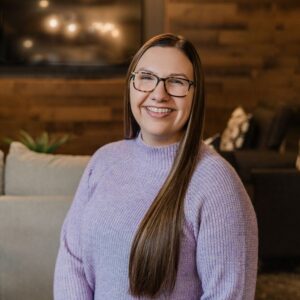
Bri Conn, CFP®: [00:00:00] Welcome to Childfree Life by Design. Today I am gonna be talking with Hillary, a client and going through what it means for her to be building a Childfree life on her own terms. In this episode, we’re talking about what it looks like her going from being childless, not by choice, to then making the shift and going through the grieving process of figuring out what life looks like now that the things that she expected to happen didn’t happen.
If you’ve ever wondered what it looks like for you to start planning your journey, if you might have found yourself in the same shoes, this conversation will give you the clarity and tools to make intentional decisions that support the life you want.
Intro: From Childfree Insights, this is Childfree Life By Design, the go-to resource for building the Childfree life you want. Every episode gives you practical guidance, clear direction, and meaningful conversations to help you live intentionally and design a future on your terms. This [00:01:00] podcast is for educational and entertainment purposes only.
Please consult your advisor before implementing any ideas heard on this podcast.
Bri Conn, CFP®: Today I’m gonna be talking with Hillary and going through a real life Childfree Wealth® checkup with her. What you’re about to hear is the first step in the planning process with Childfree Wealth® and where we get to learn more about the client and start working on a plan to assist them. These meetings are the foundation for continuing work with Childfree Wealth®.
Hello, Hillary. I got all your information today, and went through all already. I’d like to start off though by hearing more about what prompted you to schedule now? And then what are the most important takeaways or things that you want to address during this to get the most important takeaways at the end?
Hillary W.: Thank you. Well, I have been thinking about this for a long while, just trying to get all my things sorted. I’m 45 going 46. And just feel like some things in my life have been prompting me to get [00:02:00] my stuff more sorted. I feel pretty organized in general, but acknowledge that there’s always room for improvement. I’ve been going through the journey of coming to terms with being Childfree, not by choice.
I’m feeling good about that now. A long time I was not. I’m also single. And the feelings and emotions I’m filing in a better place with that. Feeling strong and feeling like getting this financial stuff in order is just gonna really help in that journey to feel stronger and stronger.
So I came to you guys through the Childless Collective, which has also been a great resource for Childfree, not by choice folks. And have been following your podcast for a while and have found it so helpful, especially in the focus of those of us who are planning for ourselves, planning next stages and the very specific scenario, what that entails and how much respect you guys have brought to that and how much respected positivity.
So I’ve just been impressed with all that you guys do. And [00:03:00] I’m excited to proceed this and just getting things in order was really helpful to my own self realizing, yeah, what insurance do I have? Where does that policy.
Getting that in order in a non panic state is very helpful. So,
Bri Conn, CFP®: That’s fair. A lot of people will say sometimes that even just having the financial information form and going through and putting things in the right capital, brings them so much clarity. ’cause it’s like, man, I never thought about this and what actually do I have and what’s covered? It sounds like you’ve worked through a lot of the life stuff.
So you’re at the almost the point of, Hey, I’ve gotten to a point of acceptance and now I wanna really look forward and what does life actually look like and what do my numbers look like as they proceed forward?
Hillary W.: Yeah. ’cause I’ve traditionally worked in the arts, in the nonprofit sector and I’ve always saved where I could, but it really wasn’t a lot of room for savings. But I’m now in a role where I am saving a little bit better and I want to [00:04:00] be able to better plan with that moving forward.
Bri Conn, CFP®: Okay. So you’ve been saving for a while it looked like in the notes here, your current role you’ve only been in for two years about?
Hillary W.: Three and a half years, I think the taxes from last year. So yeah, I started in 2022.
Bri Conn, CFP®: Got it. So three and a half years in it, and probably not the forever job is what I’m picking up on, but it is now.
Hillary W.: it’s great in many, many ways. It’s a particular sector that I just don’t know with the hours on the intensity of things. How sustainable that is for my own, with respect to all that’s getting done.
Bri Conn, CFP®: That’s fair. So going forward, if we can say, Hey, let’s work through a plan, getting the numbers in order, and what does it look like for you to transition into something else. Because if we have an idea of where you wanna go, we can work to build a plan to get you there.
Hillary W.: Yeah. I [00:05:00] could fantasize about what that would be, and then I just have had enough reality to know that the sustainability of that stuff. Ideally I would love to work again in the nonprofit arts sector. It’s just with the current climate, the current world.
I just don’t know if that’s a sector that I can go back into in a fiscally responsible way at this point. And even if that’s available, I have always seen myself in the arts world and I would love to get back into it. I just don’t quite know given administrative stuff here, government stuff, what that would look like.
So the current role, I know there’s a lot to be said for having a very stable job. So, envisioning supporting the arts in some way again, would be ideal. I just don’t know how that works in our current state.
Bri Conn, CFP®: Okay. Is it you want to support the arts and have a full-time role? Is it you would like to go to part-time or three quarter time? [00:06:00] What’s the goal?
Hillary W.: The goal would be a full-time job that has some hybrid flexibility. Currently my role is all on site, which I know is a pretty privileged thing to have hybrid, so I acknowledge a lot of roles don’t have that. I would ideally like a job that is hybrid.
I’m still fine with doing a full-time role. If it had some more flexibility with working from home, if it had flexibility with good PTO. Important to me is travel. So I would very much like to be able to travel more. I have some limited travel that I can do, but that’s really important to me. So a job that would allow that.
Bri Conn, CFP®: You had mentioned you wanna work in arts and nonprofit sector, but aren’t that’s a possibility.
Would it be something where, hey, maybe that could be on the side? Or is it like, no, you really want to just aim for that as your primary goal?
Hillary W.: I think bringing my art practice back in as something on the side is important. I think I’ve always [00:07:00] worked arts adjacent and arts administration in order to support my own art practice. So I think my art practice as a studio artist, I’d like to bring back, but that would definitely be something on the side that’s purely for me, my own joy and interest rather than anything that was an income.
Bri Conn, CFP®: Okay. Got it. And then it sounds like there are some things here that could change your financial future reading through. So I saw that you got some RMDs from dad. You inherited from there. But I also saw a trust that you got some income on tax return.
And then there’s a note about a farm trust here too.
Hillary W.: I realize I felt like some of the stuff I submitted was all over the place, so thank you for honing it in.
So, my family is involved in farming in the area and so, I’ve been very fortunate that our family has had that as a source of income, mainly it’s been to support [00:08:00] education.
As I was growing up, it was always understood that any income from the family farm would go towards education. And so that was very helpful in my going to school. And I currently don’t receive any kind of immediate distribution from this trust. My mother is the one who gets it as well as a series of cousins.
But I anticipate, and what I would hate to think about, but of course is a reality when my mom passes away, that distribution will go directly to me. So I am not needing to save that income towards any children’s college education. So I want to thoughtfully consider how I can use it and as well as redistribute it in charitable directions.
And how I might use that in a way that still feels purposeful. I wanna be thoughtful about what that looks like. It’s not enough money to live fully off of as an [00:09:00] income, but it’s a nice supplement and that’s always been emphasized to us and the family about it being this very special area for supplementing education. So, how I can honor that family gift moving forward to.
Bri Conn, CFP®: That is helpful. There’s so many pieces on here. Where is that tie in?
Hillary W.: That’s a very little silly one, it’s an oil trust. It’s $60 a year. It’s a little super tiny, tiny thing that I think my grandfather on my dad’s side invested in some oil in Texas, years and years and years ago. That’s a little gift every year, that’s literally like 50 to $60.
So that’s not a substantial
thing per se.
Bri Conn, CFP®: Got it. I saw it was very small and I wondered, sometimes, you never know though. I was like, I have to ask.
Hillary W.: I don’t entirely know the history. My dad explained it to me, and my mom’s explained it to me too. Basically my grandparents [00:10:00] on my dad’s side were interested in investing in oil and he made some investment. And there’s been some residuals from that in a sweet way that I know it’s embarrassing to not know more about it. But I have asked the trust folks, what’s the history of this?
And gotten mixed, small responses.
Bri Conn, CFP®: Well, the fact that you at least know what it’s from,
I’d say don’t be embarrassed because sometimes it’ll be random little things and people go, I don’t know, I just know that I get this form every, and have to file for my taxes.
Hillary W.: There’s like a sweet picture of my dad and his dad, visited the oil rig in Texas, so my dad was like 10. So it’s a sweet family story.
Bri Conn, CFP®: Gotcha.
Okay, so that is separate from the farm trust, which you are not currently on, but likely
will be in the future.
Hillary W.: That’s another thing, it’s a mystery in a different way, whereas I don’t look. The specifics of it are not totally clear to me. It’s gonna be a varying number. And again, I’m very [00:11:00] lucky to have this family situation.
Bri Conn, CFP®: Okay, so when you filled out the form, the order you put priority career and retirement planning, life vision and values, estate and long-term care planning.
And in that estate one, you talked about your mom, this trust. Needing to take care of things and having to manage it. I wanna flip the order because if you can get information about that and what it is, now you might be able to make different decisions. Because if things are in a trust, they’re a little bit more solid in the sense of they’re written down, we can plan for it a bit more. I’m reading it here again, that you believe you could be the trustee for it.
Hillary W.: Oh. No, I know that myself and two cousins will be the trustees for our portion of it. So it’ll be divided three parts equally.
That’s a subdivision of another trust amongst maybe six cousins.
Bri Conn, CFP®: Okay. Got it. There’s lots of pieces.
Hillary W.: Yeah. There’s lots [00:12:00] of pieces. So it’s in the sense where it’s not a straightforward monetary thing. It’s a farm, which is a running farm, and therefore it has expenses, and then it has a varying income depending on how the year goes.
So it’s never a given thing.
Bri Conn, CFP®: Are you guys currently operating the farm? Cousins are running it and making sure everything’s are done? Is it rented out? What does that look like?
Hillary W.: It is on a crop share, which sounds like sharecropping, but it’s different. It’s that it’s an equal partnership with the land, the tenants, the operators of the farm. So none of the family members operate the farm, but we’re in a crop share situation with the operators who do.
We are involved in the way there’s a farm manager. We’re alert to activities and my mom is, the trustee is currently active with decision making and discussions. There are trustees that are active in that sense.
Bri Conn, CFP®: Okay. It [00:13:00] sounds like your mom is pretty healthy.
Hillary W.: She’s healthy. I think I mentioned in the form, my dad passed away about 10 years ago and he had also been healthy and he just got struck with cancer and it was a quick, terrible six months. And so, that was a life lesson of
someone who I thought had their stuff in order, who sort of did, sort of didn’t and make me want to get things in order with my mom while she’s good.
Not
wait for something to go bad to then get it in order. That’s all to say she’s healthy and manages her stuff well and is managing her finances well in a way that I’m very lucky that she is caring for herself in that way. So,
Bri Conn, CFP®: that’s fair. Just the proactiveness of it, and especially when there’s a lot of moving pieces can helpful and make one sleep better
at night. Have you listened to the interview at all that Dr. J did with Beth Pinsker? She wrote the book, my mother of [00:14:00] money. Book came out in November, and the podcast interview came out in December.
I think that book is super helpful because it’s all about her journey of taking care of her mom. And Beth Pinsker, she’s also a CFP® and then a retired Market Watch columnist. So when she was going through and on this journey, she would call different people and ask for advice. And it gives a really good look at what do you need to do to be proactive and take care of your parents.
That book probably will help you a little bit, along this.
Hillary W.: Along the way, I felt so grateful to friends who shared their stories of me and benefited from that. So that’s why I was excited to learn from others and hopefully in sharing here that others can feel some experience in that too.
Bri Conn, CFP®: Yeah.
Hillary W.: Feel less alone in these weird stages.
Bri Conn, CFP®: That’s about it. And I can tell you right that I know a lot of people appreciate hearing stories like this and being able to these sessions. ’cause they’ve told us, they’ve [00:15:00] commented, they’ve shared things publicly. People do appreciate it. Learning more about mom
that’ll help with a lot of this.
Some of dad’s stuff. I’m gonna take and pull up and then I will share my screen. But of course I have 10 tabs open all the time. ’cause that is how my brain
operates.
Hillary W.: Always the way.
SCREENSHARE 1: Okay, so I’m going to do these last two. So this one is the inherited IRA. And then I will need to update this, do distribution. All right. Can you give me his date of birth and then his date of death? Got it. Perfect.
Bri Conn, CFP®: And it looks like you’ve been taking the RMDs
Hillary W.: I know the recent beneficiary IRAs, you’re required to close ’em out, but I fall right before the date of that cutoff time, so that’s why I’ve left them where they are.
Bri Conn, CFP®: Yes that makes sense. [00:16:00] I spent a good bit of time on the IRS website going through and checking the dates. ’cause you gave me the 10 years, so I was like, I’m can confidently say that it before this.
Hillary W.: And it’s weird that it’s still kept in his name, because it’s just one of those jarring things, every time you see it, you’re like, yeah, have to be reminded of this every time. Right?
Bri Conn, CFP®: Yeah, It’s hard to have to see that every single time you
logged in to
anything.
And there’s three accounts, so you receive from him? Correct.
Hillary W.: What’s interesting is it was two, but for some reason Vanguard divided one.
And this shows how a little I know. Vanguard made a division on one of them in a way that was necessary for something that they explained to me, but I don’t quite know why.
Bri Conn, CFP®: Okay. So I’m updating it. I got the two Vanguard ones updated, and the Chase one now. So now all of these updated in there. And then you have 2 4 0 1 Ks, the role of RA [00:17:00] and the brokerage, correct?
Hillary W.: 2, 4 0 1 Ks? Yeah, that’s the current active ones. Ones are Roth,
Bri Conn, CFP®: Okay. That’s what it is for what is the split here? Let me share my screen again.
Hillary W.: If they’re Fidelity. Yeah.
Bri Conn, CFP®: One is a Voya account.
Hillary W.: That is correct.
SCREENSHARE 2: Yes, that’s my former employer. That I’ve left there because it was making pretty good interest. Got it. I know that folks sometimes they put it all in one,
I’ve also heard it’s good to have. Stuff spread out, so I kept it in there.
So with that,
Bri Conn, CFP®: when it comes keeping things either in one, 401k account or multiple accounts, it really is a case by case basis. We need to evaluate, are the options better for the new place or they better at the old place. So that one, I can’t tell you without having all of the planned options, and descriptions and stuff like that. It’s really not gonna make a difference as far as it being spread out there. The spread out stuff primarily just [00:18:00] deals with when it comes to bank accounts, making sure you’re not going over the FDIC limits. That’s where it is. And then another that has keeps coming back around on the internet it seems like, of diversify your accounts. And then being turned into, well, diversify where they’re at.
It really just means diversify what you’re invested in, not holding all single stocks. If you can do either one on there, it’s not a huge issue. If you wanted to make your accounts simpler, that would be something to look further into to see, does it make sense to move them at all? Just because with lots of the same accounts, it might be easier for you. So you don’t have a bunch of ’em stacked up on there. One thing I did notice as I was going through and looking at all of your different accounts is on here, let me go back to make sure I’m the right account. So you have a bunch of cash sitting in one of the inherited IRAs at Vanguard. And you’ve got a few high [00:19:00] fee funds in there as well. But overall your cash amount is quite low for where I want you to be at. Being single, I’d want you to aim for six months of expenses, that way you’ve got plenty extra leeway there in case anything were to disrupt you or happen.
And that ties into as well the disability policy. I looked at your employer’s website, for the employee benefits, it that they offer long-term disability insurance. So I’m probably what you were talking about on the note of, you said, I’m pretty sure I have life and disability insurance, but I don’t have the policy declarations.
That’s okay. That’s something to just go ask HR about.
Hillary W.: I see it taken out form my paycheck, so I’m assuming
it’s there.
Bri Conn, CFP®: Yeah. like, well, it’s somewhere.
Talk with hr, confirm, see what it is. And also wanting to see how long is that elimination period? So should anything how long before it actually kicks in.
And that’s part of the reason we suggest having that six month emergency [00:20:00] fund too, just in case something happens. It’s not that you don’t have money, you do have money, it’s just in other places. And so we don’t wanna worry about trying to sell any of those things in an entity, any sort of a crisis situation.
So,
one other thing going in with disability is your plan document says that you have an HSA healthcare plan. Your pay stub says health, FSA account.
Hillary W.: I do ever get those confused.
Bri Conn, CFP®: Okay.
Hillary W.: It’s the FSA, I think I meant when I went back to it. ’cause we also just
changed insurance coverage. And so,
it’s the FSA that I have not the HSA.
Bri Conn, CFP®: Okay, i’m going to pull this up because I want to verify your other coverage then.
SCREENSHARE 3: So is this still the coverage that you have then?
Yes. That is the new plan, yeah.
Okay. So you should have an HSA account. This is the one thing where I found to be quite [00:21:00] confusing on your benefits, and I don’t blame you why you’re like, oh, I get them confused too, is because it was confusing me.
If you have an HSA plan, so the high deductible plan, you cannot have the FSA
Oh.
So. I would check with your employer. I’m wondering if they just call it health FSA when they meant HSA.
We had a switchover and there was a lot of confusion and I miss tracks with that.
That is normal. You have things like that happen, which is why I’m like, let’s check on this.
Your tax return showed that you did have an HSA and contributed to it for 2024.
Yeah, and that’s I think why I said HSA, but then when I look at the other things, I was like, it’s an FSA. Yes. It’s a plan I’ve been able to use to buy prescription drugs. I used it towards
Physical therapy.
And so I used it. There’s no money left over in
any kind of [00:22:00] investment with it. So it’s been used and it was pretax deducted.
Bri Conn, CFP®: Do you know if you can keep it year to year or if they’re like, nope, user lose it?
Hillary W.: My understanding was that I could keep it year after year, but I know that in every year I’ve spent it all.
Bri Conn, CFP®: Keeping it year to year would track with the HSA, that is on that policy form, and with your tax return. So guessing it might be your employer and the way they put it on pay stubs, that just makes things weird.
Hillary W.: Bless
them, but
that would track.
Bri Conn, CFP®: With it, I would suggest first talk to your HR and just verify, Hey, what kind of account is this going to?
Then after that, if it is an HSA account, what I would suggest doing is that is the account we typically like to fill out first, if possible. And if you’re using it every year, you’ve got a good bit of medical expenses. But it’s essentially triple tax benefit. It can grow [00:23:00] free, and you can take it out tax free.
And so it’s a little bit better of a benefit than the 401k or the IRAs.
It’s not something where we would actively seek out a plan like that, but you already have the plan, we wanna take advantage of it as much as possible. So getting whatever you can into it and then investing what you can. Sometimes, depending on whoever that provider is of the account will say you can’t invest until you have at least one or $2,000 in there. So you might not be able to invest all of it, but if you can and then take, save all your receipts and have them so you can always reimburse yourself later on. That would be where I would aim to go. Let me double check. I wanna make sure there’s nothing else on here that I saw.
Hillary W.: With our changeover, there was a big question around the deductibles and what
we be covering versus the company covering, and so that was a big confusion also. So then H-S-A-F-S-A step also.
Bri Conn, CFP®: Yeah, that’s fair. Did they do a big change this past [00:24:00] year or two with the increase in healthcare premiums across the board?
Hillary W.: Yeah. It was in November, December. So, picks switch. We’re with the same company, but there was a big cost increase. The company has generously covered a fair amount of it, but we’re paying more. Or they’re paying more. Everyone’s paying more. So
Bri Conn, CFP®: That makes sense. Everybody’s been in
that
situation. Not in a way that we love it, but it’s across board. I always say that employee benefits in the past has been one of the things that’s probably the quickest to go through.
And this year it was definitely not the quickest to go through. Way more time than years past. I will make sure those notes are in your check report too, so that have to try and remember all of those things. ‘Cause I know it’s quite a bit. Those are the big things to figure out. And then, well, estate planning, I you to get an estate plan done.
Hillary W.: I feel like my priorities were all over the place, so thank you for honing it in.
MidRoll: Hey, let’s talk about money. [00:25:00] Being Childfree gives you unique financial opportunities, but it also comes with unique questions. Are you looking to utilize your assets over time? Do you need help understanding what it means to adjust your finances for your Childfree life. Stop guessing. Take advantage of our Childfree wealth checkup today.
It’s a quick focus review designed specifically for your Childfree lifestyle. Head over to www.childfreewealth.com to schedule your checkup and start designing the future you actually want.
Bri Conn, CFP®: It’s okay, that is exactly what I’m here for to
take in. Most people apologize and say, I’m sorry, everything is everywhere, You don’t need to apologize. That is not what this is for, for you to apologize to me. This is for me to help you
work through this
and organize it.
Hillary W.: I appreciate that.
It felt like a
diary
entry, like, what am I doing?
If
anything it’s just bringing some verity with that too. So appreciate it.
Bri Conn, CFP®: So getting some of those big things [00:26:00] figured out and then looking more towards the future, is it a case of, hey, we really wanna make big changes soon, or wait a couple years? What does that look like?
Hillary W.: I think it’s wait a couple years.
The job is stable and great in many ways and, a paycheck is great and healthcare is great. I’m not in a desperate, terrible place to leave and I don’t necessarily have the option to leave. I’m not in a panic to leave. I think some of it’s the, grass is greener kind of thing.
Like, well, what? I think five years I’m comfortable, the idea of 10 years scares me. But also there’s some immediate changes that are about to happen that I’m excited to see happen here. So I feel like I’m gonna give it a solid, several to five more years. But I also acknowledge then being 50 and doing a career change feels scary.
Not impossible, but, what does that look like? There’s the ideal thing. I would love to retire early, right? I mean, even the form said that, of course the answer is retire early [00:27:00] and just do all the fun things. But I also acknowledge the realities of the world and a solid income is good and a stable income is good.
And it’s very, it’s stable in many ways. So,
I dunno if that answers it or just goes on a more existential thread.
Bri Conn, CFP®: It provides opportunity for more questions. So you said, okay, several to five years. There’s no opportunity for you to go anywhere right now. Is it the, have it necessarily looked or looked, but there’s not anything where you’d be interested in making that move?
Hillary W.: I’ve passively looked in that, on LinkedIn like a lot of people and, seeing what’s out there on that specifically. Not seeing something that’s particularly intriguing or worth leaving my current position for. So it would have to be an opportunity that was if not better paying than just as good paying that would have the golden [00:28:00] PTO and the golden hybrid style in a field that I would feel comfortable jumping to.
And that just doesn’t, from a very passive search, haven’t seen that. I haven’t dived into looking, I haven’t asked people to look for me. I’m not actively seeking anything. So, the secret right where you like tell the world if something right comes along. But I’m also very happy where I am with certain things and acknowledge the many good things about it.
I’m also about to stay for vacation, so I’m in a better mood.
Bri Conn, CFP®: Oh, where are you going?
Hillary W.: I’m going to Morocco for a week and a half. So,
when the vacation actually does come, but like, oh, it’s fine. Everything’s fine.
Bri Conn, CFP®: Gives a little different perspective and it’s
exciting to have
those things.
Hillary W.: Yeah, I am able to do this vacation with this job. We don’t have a lot of PTO, but the fact that I can do it at all is I acknowledged it’s pretty lucky. So, that’s good.
Bri Conn, CFP®: One thing I keep noticing as you go through,
[00:29:00] is you are very aware of the privileges in which you have been given. But I wonder if some of that might be slightly holding you back a little bit. Because you go, well, but I’m privileged and I not acknowledge this and I can’t necessarily do this.
Do you ever get caught up in the good things that you do have that might prevent you from trying other things that are also good, and you can do because of what you have?
Hillary W.: I think so, because in just being very conscious of the worlds around me and my circle of friends too who can and can’t do certain things. And having a deep humility around being able to access certain things. There’s some guilt with that, right? Not guilt, but just a little bit of I know there’s certain things that I can do that’s a lot of other people can’t or some other people can’t.
[00:30:00] But also conscious on the other end of things I can’t do that other people can do. And it feels very middle of the road. I’m not uber rich, but I’m pretty comfortable.
That’s how I feel and I know that there’s a lot of people less comfortable. And so, it’s tricky.
Bri Conn, CFP®: Is that something you have explored, working further through and seeing how that might present in your life and then present decisions that you make?
Sometimes people will say, yes, I know I do that, and no, I’m not gonna explore that further. We’re just gonna do that and it’s gonna keep impacting decisions I make. Sometimes people go, I didn’t know I did that. Thank you for that out. And sometimes people go, yep, I know that. I don’t want that to be the reason I don’t go and make decisions that I truly wanna make.
And so I’m wondering where on the spectrum that you fall. Is it something you’d be willing to go through and explore and see? Well, is that keeping you [00:31:00] from making decisions that might not be accessible to others? We’ll a hundred
percent acknowledge
that.
Hillary W.: Yeah, I think for a long time I was saving, in a way, anticipating a life that currently hasn’t happened. Like I anticipated getting married, I anticipated having kids, and so I was always in the realm of I’ll be saving for that.
And so now I’m in this shift of there was a sadness of, I’m outta here and that, but now it’s like, oh, I don’t have to worry about that. There’s a conscious shift to accepting it as a point of opportunity rather than a sadness. And so I think I’m in a better place with it now, but for a long time it was a sad, conflicting, emotional place. And
now I’m seeing it as a point of opportunity to really make my own decisions and do with it what I want and not plan for some future possibility. It’s a shift of what I’m planning for. And so it’s like, oh, I get to make this decision. And [00:32:00] that feels a little overwhelming too, if that
makes sense.
So it’s a shift perspective of something that’s heartbreaking and hurtful to something that’s a positive opportunity.
Bri Conn, CFP®: That’s valid. It makes a lot of sense what you said. Going and having to move through all those emotions and Identify the things and figure out, okay, now I can plan for that. I have seen people who come to us and they wanna do planning, and then they go, actually, I’m not ready for that.
And that’s okay. When I look at all of your things and going forward, I think there is a lot of opportunity for you to make different decisions and tweak things and make it what you want. Part of it is going to take more of that uncovering what does some of the trust stuff look like and figuring out how does that play in. You said, Hey, you know, retire early is the goal, but it might not be necessarily the thing.
Is it retire early and never work again? Is [00:33:00] it cut back on work? Is it maybe just, hey, take some more time off and if you can get it unpaid. That’s an option two. All of those different things. Do you know what the answers would be to those different trains of thought? But would you want to stop work completely? Would you want to just cut back on work for a while and then stop or go back and plan to work forever? What
you ideally want?
Hillary W.: I would like to cut back on work, which is not to say I don’t wanna work on other things. I would like to carve down some of employment hours to then have hours to work on artwork, say, or personal projects. So yeah, part-time work would be great in the long run. Again, I don’t think that’s a five to 10 year thing.
Bri Conn, CFP®: Okay. So if in the next five years you could switch to part-time work, that would be more of the ideal, [00:34:00] essentially.
Hillary W.: From purely work hour standpoint, from the functional standpoint of what does that mean for health coverage, there’s realities there that I know I need to consider.
Bri Conn, CFP®: Yeah, and because all this is answers to puzzle pieces. Do we plan on, you work a part-time job that has health insurance included, or do we plan you work, a part-time job, doesn’t have health insurance, you’re gonna have to pay for that on your own.
All of these are different questions that help us inform the financial plan.
So a lot of times people will go, well, I wanna know numbers, numbers, numbers. And they go, that’s great, but I need to know some of these other things. One example I sometimes give is Starbucks. Usually you can get health insurance through there.
Some people are like, Hey, I will go ahead and work a part-time job somewhere that has health insurance and I have to put in 20, maybe 24 hours a week, and that’s gonna be my part-time job. Other people are like, Nope. I’d rather just plan to cover that healthcare expense out of pocket.
And so it’s [00:35:00] about what is the right answer for you?
Hillary W.: I don’t know if I know that at this point.
Bri Conn, CFP®: That’s fair. Sometimes it takes a few times go through and just this checkup call is more of a discovery of what are the things to start thinking about. And it really is a snapshot, even on the report, it will say a snapshot of where you are now because is a snapshot of the answers that you do have now and it doesn’t have all of those future things necessarily built in there. Many times, this is a starting point for a conversation and gives a lot of other questions for you to ask yourself and think through
and
work through.
Hillary W.: It’s like, I don’t even know the questions that I don’t know. So it brings up the questions to then think about, right? What are those fundamental questions to think through, for the long-term planning too, if you can. I think I have a problem thinking about what, five years from now or 10 years from now looks like.
I mean, of course it’s not working and it’s sitting on a beach, right? But like, no. There’s the super ideal, but then true functional reality form. What does that look like? I don’t know.
Bri Conn, CFP®: That’s fair. The likelihood of Hey, [00:36:00] keep working where you’re at now forever, or at least until what you have in rate Capital 67. And so keep working at that. Until then, I wouldn’t.
Hillary W.: Oh,
Like,
till retirement?
Bri Conn, CFP®: Yep. Even if it’s just the same income, that’s what keeps it built at,
that’s not something where I’m looking at seeing you need to do.
It’s really a question of what do you want to do? And so I would spend some solid time thinking about that. Overall, your numbers are in a good place. You’ve done a good job of saving and keeping things set aside. It was interesting to me to read through when you said, I’ve really only been able to save at the pace I have been in the past couple years, and then look at where you’re at.
I go, well, I mean, if you’ve only been able to do in the past couple years, it’s pretty good. So
you have done
a good job.
Hillary W.: I mean, I’ve worked in the nonprofit sector and sustained for so long and I love those places, but they also wore me out [00:37:00] physically and emotionally in a way that, I knew it wasn’t sustainable. And so I made the pivot to this job, three and a half years ago, mainly for the fiscal benefits.
And it still had enough of an arc component that I felt comfortable picking that switch. And it was still a great environment in many ways. It’s just very different in so many ways that’s a big change. And it’s nice to finally be saving a chunk and feel good about that instead of pulling from savings where I wasn’t sure. And then that leads to bigger sadness around the arts in general, in the world. But,
it’s nice to feel comfortable with my income finally. But it also is exhausting in my work that have. But like, it was exhausting before and it’s still exhausting, so maybe that’s just work.
Bri Conn, CFP®: it doesn’t have to be though. And that is something where, man, I wish I just recorded an episode with a therapist last week, her, focus is on living not just a rich life, but a calm life. [00:38:00] And talking about work can be enjoyable and fun. And I’ll make a note to send that episode to you when comes out. It’s not gonna be out until this summer, unfortunately.
it doesn’t necessarily have to be exhausting. Are there things that you can do? You said there are some changes coming up at work that you’re excited for. Is there anything specific that you can ask for that might make it easier?
Hillary W.: And that’s the thing too, I acknowledge that what’s my part in bringing my own anxiety to it and how I react and respond. It’s funny, in the New Year’s resolutions, I did the whole solstice. Envisioning the year, and I think I can share it, but my word for the year was boundaries.
And so mainly meaning that for work life boundaries and saying no to things. And so, being clear that I could do this, this, and this, but not this and this. So I acknowledge my role in that too. And I’m going to make that a point for myself too. I mean, it’s funny to talk about this now, even in my pre vacation mode where I’ve [00:39:00] worked a bunch of extra hours in order to get stuff done. There’s that guilt with that.
There’s pre vacation guilt, before you leave and you’re like, do all the extra stuff. It’s becoming a therapy session too. But I think the things that I can do at work to make it better are on me too.
Bri Conn, CFP®: That’s valid. And that is true. That can be, both parties are responsible for their portion of making sure that things are helpful. And all parties are feeling good about it. It’s just my thought process was more of, one, good on you for recognizing your stuff. But also in these changes, is there anything that you can potentially ask for that is on their side, that could make it a little bit more enjoyable for you?
Hillary W.: Yeah, I think, partially what the changes are coming is literally a new software system that we’re implementing and the transition to this new system is gonna be a rough one. But in the new one, certain things are gonna be better, is the anticipation. So that’s gonna ease a lot of efforts that we’re doing now.
So I think, at this point, I don’t even know what to ask that would be [00:40:00] different in this new system, but it’s a good point to have that in mind.
So the short answer is no, I don’t know yet, but thank you for inspiring.
Bri Conn, CFP®: You are welcome. We did a session as a team and what we were asked to do was just spend time and going, my life would be better if. And then making a list of all these different things where if we implemented them as a company, it could make work better for us. It could make work better for clients.
It could make work better for us covering for one another when one of us is out. All of different things. That might be helpful exercise. What I did leading up to the session was I just put a note in my phone and every time something would come up, I would put it on the list. So I had that.
That might be a helpful thing for you to go through and do too, and then that might allow you to, when the changes are made think of it.
Because I don’t think from the conversation we’ve had that, one, I don’t know that you would change jobs sooner. You said it’s good now, but the hours are long and I don’t want you to run to the point of [00:41:00] burnout and now, oh boy, we have a disaster and now we need to quick make a plan
to get get you out of it.
Hillary W.: Well it’s funny when you word it that way. I know my life would be better if I could work one day a week from home.
That’s a quick answer.
Bri Conn, CFP®: There you go. Do you need help with phrasing on how to ask for that?
Hillary W.: It’s been asked before. And so that’s the thing is I anticipate ahead of time what I know the answer would be. I know how it would be taken if I said that, is my thought process.
And so, to your point, it’s making the case for it and making the valid points around why that would be beneficial to all really. ’cause honestly, I would get more work done at home. But there’s other things that wouldn’t get done. So, the balance of who else is here then, right?
Bri Conn, CFP®: Yeah. I would take some time, think about it and think about like you’re preparing for a debate almost. I love a good debate. There’s one thing about me is, debate was one of my favorite [00:42:00] things to do. Build a case for it. And it doesn’t fully have to be it, but thinking about those and thinking skills and building the case of, this is why. Maybe you don’t get to work from home every week.
Maybe it’s, hey, you get to work from home one day a month just to start or every other week. Anything like that.
But thinking through why could that be beneficial to both parties? How would it work?
Hillary W.: Yeah. That’s a very good thought process.
Bri Conn, CFP®: We have a little bit of time left. Is there anything else on here or in general that we talked about today that you’re wondering about or have questions about?
Hillary W.: I know we’ve run quite a gamut of things. I don’t think I have any pointed questions at this point. I think, some of them relate to some of the specifics around how the investments are and that kind of thing. ’cause I’m really unclear about that area, but that’s not really for the last two minutes. [00:43:00] I appreciate the reminder of having the six month expenses saved up because I’ve heard that in multiple places too.
And, that’s always been a scary number to think through, like, what would that be? I don’t think I have any other questions at this point.
Bri Conn, CFP®: That is all right. Some of it, we just need to get more information
before we can make the next decision. And that’s okay.
But at least now, you know the questions. Start asking
and start going through.
I would suggest doing some more ongoing financial planning for a period of time just to get it set. And what I did I went through and I looked at the level complexity of the different things, because we have two options. We have a quarterly planning and we have the monthly, they’re all annual plans essentially, but it’s the quarterly meetings or more frequent meetings people typically do monthly. It’s a little bit more high touch. Just the amount of things to figure out with the family stuff, to see how that plays in with the different accounts, to figure out how that gets [00:44:00] in.
And then also, the amount of iterations I suspect that we’ll have to go through in the financial plan and getting your estate documents done as well. If you want to use Childfree Trust®, you sure can. And with Childfree Trust® if you do the Childfree Wealth® 360, which is $10,000 for the year, we bill quarterly, then you a membership to Childfree Trust® automatically.
And so my thought process for you would be to do a year of the free 60 planning. Because then if you want to use Childfree Trust®, we can go work, through all the estate documents together, you have that membership, and then we can go through, get some of this other stuff figured out. And then after that, if you ever wanted to switch, just based off of where your asset level is right now and your income, everything. If you wanted to switch to quarterly in the future, you sure could and you can just pay for Childfree Trust® on the well. So those are different options for you. I can’t in good conscious right now tell you that the quarterly planning I think will be worth [00:45:00] the amount of stuff that you have because with the different things, it would be quarterly planning, estate package, Childfree Trust®, and then, I’ll tell you what the total would be if you were to do all of those. It’s 72 50 if you were to do all of those. And that’s the four typical meetings plus the other two meetings. So six meetings, whereas if you did Childfree Wealth® 360 it’s a $10,000 per a year. We can meet month as well. And then if I need to talk to your CPA, I can do that. All of those things and help you get some of this stuff figured out
for you.
Hillary W.: Okay.
Bri Conn, CFP®: I was like, I better explain all that.
Hillary W.: That’ll all be in the write up too with,
Bri Conn, CFP®: Yeah. So that’ll be in there. And if you have questions about it too and you’re like, Hey you email ’em to me or we just set up another time and I can go through them with you, but I wanted make sure I at least explained that just because there’s enough little nuances within your stuff.
Hillary W.: Sure.
And then, I feel like there’s always piecemeal [00:46:00] things that
add up to something. Okay. But it feels very all over the place.
Bri Conn, CFP®: That is okay. All over the place and then figuring out a straight path, is one of my things. So, that is all right. Okay. So we have reached the last segment of Childfree Life by Design called Your Next Draft. And this is where we wanna learn more about what you are going to take and after the conversation today, use in your next draft of life to help you design an amazing life. And if you could share what is, why it matters, and then if there’s any cost that you wanna share that you think might come along with it, you are welcome to share that as well.
Hillary W.: The question that really I think struck me earlier and couldn’t quite answer and I’m excited to think about, where I see myself in five years, which wasn’t exactly the direct question, but in many ways, what does that look like and where do you want to be in that five to 10 year point?
And I excited to think that through and vision it too. ’cause I think I’ve been going along in a way that’s like, all right, I’m doing this and doing this. [00:47:00] Something else will come, something else will come. And I think really solidly thinking that through, it’s gonna be nice ’cause I’ll be on this vacation and in a place that’s away from the craziness right now and in a happy place to think through what five years from now I’d like to be doing.
I think that was one of the biggest takeaways is what do I want in five to 10 years?
Bri Conn, CFP®: That’s all for this episode of Childfree Life by Design. Remember, investing in moments of joy is just as important as investing for the future. Until next time, happy designing.
Outro: You’ve been listening to Childfree Life by Design. Make sure you follow the show. Leave a rating or review and connect with us on social at Childfree Insights. For more resources, guides or upcoming events, visit Childfree insights.com.