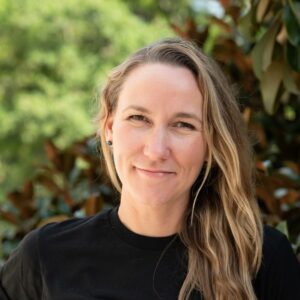
Maddy Roche: Welcome to Childfree Life by Design. Today we’re talking about how finances are different for Childfree women and what it means for people who are building a Childfree life on their own terms. I’m Maddy Roche here with Bri Conn, and in this episode we’re covering the unique challenges, career data and the No Baby Steps roadmap.
If you’ve ever wondered how finances may be different if you are a woman or identify as a woman. This conversation will give you the clarity and the tools to make intentional decisions that support the life that you want. And men and those who identify as men. We still encourage you to listen to this episode.
There will be lots of good takeaways for you in it as well.
Intro: From Child-Free Insights, this is Child-Free Life By Design, the go-to resource for building the child-free life you want. Every episode gives you practical guidance, clear direction, and meaningful conversations to help you live intentionally and design a future on your terms. [00:01:00] This podcast is for educational and entertainment purposes only.
Please consult your advisor before implementing any ideas heard on this podcast.
Maddy Roche: Bri, what a fun topic to be here talking to you about.
Bri Conn, CFP®: It is a fun little chatty topic for today and Women’s History Month as well as we are celebrating that today.
Maddy Roche: Happy Women’s History Month folks. So Bri, let’s just kind of have a general dialogue at the start of this, about what are our first instincts and impressions are, and listeners, we encourage you to come along on the ride with us when we talk about the differences of finances between men and women.
Bri and I were talking even before we jumped on this podcast, just about the historical context of women and finances and how things have been so markedly different for women over the years, than it has been for men. Bri, what comes up when you think about the difference?
Bri Conn, CFP®: When I’m sitting here and going through just reading for the numbers, I think [00:02:00] many of us feel that women have had the equal rights to have credit cards and bank accounts for as long as we’ve been alive, and for our mothers, grandmothers, all of that. But that’s not necessarily true. Many of you listening to this might have actually been alive when women were allowed to finally start getting credit cards on their own and no longer had to rely on the men in their lives to be able to do something like that and have them be a signer on any of their accounts, because that wasn’t until in 1974, with the Equal Credit Opportunity Act, which finally went ahead and said, Hey, you know, we’ve been discriminating based on sex or marital status for all these years, and women haven’t had access to accounts like they should. And in 1974, which was not very long ago, about 52, 51 years ago, that’s when access for Women really started to become equal.
Maddy Roche: And it’s those things as we’ve looked at the historical context of not just women [00:03:00] but other groups in society, how that delay in the ability to amass wealth and en mass economic stability can really hold individuals and groups back. I think it’s just important to go into this conversation with eyes wide open that this historical context exists.
And then we’re working, of course, within a society and our listeners are well aware of this, of a society that assumes we all are gonna have kids. And so when we see the intersection between identifying in those who identify as women and women with those who are also Childfree, there’s a lot of things in the system and society that we’re up against in terms of barriers. Let’s first talk about what we call the single hood tax Bri. I know you have some stats on that and that’s really fascinating. It was actually something I hadn’t been super aware of over the course of my time in this industry, but I’m becoming much more aware of it.
And you wanna give some context to listeners about that.
Bri Conn, CFP®: When we’re looking at the single hit text, what we’re really talking about is, it’s a lot more expensive to be single than it is to be partnered or [00:04:00] married. Maddy and I are both partner and in this situation we’ve got multiple income streams coming in to pay for our housing. But what happens when you’re single and you don’t have that, you still have to somewhere to live, you still have to have a car for transportation or you still wanna do these things.
It can cost you more to do all of those things because now suddenly, instead of taking and splitting that rent with somebody else or splitting that mortgage payment with someone else, you’re covering the entire thing on your own. Fidelity did a study and they found that it’s cost somewhere between $480,000 to a million dollars more to be single over one’s lifetime compared to being married or partnered just for things like housing, healthcare costs and taxes alone. That’s a lot of extra money to spend.
Maddy Roche: That’s a huge amount. But you can imagine that if you are working at a company where if you’re married, you get extra dollars towards your healthcare plan, whereas if you’re not, you don’t. That can really be a [00:05:00] disparity in terms of the benefits that you’re getting. When we think about equality and inequality within the workplace, Bri and I will be some of the first women out here to say that we support women and maternity and paternity leave and the support that we give working moms, from the trues depth of my heart, support that the idea that we actually need to give more support to women who are having children and continuing to stay in the workforce.
But when we really look at the realities of what the experience of Childfree women has been, we see that a lot of Childfree women feel that they’ve been treated unfairly in the workplace compared to married women. So we’re talking about single and Childfree women compared to married women.
Policies like flexible work schedule, we know and we see that a lot of companies offer that and then paid family leave. What’s important in our world, I think, especially for me and Bri, is that we have a chosen family and that we identify our own definitions of what family is.
And so, if that term and the way that we define it doesn’t fit into the traditional, natural [00:06:00] kin community that our society expects of us, we don’t necessarily get that same support. And those benefits can be offered exclusively to employees with children or partners.
What about this extra work expectation, Bri, have you experienced that? Have you worked with clients that have experienced that?
Bri Conn, CFP®: I have definitely worked with clients who’ve experienced that before, it’s the expectation because you don’t have kids, you have time for this, or you can take on all these extra projects. And the reality is we still have lives like Maddy, you said, we still have chosen family. We have people that we wanna be around and do things with. Where, we don’t necessarily have the time to take on all these extra projects. I am blanking on where I saw this, but I was looking at something recently and it talked about how if you don’t have children, sometimes people just assume that work can be your child and therefore they’re gonna put extra workload on you and say you need to do this and this and this. And that’s where you have to work on drawing boundaries and saying, Hey, there’s still things that I want to [00:07:00] accomplish in life and go forward and do, and yes, it might be true that I do not have children, I can’t automatically pick up everything else. We need to either get more resources or hire more people, or maybe just adjust expectations as well, because people can still be burnt out. And it’s, you’re putting too much on it, it doesn’t matter if there’s a family or not. Burnout doesn’t necessarily discriminate based off of your marital or your familial status.
Maddy Roche: in that same study that you talked about the Fidelity study, I know that they noted that nearly 50% of single women reported feeling anxious about their finances, and that is a higher percentage than married men and women. And I think that goes back to that first point around that cost and tax of single hood, that when you’re single, although it is a beautiful life, there is the reality that it might cost more. And so that additional pressure can really result in stress, which we know is never good for an individual.
Bri Conn, CFP®: So with the financial anxiety, you’re right. It is more prominent in single [00:08:00] women and that’s something that we’ve seen even having clients come to us. Usually in financial services, it’s a lot of men that reach out to financial planners. For our case, it hasn’t been at.
It’s really been women who reach out to us. Many, many single women have reached out. There have been multiple conversations. It’s very rare that I meet with a single woman and at some point in the conversation where they don’t shed a tear. Usually they’re all shedding a tear and they’re just going, oh, finally, I can talk with somebody about this. Because there is the pressure too, of parental pressure. I’ve met with women in their fifties and sixties who still have living parents that might be seventies, eighties, nineties, and those parents are still putting pressure on them on what they need to do with their finances and say, you need to earn more. You need to do this and this and this. And I’ll meet with some of ’em and I’ll go, no, you’re fine. You could retire today and you’re okay. And that’s really freeing for people to hear. But when they’re so used to doing everything themselves, and very independent about it, that can be a large burden for [00:09:00] somebody to bear.
Maddy Roche: Yeah, no doubt. Thanks for sharing that, Bri. What I think is so fascinating is that as we dive to the demographics of the Childfree group and then we zoom down to women specifically, the gender wage gap goes away. And let me just explain that a little bit deeper, that the gender wage gap is substantially smaller among Childfree women.
About $160 median difference than between a woman with children, which is about $1,800. And that’s comparing the difference between earnings of men and women, with children and without children. Now that is something to be really impressed by because wow, we’ve figured out a way to remove the gender wage gap.
But this, I think, ties back to what Bri and I were talking about just earlier, which is that we can’t really credit this gender wage gap or lack thereof, to any one thing. But I think our hunch is that, there is a lot more access time for women without children to work and to focus on their careers and maybe receive the promotion, go after the promotion to reach a [00:10:00] higher earning potential.
So whether that’s good or bad yet to be determined. But I think it is fascinating that when we think about the gender wage gap, it does go away almost entirely. The other stat that I just love is that Childfree women have the highest median net worth among any demographic, 55 and older.
And Bri, I think that’s really substantive. What do you think?
Bri Conn, CFP®: It is. When we’re talking about it, so many women who we meet with will say, I feel behind, and I can see that coming from all those pressures. And then we look at these numbers from US Census Bureau and it’s found that median net worth is higher by about $173,000 for single childless women. That’s really eye-opening to say, Hey, you feel like you’re behind. You feel like all these things, when we look at the data, you’re actually doing okay. And yes, we wanna always compare, the median does not match everybody, but many times when I am having conversations, people are doing really well.
I’ve had [00:11:00] many conversations too, where somebody will come to me and they’ll go, oh, I’ve made all this and they’ve got a specific number. And I’ve go, I have couples who have retired on that same number, and you’ve got that for you, you are doing good. Pat yourself on the back and I also invite anybody who’s listening, but also those clients to just take a moment to be proud of themselves and say, no, I’ve done a good job. I’ve done a really good job over my lifetime, and now I can work on making these things work for me and really reflect the life that I wanna live.
Maddy Roche: Thanks Bri. I think when we also start thinking about how things are different for women without children versus women with children, there’s a lot of flexibility built in inherently around not having children, which allows people to actually have higher success rates of being able to pursue some of those life-giving careers and experiences like opening up a small business.
I know Bri and Jay over the years have talked a lot about file, which is financial independence, live early concept, [00:12:00] which is a way for folks to actually appoach retirement more like a dimmer switch as an on off, I am or I am not retired. And when you don’t have children as a woman, you’re able to really start changing and designing the way that you wanna live a life, which may include part-time work, volunteer work, work that doesn’t necessarily produce a high income and things like that. So there’s a lot of flexibility built into that. And I know you, Bri, have had experience with clients doing that.
Bri Conn, CFP®: Yeah. One of the things that I often see from people is saying, Hey, I wanna take a sabbatical, but I don’t feel like I can. And that’s when we have the conversation of where are you at in your different lake folds? What does it look like? Let’s work on a plan so you can take a sabbatical and make sure we build up to that. I don’t want it to be something where you just say, Hey, I’m taking the sabbatical tomorrow and quitting without a plan. No, no, no. We’re gonna build a plan or surround it and make sure that going into it, you feel comfortable and supported and know that your financial plan allows you to do this with comfort and confidence, [00:13:00] at ease too. Because there’s nothing worse than somebody saying, Hey, I wanna take a sabbatical. Going through dropping their job, which I have seen a few instances where people just quit their jobs before and then they’re coming to me and having a conversation. They’re going, I’m really stressed out about this.
We don’t want that for you. We want you to be able to go ahead and make those choices. And for Childfree women, it definitely is a little bit more possible because you don’t necessarily have the child rearing responsibilities. However, in preface with this because just because you don’t have child bearing responsibilities doesn’t mean you don’t have any responsibilities. You might be caring for parents. Many times we’ll see single women who are caring for their parents. And if they have siblings, siblings will say, well, you can go live with mom and dad because you don’t have kids and you can take care of this. No, no, no. That is not an automatic, it’s a, if you want to, if that fits, but you still have the opportunity to go ahead and make different decisions. It’s really, almost feeling comfortable with making those decisions as well, because [00:14:00] sometimes, there might be cultural preferences or cultural upbringings that you grew up in that don’t make something like file feel possible to you.
Mid Roll: Hey, let’s talk about money. Being Childfree gives you unique financial opportunities, but it also comes with unique questions. Are you looking to utilize your assets over time? Do you need help? Understanding what it means to adjust your finances for your Childfree life. Stop guessing. Take advantage of our Childfree wealth checkup today. It’s a quick focus review designed specifically for your Childfree lifestyle. Head over to www.childfreewealth.com to schedule your checkup and start designing the future you actually want.
Maddy Roche: So you and Jay have talked a lot about these eight no baby steps, and there’s maybe a customized roadmap for women without children. Bri, you wanna [00:15:00] give us a little background maybe for some newer audience members that have never heard this term that we’re using. And then let’s walk through those baby steps or no baby steps.
Bri Conn, CFP®: So the eight no baby steps are what we lay out as a financial foundations, things that we want people to go through and review as they’re building their financial plan. The first three steps are pretty simple, no matter if you have children or don’t have children, it’s making sure you’re out of debt, having an emergency fund. Well, step one, one month of emergency funds. Step two, paying off debt. Step three, having a fully funded emergency fund. Now, if you are a single woman, we suggest six months. If you are married, then it can be three to six months. It just depends on a few other factors.
But if you’re single, we suggest going for the six months. After that, step five, when we’re talking about insurance, disability and long-term care insurance are incredibly important, especially as Childfree women. If you are a soloist, long-term care insurance and [00:16:00] having a plan for long-term care is gonna be incredibly important as you age. Disability insurance is gonna help protect you in the now. So disability insurance is something where let’s say, Hey, you’re working a job. You’ve got income coming in. Should anything happen to you, you’re gonna need to protect that income to make sure that you can still go ahead and pay your bills and take care of any medical needs that you may have.
One question that I often get from people is, well, I’ve hit fire, or I’ve hit file, or I’ve hit financial independence, whatever flavor you wanna call it, I’ve hit financial independence and I’m still working because I enjoy it. Do I need to have disability insurance? My answer for that is, yes, I still want you to have disability insurance because in the event that something happens, the financial independence number that you have calculated, might not account and likely does not account for the higher increased medical needs that you have as a result of your disability, whatever that may be. So we wanna make sure you’ve still got stuff coming in to go ahead and protect you. And then the long-term care, whether that be long-term care [00:17:00] insurance, self-funding, however you decide to go ahead and take care of long-term care is important.
Maddy Roche: Yes, absolutely. Prioritize your disability and long-term care. And something that is fundamentally different that we talk a lot about on this podcast is estate planning.
And that does not change whether you’re a man or a woman. If you are Childfree, how you do your estate planning is different. We do believe that things can be much more simple for people without kids, and that really is true in that it doesn’t need to be able to set up, it doesn’t need to be set up to pass on money or assets to your net next generation. We know a lot of Childfree people wanna die with zero. And a lot of people struggle getting their estate planning documents done because they don’t have someone to act on their behalf and fill the roles of medical and financial power of attorney executor and trustee. So when we think about the core state documents you need, you absolutely need a will. You need a living will, you need your POAs, and you need a trust. And at Childfree Trust®, we do build those out for [00:18:00] you, if you become a member. What’s most important is that those legally binding documents are in place to prevent the government or healthcare system from acting on your behalf and making crucial decisions that maybe aren’t in line with your own wishes.
We know soloists and folks that are Childfree may really need to identify who can be their trustee and executor and POA, and in that case you can look for professional fiduciaries. You can look for friends and family, or you can join Childfree Trust® as a member. When we think about long-term care as a Childfree woman, we do need to recognize that again, sometimes this tax to us and that we often live longer than others. And so, as you can imagine, long-term care insurance actually might be more expensive for us. And that’s something that really could be different between our experience and others in that we live a year and a half on average, longer than men. And the lack of partner to provide that initial care while decline is happening, is part of the financial tax that we may have to pay in this, [00:19:00] and that we might have to go into long-term care earlier than we would if we say had a partner at home that was taking care of us.
Anything on the legal security, Bri, that you think is worth mentioning here?
Bri Conn, CFP®: Another thing is just be super proactive with your documents. Make sure that you’ve got them done and you’re updating them as appropriate. You wanna make sure that anything you want for yourself, especially if you’re a solo agent, is really tightened up. Not having your documents, you’re leaving it to the whim of the state that you’re in of whether or not they’re going to be able to find somebody and that might not fit for you. The care documents, that’s something, it’s not a typical state document, but it is a little bit more proactive and calling that out. That can tie in with long-term care really well. That’s where you wanna state what are your wishes for long-term care and that helps provide a bit more security for you.
Maddy Roche: I love this step seven though, Bri, which is planning for mom and dad. Can you talk a little bit more about that?
Bri Conn, CFP®: Planning for mom and dad is a [00:20:00] little bit of what I alluded to earlier of you might have the responsibility of caring for your parent because either a sibling or the parent themselves have said, Hey, you’re Childfree, you don’t have kids, and you can take care of me. Well, we really don’t want to go into a situation where all of a sudden there’s an emergency and now you’re having to care for parents. I have been in meetings where something has happened to a parent and the individual is taking a call from the bathroom because that’s the only place that they can just sit and be private in their parents’ home and is now in tears because there’s a lot going on. And that really hard. It is not only hard to witness and be a part of, but it’s also really hard if you’re that individual as well to then having to make all these decisions in a quick emergency timeframe. We really want to get ahead of that, figuring out what can we prepare for now. One big question that I’m gonna always ask people is, do you even want to care for your parents? Sometimes you’re a strain from a parent, and that’s okay. [00:21:00] You don’t have to care for them. What does it mean for you? What is your desire?
One thing I’ll often do is figure out what your boundaries are. Don’t go into having a conversation with mom and dad and starting it off by, Hey, mom and dad, what do you need for long-term care? What’s your plan? What are you thinking, without thinking of your boundaries first? Because that’s a really good way for them to say, oh, well, I thought I would just move in with you and you would take care of me, and I won’t have to worry about a long-term care facility. That’s not great because if you’re having that conversation, you haven’t thought through what your boundaries are. It can be really easy to say, okay, yep, that’s the plan, and just totally sideline anything that you feel or want or desire in there. So talk through whether you are married, have that conversation or married or partner. Have that conversation with the other person. If you are soloist, talk through it with yourself and think through some things. So you can always talk to a professional too and see what are the different boundaries in [00:22:00] place. Maybe you know, somebody who has had to care for parents. Ask ’em about their experience. What are the things that they have not minded to do? What are the things they wish they didn’t have to do? Gather as much information as possible and be proactive about it, so you have that. There’s another fascinating book. It’s called My Mother The Money by Beth Pinsker. I think it is a fabulous recount. Beth Pinsker is a CFP and retired Market Watch columnist, but what she has done is in my mother’s money, she took and wrote about her experience caring for her mom. And what was all needed. Go through, read that book. Understand some of the things that you’re gonna need to do, so that way when it comes to caring for a parent, you’ve got a plan in place and you’re not just having to quick make decisions on the fly.
Maddy Roche: Really good point Bri, thank you. So that then brings us to step eight, which we call winding down wealth. And for those of you who are on this plan to die with zero, this can be a really fun part of the No Baby steps. [00:23:00] And that is a way to begin to spend your money and to use it to live the best life that you’ve designed for yourself. It’s really, the goal is to maximize your life enjoyment and spend and give away money while your healthy. So many people who are on the traditional life script, wait until they pass away to pass on any wealth that they may have amassed in their lifetime. And we at Childfree Wealth and at Childfree Insights really agree that there’s so much impact that can be had while you’re alive. And if you have extra cash to begin to give intentionally while you’re healthy can be one of the most heart filled experiences for individuals to be able to see the impact of their generosity in real time. Any other comments about winding down wealth, Brie?
Bri Conn, CFP®: Just ’cause I’ve seen it so often is people come in and say, Hey, I built this great plant, I built a Monte car system, and they go a hundred percent I’m great. And I go, you’re probably gonna die with a whole lot more money. So just make sure if you are building a [00:24:00] financial plan, that whoever you might be working with for whatever tools that you’re using, really reflect that your goals and winding down wealth, that that is your goal. Because winding down wealth is not built into traditional financial plan. The tools are not reflective of it, and so it’s really gonna take somebody who understands and knows what to do. You can meet with one of our Childfree wealth planners, Childfree wealth.com, and get a Childfree wealth checkup, go through that. That can be a great way to go through and look at it. Because I know I’ve had multiple conversations where I’ve had to explain to people that, Hey, your financial plan, yes, it’s working, but it’s working not for your goals, for the traditional goals.
Maddy Roche: Excellent. Okay. It’s that time of the podcast where I am put in the hot seat, trying to sum up the three main ideas and takeaways from this podcast. I think first it’s that despite there being some disparities among the work place and the higher cost of single hood, childless women do demonstrate pretty strong financial [00:25:00] outcomes. We talked a bit about the higher net worth and the smaller wage gap, which I think is a really beautiful thing and I think our listeners should take that with them as they leave today. The third point I think I would summarize this conversation with is that the eight no baby steps that Brie walked us beautifully through is the essential roadmap that solo ars who are prioritizing things like disability and long-term care insurance, early estate planning is all the mindset that you need to have to be able to maximize your life enjoyment.
And third, I think it’s all about being proactive about how you design your life. I mean, part of the reason we’ve titled our podcast, the Life by Design Podcast, is that we want you during all of our conversations to really become the artist and architect of a beautiful life. We know and the reason we’re in this segment of the industry is because we really believe that the Childfree life is a beautiful one that deserves attention and design. And so I think Brie and I both would agree that being proactive about being [00:26:00] your own designer is one of the best parts of all of this. And that you can really build a life that feels aligned to your values and to your goals. So, I think those are the three takeaways. Brie, what do you think? Did I do it?
Bri Conn, CFP®: You did well there, Maddy.
Maddy Roche: I hope that summarized this podcast well for you, audience members. So that is all, for this episode of Childfree Life by Design folks, remember intentionally choosing to invest in moments of joy is just as important as investing in your future. So don’t just have that future mindset all the time, live in the present. Until next time, happy designing.
Outro: You’ve been listening to Child-Free Life by Design. Make sure you follow the show. Leave a rating or review and connect with us on social at Child-Free Insights. For more resources, guides or upcoming events, visit Childfree insights.com.