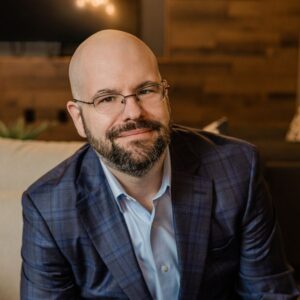
Dr. Jay Zigmont, CFP®: Welcome to Childfree Life by Design. Today we’re talking about how we designed our partnership between Childfree Trust® and Welon Trust, and what it means for people who are building a Childfree life on their own terms. I’m Dr. Jay Zigmont, and this episode we’re talking to Robert Allan and John Steiner, our resident trust and estate planning experts.
If you’ve ever wondered about who’s gonna take care of you when you’re older, this conversation will give you the clarity and tools to make intentional decisions that support the life you want.
Intro: From Childfree Insights, this is Childfree Life By Design, the go-to resource for building the Childfree life you want. Every episode gives you practical guidance, clear direction, and meaningful conversations to help you live intentionally and design a future on your terms. This podcast is for educational and entertainment purposes only. Please consult your advisor before implementing any ideas heard on this podcast.
Dr. Jay Zigmont, CFP®: Gentlemen, I was looking at my notes and I found that the first time we really talked was almost two and a half years ago. It was June of 2023. Does it feel like about right?
John Steiner, CFA®: Yes, it does.
Dr. Jay Zigmont, CFP®: It’s been a long path.
John Steiner, CFA®: Well, It does seem that way as though it’s taken a very long time to get us where we are, but we have done a tremendous amount of work to make it real and to make it happen.
Dr. Jay Zigmont, CFP®: So, Robert, you and I first met at a mastermind actually for XY Planning Network. And at the time I was asking everybody I could find about, Hey, anybody have any solutions about this? And you had said, Hey, my partner and I have been thinking about starting a trust company. Maybe we should talk.
Robert Allan, CFP®, CFA®, CPA: That’s right. Yeah, it was, I guess serendipitous that we ended up in that group together. And you had talked about, this is the problem I’m having, this is what the Childfree community sees. I need somebody to help not just manage the financial piece, but also who takes care of them when they get older. And that seemed to be the big hangup. And I don’t even know, we spent, what, six months work shopping solutions, whiteboarding, flying back and forth. But yeah, the trust ended up being a solution and we were thrilled we could jump in and help.
Dr. Jay Zigmont, CFP®: And John, when I first met you, I think your response was, I’ve been doing this for 35 years, and nobody’s ever asked me that question. Can you tell me about that?
John Steiner, CFA®: Well, I’d always heard that you never hear it all, that you always find something new and you gotta figure out, okay, how will we actually work this? And I’ve never contemplated Childfree Trust®, the whole idea of what you’ve got going on. I’ve never even contemplated it and I don’t think that anybody else really has. Although they have the possibility of it, but I’m not sure that anybody’s ever really gone down this road. And so now it’s not 35 years. It’s closer to 40 and still hadn’t heard of anybody else that wants to do this. I think it’s compelling. I think it’s very interesting.
Dr. Jay Zigmont, CFP®: And John, you’re child for yourself, but I think you said Robert’s your power of attorney. You were just gonna check that box that way. My whole point is frankly, you’re one of us, you’re one of our community. But still, even living in the trust world, this is just not talked about. Is that fair?
John Steiner, CFA®: It is very fair. And when we first met and we were sitting down talking about it, I remember thinking to myself that this guy’s either crazy or a genius, but nothing in between.
Dr. Jay Zigmont, CFP®: I’m not sure which one it is. Okay. Just be honest.
Robert Allan, CFP®, CFA®, CPA: Jury is still out on that one.
John Steiner, CFA®: But, the more I got to thinking about it, It wasn’t until sometime later that I actually put myself in there and went, well, yes, this works. ’cause I had been thinking about this for a pretty good while because we don’t have children. And I’ve been thinking who is gonna take care of us when we’re not able to do that ourselves? So in following what your plan is, is that yes, my wife is my power of attorney, I’m her power of attorney, executor, trustee, all that stuff. But that Welon Trust is the successor and lo and behold, yeah, there we have Robert. So take care of me, Robert.
Dr. Jay Zigmont, CFP®: I keep joking with people. I said, look, this company has to be able to bury me. It’s not a joke, it’s true. It has to outlive us. Robert, you want to dig in and how do you look at it? You’re the chief operating officer of this whole thing. How are you looking at it saying, John and I are gonna be long gone and making sure this happens.
Robert Allan, CFP®, CFA®, CPA: Absolutely. , I mean Building something that outlast us. From an operational standpoint, it’s all about process, procedure, putting things in place that, we can hand over to whoever ends up coming on and digging our place afterwards. In terms of actually building it today, I mean, I think it’s a matter of building with intentionality. I know we can dig into our past a little bit if you want to at some point, but, one of the things that John did was he started Alabama’s first independent trust company back in 2007. And ended up selling it to a community bank in 2016, I believe it was somewhere there. But the idea is we are building this and designing it not to sell but to truly outlast us and continue operating for the clients that we are establishing these cradle to grave relationships with.
Dr. Jay Zigmont, CFP®: And just for disclaimer, so John and Robert are, part of Welon trust they own Welon trust. I’m also on the board of well and trust investors. So yeah, there’s a little bit of conflict, I wanted to live also, but to me, when we were going through all the banking regulatory stuff, which I dunno, what was that, 18 months plus or whatever, that felt like, it was forever. I think what I got out of the banking regulators is that they’re intentionally strict because they want this to outlive us. Does that make sense?
John Steiner, CFA®: This absolutely true. They’re not interested in having a short term institution because it reflects badly on them too. So they want this thing to last, almost as much as we do.
Dr. Jay Zigmont, CFP®: And one of the things I’ve talked to our clients about is look, if well and ever goes belly up for whatever reason, it has to have a capital reserve to do that, and then the banking administrator has to step in and take over. John, can you give a little more how that works if something went bad?
John Steiner, CFA®: Well, if something goes bad first they come and basically hit the board with a capital call. Get us back to liquid. If that doesn’t work, then they try to orchestrate maybe a sale or someone that just takes us over, like Jp Morgan did with bear Stearns. They didn’t pay anything for it. They just got all the assets. So the idea is to make sure that this is seamless and worry free for the clients. My definition is by making it more difficult for me and Robert.
Dr. Jay Zigmont, CFP®: Well and I think that’s the clarity for the people listening is, I’ll be real, the banking regulators care about the clients, not us. That make sense
John Steiner, CFA®: That’s a fact. It makes perfect sense. ’cause that’s exactly what it is they want. If you’re a depositor in a bank and the bank goes belly up because of bad loans or whatever the FDIC comes in and shuts ’em down for a couple of days. They rework everything, recapitalize and open up three days later, and you’re still writing checks. That’s the idea.
Dr. Jay Zigmont, CFP®: And to our clients it just means hey your your estate plan your trust your power of attorney all that To you it looks like nothing happened Like hey somebody else is making the decisions but it’s still the person you appointed that they know you They know the documents they know the structure It just happens to be under a different management if the worst thing ever happened
John Steiner, CFA®: That is fact. The document does not die. The company may but the document doesn’t. The assets. Held in trust don’t go anywhere, because they’re held in the client’s name through us. It is meant to be seamless. Everything’s just fine. Don’t worry about it.
Dr. Jay Zigmont, CFP®: I used this example in a session I was doing and the audience actually didn’t know it because they were a little young. But you two I hopefully will get it. So the example I used was if you ever watched the Beverly Hillbillies the bank manager managed grandma’s money forever. And that was a trust relationship. That’s the concept. This whole trust company managing stuff for people has been around for hundreds of years this is not concept, correct?
John Steiner, CFA®: That’s correct. It has been around forever.
Dr. Jay Zigmont, CFP®: So why don’t any companies wanna do this? I talked to pretty much every trust company I could come to and they would part, there’d be a minimum like Ten Fifteen Twenty Thousand Dollars a year. They wouldn’t touch the medical part and power of attorney eh maybe they would do for enough money but why is it that nobody else wants to do this?
John Steiner, CFA®: I think just ’cause they don’t wanna do it, tell you the truth. We thought about it and said okay, what’s the best person for us to call? Okay, first you call a lawyer and say, what does a being a medical power and a power of attorney, how does that increase our risk? The answer was just marginal. Not a significant amount. ’cause you’ve taken on all the risk ’cause you’re the trustee. That’s more impactful. And so then it was like, who else do we talk to? So we talked to our insurance company and said how much would our premiums go up if we become medical power and financial power of attorney? And they said, nothing. So I think that they don’t do it because they don’t want to do it.
Robert Allan, CFP®, CFA®, CPA: I think they also have a model problem, right? Because if Childfree Wealth® and Childfree Trust® does its job correctly and clients are, spending down assets at a more aggressive rate than the traditional 4% rule of thumb, you have a smaller balance that would be going into trust at some point in the future. And if you’re billing based on assets, that becomes a much less compelling proposition for a different trust company. But given our hourly model, we as a company can still be profitable servicing clients even if it isn’t a huge asset base.
Dr. Jay Zigmont, CFP®: Yeah. And it was interesting cause I got to meet with the banking regulators as board member, and in the meeting that we were talking about the hourly model and their answer was why would you do this? And I’m like, because that’s what we wanna do for the clients. And they’re like yeah but everybody else charges a percentage of assets. Why wouldn’t you do that? So I told em a lot of the same things. And they just got stuck in why would you charge hourly? And at one point I finally asked em is there anything wrong with it? And they’re like no but nobody else does it.
John Steiner, CFA®: They just look at our fee structure. They just look at our revenues. They don’t know what it feels like to have a series of accounts basically drain your drive of working hours. Which was the whole purpose of doing the hourly model. If you’re gonna use all of our hours, then you should at least pay for doing it. And if you’re not, you shouldn’t have to pay for it. So seems to us to be a lot more fair.
Dr. Jay Zigmont, CFP®: Just because it’s fair doesn’t mean any trust companies wanna do, I mean I don’t know of other trust companies doing this. Have you seen others? I mean there might be a few out there that I don’t know.
John Steiner, CFA®: No, but I think the lawyers have done well with that model as well as the accountants.
Robert Allan, CFP®, CFA®, CPA: Yeah, I was gonna say, there’s a few law firms that’ll step in and serve as trustee, but even most of the estate planning attorneys here that we talk to don’t really wanna do it. They wanna draft the document and move on. Even if they like the client, they don’t necessarily want that lifelong relationship and the responsibility of stepping in, God forbid the worst happens.
Dr. Jay Zigmont, CFP®: It’s interesting because I bashed my head in a wall quite a few times at this. And by the way you all have to see this, so I go down to Alabama and we grab a whiteboard and I explain to John and Robert how much the market’s there and what’s going on and how I wanna do this. What was that movie A Beautiful Mind or one of those where you’re like drawing on the windows and like, what in the world is going on here? But you guys bought in, I mean you were willing to make a huge commitment to the Childfree community by doing this. Why did you finally say, yep we’re willing to do it
Robert Allan, CFP®, CFA®, CPA: Yeah, I mean, it’s two sided right? From my purely greedy business mind. I’m sitting there looking at the size of this market that needs to be addressed and saying, there’s an opportunity to make money. But the other side of that obviously is a traditional trust company. You have a trust administrator that can only service, depending on asset size and complexity and depth of relationship, 30 households, 40 households, something like that. When you came in and we talked about, okay, there’s tens of thousands of people that are pretty ready to sign up for this service right away. The idea of being able to have that impact at such a scale was really compelling for both of us.
Dr. Jay Zigmont, CFP®: So let’s talk about that trust administrator. I’ve been trying to explain, trust administrators have to be proved by the bank administrator and they have things. But what do you guys look at when you’re trying to hire a trust administrator? How do you know they’re the right person for you to trust with your clients?
John Steiner, CFA®: The first thing is gonna be experience. What have they done? Where are they currently working? Do they have a law degree? Do they do investments and administration, or just administration? Because the whole thing is that a trust agreement is a contract and we have to be able to interpret what the grantor was trying to do or was hoping to do. And the administrators just make sure that we follow what the document says, that’s their job, along with dealing with the client themselves. So we look for experience, for lack of a better way of saying it’s their bedside manner. Are they jovial? What’s their personality? He or she, it doesn’t really matter. To me that’s what I look at. Experience and personality. And then of course, their reputation in the town.
Robert Allan, CFP®, CFA®, CPA: And I obviously looked at from a slightly different perspective. Again, just given my operational bent. We’re looking at who can scale this because when we’re looking at bringing on thousands of clients over the next couple of years, hopefully the worst doesn’t come to pass. And Childfree Trust® and well in trust or working together for two years and all a sudden there’s, 10,000 clients that we have that all need trust services immediately. That would mean something awfully tragic has happened. But, from an operational side, we’re looking at somebody who can scale a team, who’s got the executive leadership expertise and experience and who can operationalize, to John’s experience, the knowledge that they’ve gained over their previous years of employment, and so that we can plug and play and build out a team that will be able to scale and service, as big as we end up getting.
Dr. Jay Zigmont, CFP®: So Robert let’s talk about the scaling thing cause I get question of how do we know we’re gonna have enough people to handle it? And I try in explaining to folks that the trust administration side, we’re not literally going to your bedside and being the one caring for you, we’re gonna hire agent care managers the others to support this. We’re not gonna go to your house and let your dog out ourselves, we’re gonna hire your pet sitter to do it. We’ll hire your landscaper to model on. It’s like the quarterback of it. But how do you look at scaling, I mean how many people can one trust administrator handle in this type of Childfree trust system?
Robert Allan, CFP®, CFA®, CPA: To your point, they are more of a project manager than they are hands-on delivery. It’ll depend on complexity and need. If you have a solo-ager who doesn’t have any pets we have agent care manager needs, they might have a primary home that there are some things that we need to do check on. Obviously the day-to-day management of financial accounts and that sort of thing. If you look at the actual time that it takes to quarterback all these relationships. The average trust administrator can probably handle 150 to 200 accounts because they’re delegating the most important things to the people that are best suited to do them.
Dr. Jay Zigmont, CFP®: And let’s be clear that is 200 accounts or 150 accounts in trust. So the way it works is you sign up with Childfree trust you get all your paperwork done, we provide the 24 7 response, the care documents, all of that. And then when you go into power of attorney or trust which is like, hey you cannot make decisions for yourself for some reason or you voluntarily say I don’t wanna make the decisions. That’s when that counter starts. And you’re talking about 200 people who have decided or medical reasons whatever, can no longer do it. Not necessarily, hey there’s a thousand members of Childfree Trust® and all of a sudden you can’t handle that many. It’s how many are having emergencies or long-term care. Is that correct?
Robert Allan, CFP®, CFA®, CPA: Absolutely. And it’s gonna come down to sort of an actuarial experiment, for lack of a better word, because, for any given year, you don’t know exactly how many people who have signed up for the Childfree Trust® platform will need or want the services of well and trust. So theoretically, if you brought on 10,000 clients in the next year or two, we might only be servicing 150 or 200 of them at any given time. But as you grow and as we grow with you, we’ll see, okay, what is the actual experience in terms of percentage of people that need services over time? And it’ll allow well in trust to scale up accordingly.
Dr. Jay Zigmont, CFP®: So I think one of those challenges is understanding, how do I know for sure you’ll be there when I need you? And yeah we have the emergency process how the system works but, what happens if you guys get, all right trust administrator has now 200 people and now the 201st person calls. I mean John I know you can fill in as some of that, I mean you’ve got the experience to do that. But how do you in real time add on? I We had talked about maybe you delegate some of the trust duties to local people, help me understand.
John Steiner, CFA®: Robert, why don’t you talk about the hours.
Robert Allan, CFP®, CFA®, CPA: Yeah, absolutely. So took the banking department a little while to understand, is that if we actually bill on an hourly basis, you almost look at this like an attorney would look at their workload. There’s 2080 working hours in a given year, but if you’re working at a law firm, you’re not expected to bill your clients for 2080 hours. You’re expected to bill, depending on the firm, 1800 hours, because there’s going to be the presumption that you have 200 plus hours year of administrative time, whatever that means, internal meetings, corporate retreats, all that kind of stuff. While with us, we are going to take a similar approach and say, okay, we expect that, the trust administrators are gonna bill 1500 hours is what we’re targeting. So if we see that they’re starting to approach that threshold, or if we project out based on the number of clients that we see needing our services over an annual period, we say, okay, hey, it looks like, trust administrator John over there is getting toward capacity. We can immediately hire, so that we build some slack into the system.
Dr. Jay Zigmont, CFP®: But how hard is it to find a trust administrator? Because I’ve seen how hard you guys screen people and you’re trying to find the right people. So this is not something you’re gonna find overnight.
John Steiner, CFA®: That’s the real thing, is to find the right people. You just hunt and pack. Sometimes you go to law school and find somebody that wants to be a lawyer but doesn’t wanna practice law.
Dr. Jay Zigmont, CFP®: So John, I know you’ve been doing this for almost 40 years now. I also know one of the things about you is that you have a pretty impressive network in the trust world. So how do you use that to help find people that help you?
John Steiner, CFA®: Certainly. I mean, there are people in Birmingham that I would call. There are people in mobile that I would call, probably even Atlanta, that I would call that I know that I’m looking for an administrator. This is what we need, this is what we’re trying to do. Let me know if you know of anybody like that. I did that for another position for another company just a couple of days ago looking for a business administrator. So you just call people. Who do you know, what do we got here? And then if you have to get a headhunter, you just find them.
Robert Allan, CFP®, CFA®, CPA: And Jay, I think the other piece of this that’s important to keep in mind is that given the model, we can actually hire remote trust administrators. It used to be that, if in a traditional trust somebody wants to come in and look in your eyeballs and have a conversation. But given that we are going to be servicing clients all over the country, we can actually hire an administrator in Iowa who’s a fantastic administrator at their current firm, and they can work remote. So because our client base is gonna be national, our search pool for qualified trust administrators also becomes national. And given that, you have the breadth of the entire United States at your disposal to find a qualified trust administrator. It makes it significantly easier than trying to find a local one and or convince somebody to move to Montgomery, Alabama.
Dr. Jay Zigmont, CFP®: Yeah, I’m not moving to Montgomery, I’m just telling.
Robert Allan, CFP®, CFA®, CPA: I don’t blame you.
Dr. Jay Zigmont, CFP®: All right, let’s pull this apart a bit. One of the things that we’re getting feedback from people when they look at the system is a trust administrator, John just talked about you want somebody to look in the eyes, but you don’t know this person. You’re paying somebody willing to do this. They’re fiduciary. They have to do this for you. And it’s unemotional and it’s become this debate in our community and the discussions we’ve had, is that good or bad? And I think it’s both. And where I’m going is I have some folks say to us, I just want somebody that’s a fiduciary who’s unemotional to follow my wishes and do what I say. And then there’s others that say, yeah, but they don’t know me. And I’m like, well, that’s why we have the care documents, so we get to know you as best we can. And your family members can be there at your bedside, but we can be the ones checking the box for you to make sure things are done right. What do you guys think about this unemotional component of it? Is that good or bad?
John Steiner, CFA®: Yeah, I think it’s both. I think each one of ’em has its strengths and his weaknesses. If you don’t know the administrator, then yeah, you’ve got to look at the care package and all the information that you can get to have a better understanding of who this person is and what it is that they want. But by the same token, it does make you less emotional because you don’t know them personally and haven’t known them for a long time personally, where in the traditional manner the administrator’s been working with the grantor or with the family for years and then it’s really hard to be unemotional. They both have their advantages.
Dr. Jay Zigmont, CFP®: And John I know we gave you a sneak peek of our system before it launched in a public, and I heard you and Robert afterwards were impressed by it. Can you gimme what you saw from your side?
John Steiner, CFA®: I just saw detailed information that I’d never seen before on any client that I’ve ever had in a trust environment. The ease of getting at it, the ease of transmitting it, the ease of everything about it was, ah this is really good. There’s information here, especially if you’re gonna be a medical or financial POA you need all this stuff, so you can make the best considered decision that’s possible.
Dr. Jay Zigmont, CFP®: Thank you. Robert, what’d you think?
Robert Allan, CFP®, CFA®, CPA: Yeah, I mean, I had a similar takeaway and John and I often tell a story when we’re talking about the trust company. John was named when he was at his previous firm in, I think it was 18 trust documents by a local attorney, and he did not tell them the names they had no idea who these people were. And surprise, John’s about to go outta town for Memorial Day weekend and they say, oh, hey your all trusts, his old company was listed as trustee. Congratulations, John, you get to go handle this problem. And there’s two siblings sitting at the table who effectively hate each other. And John’s walking in blind to the situation. And, when we’re talking about Childfree Trust®, it’s fun to juxtapose that story with how clean everything coming over your system. We have all of the documents, everything’s laid out, everything to who takes care of the dog, what I want wishes to be that aren’t traditionally listed in a trust document. All those things make our job that much easier. When we are called to step in.
Mid Roll: As a childfree individual who’s gonna make decisions for you if you can’t. Traditional estate planning often falls short for our community. That’s why we created Childfree Trust. This isn’t just about a will. It’s about providing a fiduciary solution to protecting your assets, your legacy, and your wishes. With people who understand the child free path, don’t leave the future up to chance. Learn more and get started on securing your peace of mind@childfreetrust.com.
Dr. Jay Zigmont, CFP®: Yeah. So keep in mind for the audience, your estate paperwork, as your will, your power of attorneys, your trust documents are the legal documents. They’re giving the power to do this. It’s the care documents that fill in the blanks. The trust documents don’t actually have a lot of detail about what do you want. It’s got the money, but not the things that matter to you day in, day out. What matters in my care and other things. So it’s about filling in those blanks. One of the dumb examples like, Hey, are you allergic to penicillin? Do we need to know that? That type of thing. And that’s why we built a do that. So let’s shift a little bit and talk about this medical response. So we’ve got the 24 7 emergency response number. Everybody lists as in case of emergency, that’s who the hospital’s gonna call. We’re gonna fax over a copy of the paperwork, activate you guys, what happens from your side.
Robert Allan, CFP®, CFA®, CPA: Yeah, absolutely. So ultimately, when they call that number, you guys fax everything over to the doctor, so they’re gonna have at least some basic level of information to help make immediate decisions in response to whatever the situation is. The next phone call, presumably will be from the doctor to our number to say, okay, we’ve stabilized the patient, right? They’re in critical care. What do we do now? And that’s really where we step in and where the care documents provide a lot of extra color. So the call comes in, whether it’s two in the afternoon or two in the morning. It doesn’t really matter. We have 24 hour on call nurses. A nurse will that phone, pull up your care documents, pull up powers of attorney, the medical proxy, look through it, and then discuss with the treating physician. Okay, what are next steps? What makes sense? So once that’s handled it goes into more of a routine process where, every 24 hours we’ll be calling to check in, okay, is the patient gonna be going to rehab soon? Are they still unable to make their own medical decisions? And we’ll handle the medical side of it from there. But meantime, because of the way that Childfree Trust® is set up, we’re also making sure that the dog is getting walked. We’re also making sure that somebody went over to lock up the house. So, it’s an all-encompassing fire drill, for lack of a better word. When we get the call from either the medical professional or are notified from Childfree system that, hey, this happened. It’s all hands on deck to get all these things handled as quickly as possible.
John Steiner, CFA®: I think it’s important to go along with what Robert’s saying is that the nurses that we have on call, they’re not there so that they can practice medicine. They’re not there for that reason. All they’re supposed to do is to do what the document says that we’re supposed to do. The doctor is doing that. We’re just making sure that whoever answers the phone actually understands what the hospital is saying. If they call me, I probably would not understand what the issues are. We want a nurse too, so they do understand.
Dr. Jay Zigmont, CFP®: It’d be tactical. You, John and Robert are listed on the documents as the ultimate trust administrators, the people in charge of the company, and then you delegate to folks that are experts in that area. Is correct?
John Steiner, CFA®: Correct.
Dr. Jay Zigmont, CFP®: And by the way, just so everybody in the audience gets it, that’s because of legalese. So, one of the fun ones that we spent way too much time on hired a team of legal interns for a summer, spent way too much on legal bills, is understanding 50 states and 50 different structures. And what we found is most states will not allow you to list a company to do the medical stuff, but they want an individual’s name. What we did in our documents. We said, okay, cool. John and Robert are the individuals who can delegate to nurses, to others, to do this. Because it was the way to make the legal system work. Because this is the hard part. There’s 50 different systems at 50 different states, 50 different power of attorneys, the medical side is a mess. The financial side relatively simple in comparison. Is that fair?
Robert Allan, CFP®, CFA®, CPA: Yeah. absolutely. Honestly, nothing to add. We spent a lot of money and a lot of time and a lot of brain cells trying to find a solution to particularly the medical side. I think we got to one. It just isn’t probably as clean as I think we all would’ve liked. It would’ve been really nice to be able to say, well in trust, we’ll take care of me. End of story. But I think Jay solution of listing John or myself to do it, was as good a work around as we’re gonna get into legislation changes.
Dr. Jay Zigmont, CFP®: Yeah. And by the way, the legislation they’ve been trying to change for hundreds of years, literally in case everybody’s missed this, trust legislation, the trust laws are based on the stuff from British law from over 500 years ago, and it really has not changed that much. So we’re talking about a system that was designed when your average lifespan was, 35 years, and now we’re trying to make it work in this current world. To save a system is broken is an understatement. Is that fair?
John Steiner, CFA®: Yeah, that’s pretty fair. It does seem to be archaic in a lot of areas. It does not contemplate what we’re doing now.
Dr. Jay Zigmont, CFP®: So John and Robert, if you wanna take turns, tell us a little about you and your experience, because if your name’s down there, how do we know your judgment’s good?
John Steiner, CFA®: Go ahead Robert.
Robert Allan, CFP®, CFA®, CPA: My wife asks me the same thing all the time. How do I know your judgment’s good? So, I come at this from, if you can’t tell already very much from an operational and impractical background. I spent five years in Big four accounting, earned my CPA shortly thereafter, started sitting for my CFA exams, which is a chartered financial analyst. And then ultimately landed when John and I started Welon with my CFP® designation. And a lot of people have a lot of letters after their name and whether or not they mean anything is up for debate. I think ultimately when it comes to this sort of work, as much as I hate to say it, because of the somewhat impersonal nature of being a distant administrator, it boils down to fiduciary duty. And as much as we make fun of the system for being somewhat archaic. Understanding that a trust company is legally obligated to always act in your best interest. And John and I wholeheartedly believe that’s not just a legal responsibility, but it’s also a moral and ethical one.
Dr. Jay Zigmont, CFP®: John, you wanna tell your background?
John Steiner, CFA®: Well, I am a CFA as well. Back in the nineties I was a mutual fund manager. When Nasdaq broke at the end of the tech cycle in 2000, I decided that I needed to reinvent how I manage money. So I left the institution that I was working at and started my own registered investment advisory firm, and that was my first one. And spent a lot of time reinventing how I view the markets. So, that went fine for five years. I sold it, started AlaTrust an independent trust company in 2007. The world blows up in 2008, but we did in fact survive and grow and sold it in 2015 or 2016 whenever it was. So, judgment, I think that’s the original question is, 40 years of doing this gives me a lot of experience to rely on to how did I deal with it in this situation? How’s it similar to what I’ve got going on now? So it’s the experience side of it. I will say that I’ve seen a lot, but since Childfree has come along, I’ve realized that I’ve not seen it all.
Dr. Jay Zigmont, CFP®: For everybody in the audience, so here’s the thing to remember. What really happened on this is John, Robert and I spent a lot of time doing what if games. What if we decided this way? And that is the point. Literally you take somebody like John with 40 years experience, Robert and I, both CFP®s, we’re all a bunch, we can all be money nerds, all you want, but I’m the expert on the Childfree side. And let’s play with this and figure out how to make this work. And it’s interesting because I was explaining our model to somebody else a couple weeks ago, and they’re like, wow, that makes a lot of sense. And I’m like, you did not see the 30,000 versions in between. That’s not an exaggeration. Am I right guys?
John Steiner, CFA®: Not by much, no. And listen to some really very interesting conversations.
Robert Allan, CFP®, CFA®, CPA: And some hidden ones quite frankly.
Dr. Jay Zigmont, CFP®: Oh yeah. These two will attest to my question always, well, why can’t we, why can’t we do x. They’re like, because you don’t, and I’m like, that’s not an answer. Why can’t we? And that’s where John’s experience on the trust side and the banking side. I didn’t know it until I met with the banking administration. I’m like, oh, because they’re gonna question this completely. It’s one of those things where, in the financial world, we jokingly say a lot of finance is old, stale, pale, and male It’s been the old same way of doing it forever. The trust world is even more old and stale a little bit in that new ideas in the trust world, don’t come around often Is that fair John?
John Steiner, CFA®: That is very fair. They don’t come around very often. And it’s, scary to go out there and because the mantra is, don’t ever be the first in anything. Let the courts decide whether this new thing is reasonable or not. And if it’s not, then nobody else will do it. So we’re definitely stepping outta bounds on this thing outside the comfort area by being the first of doing something like this. But the 30,000 versions that we’ve been through before give me a little bit more confidence, as well as our lawyers getting more confident and eventually the banking department as well.
Dr. Jay Zigmont, CFP®: Robert any reaction?
Robert Allan, CFP®, CFA®, CPA: I think the industry is ripe for innovation. To your point, it has not changed in years. In fact, our backend system is still the same system that John was using in 2007 because nobody has come out with a better mousetrap for the trust accounting system, which effectively you need in order to break out interest from principal for certain kinds of trust. But to your point, I mean, it’s archaic. So everything from your tech process and procedure to the model, to everything that we’re doing was so different. Quite frankly. That’s probably why it took us so much two years to get our charter. Had we just applied for a trust company without you, I think we could have done this a heck of a lot quicker.
Dr. Jay Zigmont, CFP®: It’s all my fault. Got it.
Robert Allan, CFP®, CFA®, CPA: Of course you throw the Childfree wrinkle, and that slowed the bacon department down a little bit to try to get comfortable to understand what we were doing, to understand how and why it worked and truly to understand the need there is in the market.
Dr. Jay Zigmont, CFP®: I’ll be frank, people say to me, why the world do you work with a company in Alabama? Alabama’s not on the top of my list of where I thought you would’ve done a Childfree friendly group. And I’m like, it’s because John and Robert are willing to dig in, try it, let’s figure it out. Because a lot of the other folks I talked to were like, nope, we’ll do the financial side, but nope. That was the end of the discussion. So talk to me for a little bit about the regulatory process, because I try to explain to people just how hard it is and also what a independent trust company is. But I think you two probably have a better sense of that.
John Steiner, CFA®: Well, I’ll do the second part first. An independent trust company is just a trust department that is not affiliated with a bank. Most of the time it’s a department of the bank. And that bank presence the profitability of that bank helps support the trust company. And you can also use the capital of the bank as a whole for all the calculations on how much capital you have. So it’s easier to do it as a part of the bank. It’s more difficult, because you don’t have anybody else to rely on except yourselves and your ability to generate revenues and keep costs down to keep that capital there. There are not many in Alabama. I think Robert said earlier, we’ve only had three, I think in Alabama, truly independent trust companies not affiliated. And amazingly I was involved in the starting of two of them. So Alabama is not very receptive to this, they feel like it’s a really good idea or nobody really wants to do it. But you look at it at a state like Tennessee that has dozens and dozens and dozens of independent trust companies, they just take a different approach than Alabama does.
Dr. Jay Zigmont, CFP®: So, Robert, you wanna talk about the process?
Robert Allan, CFP®, CFA®, CPA: Long and arduous. To sum it up, it was the actual process of getting the charter. I mean, it’s pretty substantial. You have a vetting of all the proposed board members. Our application was 752 odd pages. We had hundreds and thousands in legal fees working with a white shoe accounting firm that helped push this whole application process through. The starting of the company is, I wanna say, frustrating. It required a lot of elbow grease to get it done. And it pretty much took two years of my time, almost entirely. The ongoing regulatory framework also varies by state and, that bleeds into part of the reason we structure things the way we do. And for your audience, the reason that if they look at their documents, they’re gonna see their trust is situs in Alabama, which effectively a good analogy is you set up a corporation in another state. That’s effectively what you’re doing by siting your trust in Alabama. In order for us to be able to step in and serve in all of the capacities that we wanted to be able to, we needed that situs here. So as people are looking at their documents and asking those questions, the answer is again, to Jay’s point of, well, it’s a little bit of the legal game is for us to be able to step in and serve and do it with the model that we think is most beneficial to the Childfree community, which is the hourly model. And to be able to do it at scale, it needed to be in Alabama situs on those documents. And then of course, there’s the ongoing regulatory component and there are certain jurisdictions that are better and worse than others, like any regulatory bodies. Alabama is very, very diligent. We are required on an annual basis to go through a big checklist of, do we have the documents on file? Has the account been charged correctly? Were the fees calculated correctly? If there’s real estate, have we done appraisals every three years? There’s a whole laundry list of things that we have to go through on a recurring basis, and the banking department comes in and checks every single one of those to make sure that we’re doing what we said we would as a fiduciary.
Dr. Jay Zigmont, CFP®: Yeah. And I think that checks and balances is important. So the fact that it takes two years to create a company is not because there’s something wrong with a company. It’s because they’re double checking everything. My favorite was, they’re like, okay, here’s electronic copies of documents. Great. Then they come to your office, go, I wanna see the printed copies. I’m like, they’re the same, but okay, fine. That’s because that’s their job, is to make sure this stuff actually occurs the way it is. One of the things I try to explain to folks is, if you name your sister as your executor or your trustee, they’re still required to be a fiduciary, but there’s no oversight. It’s like, okay, cool. Hopefully she doesn’t mess up. It is what it is. But with a trust company, you have that oversight. You have internally, you have the board, you have the structures inside, and then you have the bank administrators. If I’m getting correct, for the first three years, they come every year and check on you and go through this whole process, they are all over it.
Robert Allan, CFP®, CFA®, CPA: Yeah, absolutely. And even after the first three years, they still come in every 18 months. It’s not like, oh, they’re gonna come in once a decade and go through some old files and make sure we check some boxes. I mean, they stay on top of us and they also expect the board to. We just had the meeting with the banking department a couple weeks ago because they wanted to come in and do a meeting with our board present and effectively said, Hey, we’d really like board members to be there during your annual audit. So when banking department’s in here, they’re like, we’d really like the board to be involved in all this too. And, thankfully we have an active board and they agreed to do it, but there are so many levels of oversight which at the end of the day all goes to really the protection of the client’s assets and wellbeing.
Dr. Jay Zigmont, CFP®: Yeah. And just so you guys get the behind the scenes, one of the things I did when I was creating this partnership was like I wanted to be an investor in Welon and a board member to provide some oversight. This is something that hasn’t existed before, so sometimes we’re gonna have to figure this out as we’re going along. And that’s just transparency. We’ve tried to do the 30,000 what ifs, but I am sure something will happen we have not thought of. And how do we react to it and how do we do it, and how do we do an appropriate way and how do we have a good set of eyes because we’ building a system that has to outlive us all. The next few years will be a little bit rocky. But here’s the thing, Childfree Trust®, we get to sign 5,000 clients next year. We don’t know if we’re gonna get one phone call or 500. For people that need to be in power of Attorney, there’s no way to know. I guess the worst case, ’cause we actually went through this, is like, okay, all of our Childfree Trust® clients are on a cruise and that ship goes down all the same time and they all need emergency at the same time. Is that fair guys?
John Steiner, CFA®: Well, that’s certainly the way you have to look at it. Whether it’s fair or not is another thing. I mean, they’re likely not, unless you’re putting on a cruise for all of them. And you decide to subject well and trust to that eventuality. But you do have to look at it from worst case scenario and can you handle it? And we think that we’ll be able to. As long as we don’t get 500 in one day.
Dr. Jay Zigmont, CFP®: It’s one of those when you design systems, you go and look for data. And there is zero data on the Childfree population also, we have. I can truly say that at Childfree Wealth®, Childfree Trust®, Childfree Insights®, all of our companies, we know more about the Childfree market than anyone else, and still, I don’t have the answers. Robert mentioned in passing about an actuarial assessment. I’ve gone out to actuaries. So is he like, how do we figure this out? And they’re like, I don’t know. Look at your data. When it starts coming in, then we can do some math. I went to somebody, we were at one of the aging conferences and this is what they do. And I said, Hey, help me understand. They’re like, we don’t have the data to do that. I mean, we’d be guessing just like you. And I’m like, thanks. And that’s part of why we have to build a system that can react as we get the data. So, we’ll go to Robert first. It’s a question I didn’t ask you that I should have.
Robert Allan, CFP®, CFA®, CPA: Ooh. Didn’t ask for should of. I’ll defer to John first on this one while I, think about it.
John Steiner, CFA®: I don’t really think that there’s any question of significance that you’ve not asked. We have looked at it from 30,000 different ways. Did we cover everything? No, probably not. Did we cover all the biggies? Yeah, I think we did. So as you said earlier, something’s gonna happen tomorrow that where we’re gonna go, okay, we did not contemplate this. That’s gonna happen, but I don’t think it’s gonna be an earth shattering one. It’s just gonna be okay. We need to adjust our procedure on this. That’s not asked
Dr. Jay Zigmont, CFP®: And by the way, we’re being transparent on this because this is something that’s never existed we’re not gonna say we have it all perfect today. Well, here’s what we’re gonna say. We have your care documents, we have your documents, we have the team that does it. We have experience to do it. We’ll figure it out. And then we’re gonna document the hell out of it and make it a process for going forward. But nobody’s got the experience in doing this ’cause it hasn’t been done on the nationwide level. Robert, swinging back to you.
Robert Allan, CFP®, CFA®, CPA: I would not to be a complete cop out here, but I’m gonna put it back to you, I guess, and say, what are the biggest points of resistance when you’re talking to other professionals in the field? Whether that’s estate planning attorneys, whether it’s other individuals that serve the Childfree community. What is their biggest resistance to this concept? Because I think that’ll help us frame questions a little bit that your audience wants answered.
Dr. Jay Zigmont, CFP®: I think that they don’t even have a clue that this world exists. That was our first conversation, Hey, by the way, 25% of the US is Childfree. Huh? I think that is true part. I think the other part in this current world, some politics. So when we went out and raised money for Childfree Trust, I had an interaction here in Nashville. I talked to one of those folks that’s in charge networks and I said, Hey, doing. They said, Hey, love your business model. Love the founder of fit. You definitely are the right one to do this. Love what you’re doing, love the whole thing. Love your profit, love it. Everything else. I can’t give this to my investors. And I was like, why? Their answer was because they can’t go to church on Sunday and say they invested in a Childfree company. And I think there’s a part of that that people are not saying that out loud. This was one person who actually did so I appreciate that. And I also went, did you really just tell me that? But some of this it’s just unknown, but some of it is they don’t wanna work with this group. And that’s why I gotta applaud you two for being willing to do it.
Robert Allan, CFP®, CFA®, CPA: Well, we appreciate what you’re doing. I guess, I don’t wanna get too deep in the political or religious discussion, but, I go to church and I’m a Christian, I think my worldview is more about helping my fellow man, whether or not they have children. Our take is, look there’s a market needs to be served. We can have a huge impact on it. We have the expertise, we have the systems and processes, we have the concept to really do something great. I think it would be the unchristian thing to do, not to put that out in the world.
Dr. Jay Zigmont, CFP®: John, do you think? I’m crazy with way I said people look at it.
John Steiner, CFA®: I think that, like we said earlier, we’ve covered all the biggies, but just the small ones are gonna surprise us. That reason surprised me, because as we said at the very first I’m one of you, I’m one of your clients. We don’t have kids, and I don’t see a theological or religious way of saying but shame on you, you don’t have kids. That never occurred to me. They’re coming up with this. Wow. I’d like to hear the reasoning.
Dr. Jay Zigmont, CFP®: It’s a whole separate episode. I can tell you the story of how my wife and I, were not allowed to get married at the Catholic church because we weren’t having kids. It’s a weird world out there. Well, gentlemen, it’s great to have you on here. As we go through, anybody listening to this you can go to well and trust.com, learn more about Welon, and you go to Childfree Trust®. Learn more about us. This is a partnership that is here for the Childfree community. I hope we gave you an idea of we’ve been working really hard to figure this out. We’ve tried to figure out every kind of corner of this we can. We’re also being honest on the good, bad, and ugly of it. But it should help you answer that question, well, who’s gonna make decisions for me when I can’t? And the answer is, your plan with the help of Childfree trust.
Outro: You’ve been listening to Child-Free Life by Design. Make sure you follow the show. Leave a rating or review and connect with us on social at Child-Free Insights. For more resources, guides or upcoming events, visit child free insights.com.