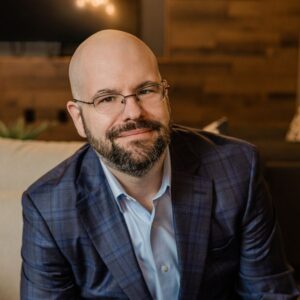
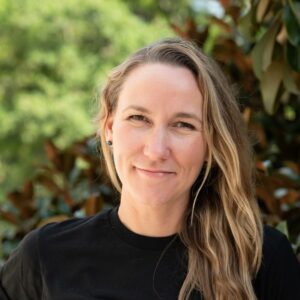
Maddy Roche: Hello everyone. Welcome to Childfree Life by Design. Today we’re talking about the launch of Childfree Trust®, the first nationwide professional fiduciary solution for all estate planning needs, including medical power of attorney. And we’re gonna be discussing what it means for people who are building a Childfree life on their own terms. I’m Maddy Roche, and I’m here with Dr. Jay Zigmont. And in this episode we’ll be covering a few things.
First, we’ll be tackling why relying on friends and family for estate planning roles is not the recommended option. We’ll talk about what really happens if you don’t have crucial documents like financial or medical power of attorney in place, and we’ll talk about how Childfree Trust can assist in those roles and what makes it different from other existing trust companies. If ever wondered who will act on your behalf when you can’t, this conversation will give you the clarity and the tools to make intentional decisions that support the life that you want.
Dr. J, you’ve been working on this for a long time, and we know getting people to do estate planning is always challenging. Could you give us just a little bit of background about what this took to roll out Childfree trust?
Intro: From Childfree Insights, this is Childfree Life By Design, the go-to resource for building the Childfree life you want. Every episode gives you practical guidance, clear direction, and meaningful conversations to help you live intentionally and design a future on your terms. This podcast is for educational and entertainment purposes only. Please consult your advisor before implementing any ideas heard on this podcast.
Dr. Jay: Yeah, it’s interesting. Childfree Wealth® has been around, I dunno, four or four and a half years, something like. And about a year into that, I started running into clients going, but who makes decisions for me? And I’m like, I don’t know. Didn’t know the answer. This one was not in the financial literature. I started researching this, and what I found was that estate planning attorneys can do it, but, they often don’t want to, and they don’t wanna do the medical part. In California or Arizona, you appointed professional fiduciary. In other areas, trust company can do it, but only if you have a lot of money.
I had a client with millions of dollars and we tried figuring it out. They were in Texas, not a one of the attorneys would touch the medical part, just wouldn’t do it. So I went out and talked to everybody. So I spent the last three and a half years trying to figure out a solution. I talked to every trust company I could talk to, every estate plan attorney, every group I could find, and nobody had an answer. And to be perfectly transparent, I wanted somebody to say, oh, I have the answer and I can just send all my there. And since nobody had the answer, we had to make one. So we’ve been working on this for years and we’re really excited to say that Childfree Trust is here and ready to serve folks because it’s such a big issue. And there is currently no nationwide solution.
Maddy Roche: And audience members, we’re talking about the nationwide solution to who to list in some of these crucial roles like medical and financial power of attorney, executor and trustee. There’s a number of different places you can go to get your documents created, but it’s the question of who will really step in and make decisions on your behalf when you can’t. So Jay, I think it’d be helpful for the audience to hear from your perspective, what these roles really are and what they entail.
Dr. Jay: Yeah. So when people think about estate planning, they often think about their will and like, what happens after you die? And let’s be transparent, I want my stuff to go where I want it to go, but I’m dead. I don’t know that I worry as much about it. It’s who’s gonna make decisions for me when I’m alive that really worries me. ’cause what’s actually happening is in your estate planning documents you’re outlining who makes decisions when you can’t either because you’re disabled while living or after you pass.
The will is the one people know, that’s what happens to your stuff after you die. The executor does that and you have to point somebody to make sure, like your house is cleaned out, your animal goes to the right person, your money goes to your charity, your friend, your nephews, whatever else it is. But that’s somewhat easy to find a solution for. The harder ones are this medical power attorney, financial power attorney, which is who makes the decisions for you while you’re alive.
So the example I like to use, if my wife and I are in a car crash, who makes our medical decisions, who makes our financial decisions, and who lets her dog out. Which my wife swears, she’s not gonna be worried about the dog than me, but I know the truth that she’s gonna be worried about who’s letting Cole out. And that’s the type of roles that the estate planning system has always assumed you have a next of kin to do. You have kids, it’s gonna do it. We don’t, and if you don’t appoint somebody in those roles, the government is gonna have to step in to make decisions for you. So you need to create the documents to say, these are my wishes and these are the people that I want to carry those out.
We recently finished a study looking at this. We asked Childfree folks, do you have a will? And less than 20% did, which sounds really low, and it is. In general population in the whole Us, it’s 30%. So we’re not that far behind, but we are behind. And what you find is the number one reason why people get the paperwork done, is because they have kids, but we’re not gonna do that. So we have to figure out, who’s gonna make sure our long-term care plan is executed? Who’s gonna make sure my wishes are done and we have to get that paperwork done? And turns out the vast majority of us have not done it.
Maddy Roche: You’ve brought up so many things that I think we all take for granted that keeps us from getting some of these documents done and it’s some of those thoughts around where our animals are and who takes care of them. And I think so many people are always thinking about death as being the reason for these documents. But there’s so many different scenarios that could play out where you might need a professional to act on your behalf. Could you talk about some of those different scenarios a bit more in detail in terms of when someone may need this for a temporary period of time.
Dr. Jay: Sure. So if I go back to my car crash example, I was a paramedic for years and there are many times you get a car crash, somebody’s unconscious, they can’t talk. We have to go to their paperwork and say, okay, who’s gonna make this decisions for them? And just so you know, how the healthcare system works is, if we can’t find a piece of paper, we can’t find a contact. The paramedic or the healthcare provider just makes whatever they think the best choice is. Which is usually good, it’s just a matter of it may not match your wishes. Then what they’ll try to do is find a family member or next of kin to make decisions while you’re unconscious or disoriented or whatever else it may be.
So this is somebody who steps in only when you can’t make decisions. When you’re good, you’re good. This is not somebody who’s handling all of your medical decisions. It is just when you cannot. Now, if we follow that medical example, my wife and I are in the car crash. We can’t make our decisions. We need to make sure that the hospital gets a copy of our paperwork and that knows who’s gonna make the decision for us and then calls our pet sitter to let our dog out. These are the types of things you don’t necessarily think about, but it can happen to any of us. People go, well, I’m not old enough to do it. I’m like, you can get in a car crash tomorrow at any time. It can also be, you have a stroke or long-term care or a lot of other reasons. But the medical things tend to push, then we need to act as medical power attorney and financial power attorney because if we’re in a hospital for a while, who’s paying the rent, who’s keeping the lights on, and who’s making sure all of your financial stuff are taken care of. It all is part of that package.
Maddy Roche: And you may actually have someone, your life who you’d like to make decisions for you, but unless it’s down on paper, there’s nothing the medical facility can do. Right.
Dr. Jay: Yeah, and it’s a big issue for people that are not married. So this is one of those folk when people ask me like, Hey, I’m Childfree, should I get married? And my joking answer is, well, do you need healthcare? Because that’s the number one reason why I see people getting married besides love or whatever they wanna do it. And what happens is marriage does check a box. Your spouse can usually do most of the decisions for you. I said most, not all, because it’s not a blanket thing. Well, if you’re not married, that person has no rights to make decisions for you. They’re not on a piece of paper.
My wife is gonna make my first round of decisions, but if she can’t, who’s the next backup? Well, if we weren’t married, I would need that piece of paper. If you’re single with no kids, the hospitals are lost. They’ll find my mother or whatever. Listen, your mother should not be your power of attorney, that’s going the wrong direction. You are your power of attorney for your mother. The age just doesn’t work in your favor, but you could always list them first, and if they can’t be found, you keep going. But if you don’t have to paperwork, you’re at the whims of the healthcare organization and ultimately if you are disabled, you’re just not coming out of that coma or whatever else it is. They will point a court appointed guardian or conservator to make those decisions, and nobody wants that.
Maddy Roche: So Childfree trust, we describe ourselves as a professional fiduciary, and I think a lot of listeners that have listened to you, Dr. Jay for a long time, know what a fiduciary means, but why don’t you tie that word to our service and why it’s so important for our audience members to look for professional fiduciaries when filling these roles?
Dr. Jay: At Childfree Trust, we’ve partnered with independent trust companies to serve as a fiduciary. Now, fiduciary is a weird word, but what it really means is by law, we are required to follow your care documents, your documents, your wishes, and execute in your best interest. We cannot act in our own interest. That’s kind of how it works, the fiduciary is required by law to do this. Now, if you appoint a family member to be your executor or power of attorney. They also are required to be a fiduciary, but they may not even know that. This is when I was like, oh, what are the requirements? How do I have to do this? How do I have to document it? How do I have to work with the courts? It becomes a big burden to ask a friend or family member to do it.
The bonus of working with professional fiduciary is, we’re regulated. So the independent trust company I work with, they’re regulated by the state banking administrator. An independent trust company is a bank that doesn’t take deposits. They have to have huge requirements on how everything is documented, the capital requirements, they have to have millions of dollars in cash hanging around, just in case something bad happens. Have to have insurance, have to have tracking. It’s a huge amount of paperwork. I actually sit on the board of the trust company we work with, and you would be amazed by the amount of paperwork. And when I say paperwork, I mean literally paperwork. There has to be a safe with copies of paper, not electronic files. Everything has to be documented because they have to be able to prove that their act as a fiduciary at all times. If they ever went against that, their charter could be at risk or their business could be at risk.
Maddy Roche: And I think that’s the challenge of appointing an individual, is that yes, you may believe that your parents, if you’re gonna choose your parents to be your medical POA, despite Jay’s recent disclaimer here. Are we sure that your values align with the people that you nominate in these roles, and it become a conflict when maybe there’s a difference in religion or lifestyle. And the question really becomes, if they haven’t been able to maybe honor your life choices while you’re alive, how can you be sure that the people that you’ve selected in these roles will honor your choices at the end. And we see that in some queer relationships. We see that in difference of religion. And remember, these people may ultimately have to make a decision to end your life per your request, and that can be an emotionally draining and pretty heavy experience for someone. So I think a recommendation from both Jay and myself is to always remember what the expectation is in each of these roles and how big of a responsibility it can be.
Dr. Jay: Yeah, and I’ll use an example for my family. So, I’m power of attorney for my parents and my father, wants all the machines the world. He wants the machines to keep him running forever, that’s just his take. My mother is like, pull the plug as fast as possible, pull the plug. And she knows that if my father was appointed as a power of attorney, he’s not gonna follow her wishes. It’s not because he doesn’t love her, doesn’t like her, but he just has a different set of beliefs. And I had a client, to Maddy’s point, they wanted to be cremated, but their whole family, for religious purposes believes in burial. She’s like, my mom’s not gonna follow my wishes. I’m like, that’s why we use a professional.
It’s a double-edged sword. We’ve had people give us feedback where, by paying a professional fiduciary, it’s unemotional. I want somebody following my wishes that just does what I said, which is unemotional. And they go, well, but I want them to care for me. Well, they care for you based on your care documents. And the bonus is if I list my wife, I can list her first. I’m a Childfree trust client, that is what we’ve done. But she can go, you know what, I’m just gonna pass this off to Childfree trust to handle so that she can just be there to be my spouse, and be there to care for me, rather than having to worry about, which form do I have to fill out and how do I have to check this box? You can give family members and others a gift by using professional.
Maddy Roche: At Childfree Trust, we don’t have to be your primary choice, your first choice in any of these roles, but we wanna be your backup and exactly that language that Jay used is language that we’ve used a lot, which is give the gift of having a backup for your individuals. I was recently on a podcast with a financial advisor. I said some people object to having a professional fiduciary who doesn’t know them personally. And she said, well, isn’t that the point? And I thought that that was so excellent because that is exactly the point. So many people would prefer to have someone that maybe doesn’t know them personally, making decisions that you yourself have crafted. And to that point, we’ll dive into what we’ve created at Childfree Trust called Care Plans in just a moment. But we talked a lot about medical and financial power of attorney, Jay, I’d be interested in just hearing some of your experience of what the role of executor and trustee is and why maybe your neighbor shouldn’t be either of those roles for you.
Dr. Jay: So, anyone who’s had to do this for a family member knows how much work it is. I had to do this recently for a family member who passed, and I know what I’m doing, but it still took me three days to find all the stuff I needed to be their executor. It’s hard because, the executor starts with, well, what’s your funeral wishes and how do we get your body from the hospital to the funeral home? And how do we make sure who gets invited? I started with clients a couple days ago and one of ’em was like, I want to be cremated and no party, no nothing. I just want to disappear. And the other one was like, oh no, I want the whole party. I want people in suits, I want people crying. I want seven days of mourning. And that’s all the stuff that happens on top of the financial stuff. What has to go to probate to court? What’s gonna pass through the will? What’s gonna pass through the trust? How do we make sure people get it?
And then we get to pets. And this gets really challenging. So in our documents for Childfree trust, we have built in a pet trust intentionally, because you need to name somebody take care of your pets, but then ideally you leave them some money to take care of it, and you want a trustee to make sure your pet’s actually being taken care of. Because the way it works, if you’re just like, Hey, Jane’s gonna take my dog, I’m gonna give her 10 grand for it. She does not have a legal responsibility to take care of your dog. She could just take the 10 grand and run. Now, hopefully you’ve picked somebody that’s gonna do it right, but with a pet trust, the trustee actually has to make sure of that. It’s all these things you don’t think about that just take a lot of work and time and effort.
Maddy Roche: That’s exactly it. Now we use the slogan, who will make decisions for you when you can’t? And I just wanna be clear with the audience members that yes, our professional fiduciary partner trust company will make decisions on your behalf when you can’t. But ideally, we’re making decisions based on your wishes. And Jay, we’ve created a Childfree trust, a beautiful component to our system called the care document section. And this is where you can list everything from what prescriptions you’re on, to what kind of dog food your dog eats, to where you may want to go or move to if and when you are aging and maybe wanna move into a senior care facility. But Jay, we’ve really made this a comprehensive section and a differentiator in our system from other document creation systems. And I’d be interested in your perspective of why the care documents is so important and how to support audience members moving through that section.
Dr. Jay: Yeah, so you can get your estate paperwork done. You get it place done like free will.com. It gets the piece of paperwork done, it gets signatures on piece of paper, you’re legally covered. The question is A, who makes the decisions for you? Free will, does not help you with that. And B, do they know you well enough to do this? Let me use the medical example to start, so if I appoint my sister as my medical power of attorney, she’s willing to serve in that role. Does she know my natural medical issues? Does she know my current prescriptions, my allergies, everything. I just had surgery a couple weeks ago. I would have a constant running system to keep her up to date. There’s actually a system called Knock Box Next of Kin Box. You can do that. There’s ways you can do it, but you’re cobbling together a system to do it. What we did was create care documents, so we understand that.
So for example, an emergency happens, the hospital calls us, says, Hey, Jane’s in the hospital. We confirm who Jane is, she’s a client. We fax over a copy of your medical power of attorney, we also fax over a copy of your medical care documents. Are you allergic to penicillin or not? Or whatever else it may be because the estate documents are the legal protection, but they don’t fill in the blanks. And people go, well, my doctor knows me. Yeah, but you know what? The hospital that’s calling at three o’clock in the morning, does not. They might have some electronic records or I dunno about you and my luck. I’m gonna be traveling in another state. They won’t know me. We need to get there and we need information. If I keep going on the medical example, I was on a podcast and somebody was explaining to me, he was taking care of his mom as her medical power of attorney. She’s in a nursing home, she’s 90 something years old, and she wants chips. She loves chips, that’s her favorite food. He went to nurses like, Hey, we get her some chips. And I said, no, because her diet is not appropriate. And he’s like, look, she’s 90. Get her the DM chips. This is not gonna hurt her. And his question to me was, who makes sure I get my chips?
And it’s a really good question. Now, you might not literally want chips, but what are the things that bring you joy that you wanna make sure are in your care? We actually encourage people to figure out what should their long-term care plan look like. Now, if you don’t have one, we will follow our default care plan, but the more detail you can give us, the better. And we shift from the medical side over to the pet side. I don’t know about you, but I’ve got a dog that’s got some issues, he’s got allergies to everything. He’s allergic to grass, he’s allergic to certain foods. I have to specify all of that in my care documents to make sure he gets the care he needs on top of who’s going to provide him the care and what does he need? Same with our cat. Our cat Catman, he’s a little bit of a jerk, but here’s how you work with him. Here’s how you don’t get bit. Sounds silly, but that needs to be in the care documents. It’s about so much more than the estate plan. And then you get to the financial side, the things that matter to you there, who gets what, Hey, do you have a great guitar collection, you wanna make sure it goes to the right person. All of that type of stuff goes in your care documents. And the bonus is you can update it anytime. You’re like, you know what? I just got this new medication. Let me add it. Hey, I’m fostering this cat, let me add ’em. You can at any time go in and update that so that if we ever have to step in, we know what you care about and we know what to prioritize.
Maddy Roche: Jay, we received a lot of questions during our webinars and via email around who really will be making those decisions. And we understand that we’ve partnered with a partner trust company, but will they actually be showing up at our door and taking care of us? And how do we really embrace planning for these kind of scenarios? What can people be doing ahead of time to make sure that the people that are taking care of them are the ones that they want?
Dr. Jay: Yeah, let’s be real. Maddy and I are not gonna show up at your house and be the one taking care of you. Just not gonna happen. What’s gonna happen instead is we’re going to engage a team to help. So if you think about the trust company, they have a person they call trust administrator. That’s usually a lawyer or a financial person. It’s approved by the banking administrator to make decisions for you. It’s the quarterback for the team. They’re the ones calling the plays and saying, this is what Jane wants. But then when it comes to actually at your bedside, we’re gonna hire a team to work with you. So for example, there’s folks called Aging Care Managers, if you haven’t heard of them yet, it’s somebody that you need to get to know. Aging care managers, their job, their local people that understand what does it mean to age in your area. For example, they know the care providers in the area. They know the facilities in the area. They know the ins and outs. They’re people that can fight with the insurance company for you. They’re people that can make sure you get your appointments. We had somebody, a great example. They’re like, Hey, I wanted to do a surgery. It’s an elective surgery, but I couldn’t do it because I need to have somebody’s name down as my mercy contact. I need a ride. We’re not literally gonna be the ride, but we will be the name on the piece of paper. But there are people you can leverage, like for example, Aging care managers and medical rides to get you there. There’s a way to build a care team around you, and the more preparation you can do, the better. In the best case, you’ve already met your care manager, you found one. There’s a website called aginglifecare.org. You’ve gotten on their list, you’ve done the look at facilities. You know what you want. We have a whole detailed plan. ’cause the aging care manager will make all of it. And we’re just saying, okay, press play. Let’s do it. If not, we’ll find folks to fill in the blanks. If you wanna age at home, you don’t wanna go to a facility, great. Your Aging care manager helps to put a team together and manage it. These are the types of things we have to build together. One of the silly examples I gave is, if you own a house and need the lawn, mow, we’re not mowing the lawn, but what we’re gonna do is we’re gonna call your landscaper and have them mow the lawn. We need to know who that is. And if you live in a row area in particular, you are going to need to do a little bit more legwork of exactly what I offer care, because there might only be half a dozen caregivers in the entire town. These are the types of things you need to think about. We’ll fill in the blanks where we have to, but the more information you give, the better we can stay towards exactly what you want and just execute on your plan.
Maddy Roche: Jay, you’ve worked with a lot of Childfree people, and I know many of your clients are motivated to keep their eye on the future in terms of what it may be like to age without children, but I know that there are a lot of people that really drag their feet around it and this feeling of procrastination. How do you coach your clients around when they’re young and healthy and spry at 45, thinking about what may happen and how you encourage them to make these relationships early.
Dr. Jay: Yeah, it’s interesting, I get two parts. Either I’m too young or I don’t have enough money to have an estate. And I’m like, yeah, but you can get hit by the bus tomorrow. That’s the unfortunate truth of this. It’s hard because this is not a topic anyone loves talking about. Actually, Bri from the podcast, she talks about it all the time. She loves talking about estate planning. She’s a little weird like that. But most people don’t want to talk about this. And usually what happens is they set up their plan when something’s gone wrong. Either something’s going wrong for them, for a family member or others. They’ve seen what that’s like. We’re trying very hard to encourage folks that, I don’t care what age you are, if you are Childfree, you need to get some paperwork down today. If you have somebody that can do it for you, if you have names, you can use free will.com. Technically they’re one of our commanders, but I would rather you have paperwork down. If you have somebody that can do it, just get the paperwork down. If you don’t have somebody, you don’t have the care Act for each other’s system, that’s where we can step in. I’m on a mission to make sure all Childfree people get the paperwork done, because the alternative is the government. And I don’t care what your political beliefs are. You do not want the government making decisions. I made Maddy watch that movie. I care a lot and I swear it’s still causing nightmares.
Maddy Roche: It is a very scary movie and it is a reality for so many people. And I think you said it earlier that if you’ve been through this once or twice with maybe a loved one, you know what’s on the line. I think those of us who have. Haven’t actually been appointed as someone’s medical power of attorney or executor at any point. We again, take it for granted, assuming that we’ll figure it out when we’re there. But remember, a lot of these things are timely and a lot of these decisions are needed to be made quite quickly. And if you’re not in the emotional position to do that, your care might be delayed. And that’s really where one of the problems that we’re trying to solve. Jay at Childfree Trust, we’ve created a system where Childfree people can create all their legal estate documents. They can nominate us in any of those four roles that you need to be able to identify to complete your documents. And then we have this incredible care plan section that allows you to maintain updated information about yourself. And one of the ways that you’ve made Childfree trust so accessible is through the pricing structure and the pricing model that you’ve put forth in the market. And I’d love to know why you went the way you did and what the pricing is.
Dr. Jay: Yeah, so if you’ve read my book, the Childfree Got Life and Money. I mentioned Childfree Trust in there, and it was talking about Childfree Legacy at the time, different terms and different things. When I wrote the book, so just behind the scenes, you have to write a book 18 months before it comes out. So now it’s two and a half years old. At the time, I thought the only way I’d be able to get this to work is if people could pay like $10,000 a year or more. The going market. If you go to a trust company and say the trust company, Hey, I want you to do this, the answer is 10 K or more a year minimum. I went to a company recently to try to help one of my clients figure out something for their parent, and their minimum was $35,000 a year. I mean, we’re talking about tens of thousands of dollars a year to do this. The problem I have is, I’m a little bit more of a bleeding heart and I want to help and save everybody. Unfortunately, I cannot. There is a limit. What we ended up with at Childfree Trust is you can have the service. It’s 999 a year, so it’s less than a thousand dollars to be protected. That’s 24 7 response. That’s all of your state documents. It is the care documents, it’s all that in place. And then, when you’re actually in power of attorney, others there’s additional charges for hourly services to do that. But it really meant we were able to get it priced somewhere closer to where it’s accessible to most. I say to most ’cause it’s not accessible to everybody. I’m just transparent on that. I couldn’t do it. That was the lowest we could get. There are a couple other things we did to make sure that our people are protected. We have two promises we make.
The first one is our price will not go up by more than the social security cost of living adjustment. Right now, this year, the social security cost of little adjustments is 2.7%. We’re actually not raising our prices this year, but if we did, it’d be by no more than 2.7%. So what that means is, as you age, if you get a raise, we get a raise, but we’re not gonna raise by more than that. So it’s just a way to make sure it’s affordable. It’s affordable to you now, it should be affordable to you in the future. The other thing we did was made a promise that if you’ve been a client for us for at least 24 consecutive months and you weren’t on Medicaid to start, then if you go on Medicaid, which means you run outta assets, you have no money. We will still make decisions for you. We just won’t bill you. We’ll just cover it. And we did that because we’re are like, well, what happens if I actually truly die with zero? I’m like, we’re still going to make the decisions for you. We’re gonna use your Medicaid dollars, your social security to actually care for you. We’re not gonna pay for your long-term care out of our pocket, we can’t do that. But we will be the ones to make decisions for you to make sure your wishes are followed, even when you can’t afford.
Maddy Roche: And you talked a bit about these minimum prices at other trust companies, and not all of them will be your medical power of attorney, and that’s one of the most important roles as we talked about at the start of this podcast. And we’ve seen the emails and we hear from our audience, folks that have tried to vet these options themselves. And I honor anyone that has tried to figure out this complex puzzle of who can step in because it has been challenging up until this point. There have been experiences of individuals where, yes, you may have the coverage, but the second you don’t have enough assets, you’re kicked off the platform. And that can be really excruciating. And that’s part of why Jay and the team have gone above and beyond to ensure these promises. Jay, any final words before I try to summarize, or three takeaways from this podcast?
Dr. Jay: So I think the one message, if you got nothing else out of this, is you have to get your paperwork done. I’d love if you do it with us, but if not, get it done. I don’t really even care how you get it done, what service you do, you must do it to protect yourself.
Maddy Roche: Okay, I’m gonna try to give this a shot and define our three big takeaways. Childfree Trust is here to serve you, audience members. We are live and ready to take and support your document creation as well as being able to fill those crucial roles for you if needed. And we are a place for those care documents that can allow you to create the plan. Number two, we really are promoting you having a professional fiduciary. And although you may have an individual, we’d love for you to gift that individual a professional fiduciary as a backup to any of the roles that we’ve talked about on today’s episode. And three, as Jay has talked about, having a plan and really trying to define what you want your future to look like is going to protect your best interest long term. Jay, do you think that sums up the three things we talked about today?
Dr. Jay: It does. I think the one thing you missed is it’s a nationwide solution. So wherever you are in the US it works. And if you move states, we can just recreate your documents and move with you.
Maddy Roche: Great. Jay, it’s been a total pleasure to be on with you today. Thank you so much for joining us and listeners, we will be back with another episode of Childfree Life by Design next week.
Speaker 2: You’ve been listening to Childfree Life by Design. Make sure you follow the show. Leave a rating or review and connect with us on social at Childfree Insights. For more resources, guides or upcoming events, visit Childfree insights.com.