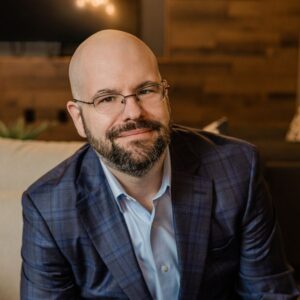
Dr. Jay Zigmont, CFP®: [00:00:00] Welcome to Childfree Life by Design. Today, we’re talking about sociological myths keeping people tied to traditional parenting expectations, and what it means for people who are building a Childfree life on their own terms. I’m Dr. Jay Zigmont. In this episode, I’m joined by Dr. Amy Blackstone. By the way, we are gonna get real on this. I’m gonna trigger warning you here. You put two people that have been studying this together in a room, we’re gonna have fun. I’m gonna tell you right now, Amy’s run out of fucks to give, so she’s going to tell you the real stuff. We’ll be covering the debunked science behind maternal instinct, how dropping teen birth rates are triggering political meltdowns, and why building a Childfree life by design is a form of intentional troublemaking. If you ever wondered why society pushes back so aggressively when you say you don’t want to have kids, or why politicians freak out over shifting birth demographics, this conversation will give you the clarity and tools to make intentional decisions about the life you want.
Intro: From Childfree Insights, this is Childfree Life By Design, the go-to resource for building the childfree life you want. Every [00:01:00] episode gives you practical guidance, clear direction, and meaningful conversations to help you live intentionally and design a future on your terms. This podcast is for educational and entertainment purposes only. Please consult your advisor before implementing any ideas heard on this podcast.
Dr. Jay Zigmont, CFP®: Joining me today is Dr. Amy Blackstone. She’s a public sociologist, and she’s going into retirement or some other word, the next chapter. But she was a professor at the University of Maine and the author of the critically acclaimed book, Childfree by Choice. She’s one of the OGs. She’s been doing this for a lot of years. I’m not gonna try to age her here, but she’s one of the originals. We had Laura Carroll on here a year or so ago. We’ve had a bunch of the people who’ve been doing it forever, and Amy’s one of those. So we’re gonna pull that apart. And she studies everything from reproductive justice and population trends to what happens when people in power get riled up by the shifting demographics. These days, she’s looking forward to future retirement advocacy and intentional troublemaking. [00:02:00] Amy, welcome to the show.
Dr. Amy Blackstone: Thank you. I’m so happy to be here, and it’s so nice, Jay, to actually meet you face-to-face. I know your name and obviously I’m familiar with your book as well, and just really great to be here.
Dr. Jay Zigmont, CFP®: Yeah. We’ve been like in the same circles for quite a while, and this is the first time we’ve actually met, so this is gonna be interesting to see where it goes. But I know you and I, are cut from the same cloth, let’s put it that way.
Dr. Amy Blackstone: Yes, we are.
Dr. Jay Zigmont, CFP®: All right, I gotta start with the fun one. You obviously got the same phone call I did and went a different direction when the Dr. Phil Show called.
Dr. Amy Blackstone: Oh my God, you got the call too. Yeah, I made a different choice.
Dr. Jay Zigmont, CFP®: Context for the audience. So I don’t know when this was. Was it, what, a year and a half ago, a year ago, something like that? I’m driving back from somewhere, and then the Dr. Phil show calls, and I spend 45 minutes talking to the producers about all this stuff. And I actually ended up referring our friends over at the Dinky Pod over to them. A lot of behind-the-scenes stuff, we’re like, “[00:03:00] Yep, just not right for us.” And then I saw Amy go on, and I’m like, “Awesome. You go take this on.” And I kind of bowed out when the message was, “We’re gonna do people without kids versus people with lots of kids.” And it actually worked out to be a pretty good spot, but yeah. Tell me about you deciding to go start up with Dr. Phil.
Dr. Amy Blackstone: Well, I never say no to the opportunity to expose sociology to new audiences. I love preaching the gospel of sociology, so I will always say yes to an opportunity to talk sociology and to present a sociological perspective far and wide. The heart of the Bible Belt is a number one opportunity. I’m gonna say yes to that. My husband Lance is from Texas and knows that region and the cultural and political ethos of that region quite well. And so we also knew that that [00:04:00] was an area that we wanted to share our perspective and our life as what we think of as pretty normal everyday people who’ve opted into a life as non-parents. And give people who may not have seen that side of things a chance to look at it. And we knew that we were exposing ourselves to criticism. We’ve been doing that our whole f*cking lives. We’re 54 years old. And we know that there are many people who’ve done this before us. There are plenty of people who’ve come before us who have blazed the trail and faced a lot harder and harsher critique and stigma than we have. That’s not to say that we haven’t faced our own. I think we knew what we were getting into. And it turned out to be an okay experience actually. It was hilarious. There were parts that were cut that I wish weren’t, but some of my favorite parts did make the cut. For example when I got asked by one of the [00:05:00] parents of many children whether I considered sterilization, mutilization, and I got to say, “No, I just think of it as surgery,” and he was aghast at that response. So, I don’t know that we moved the needle at all in terms of the broader cultural discussion about reproductive justice, which is what I would have loved. But I think maybe what I loved about that day was that there was an entire high school class there from Dallas who was there on a field trip, and maybe there was a student or two there who had never considered that they had the choice about parenthood before they got to the Dr. Phil Show that day. And after that day, they knew that parenthood was an option for them. And that’s the reason that I said yes.
Dr. Jay Zigmont, CFP®: I don’t know. The problem is with those type of shows, you don’t know if you’re being set up or not. You know? So I did one for—
Dr. Amy Blackstone: Oh, I knew we were being set up.
Dr. Jay Zigmont, CFP®: You kinda assume it. I did [00:06:00] one for GB News, which is Fox News of Great Britain. And you do the same thing. One of my favorites there was he asked me, “Well, what do you do to convince people to have kids?” I’m like, “You don’t.” And he’s like, “Okay, thank you very much,” and gone. He kicks me off. I’m like, “All right.” But this is normal.
Dr. Amy Blackstone: I mean, I definitely have regrets about some of my responses. I do that with every interview. I leave and then I’m like, “Oh, this would’ve been better.” But whatever, you learn.
Dr. Jay Zigmont, CFP®: You do. And I think the reality is, so you’ve been researching this area for over a decade, and I think I saw your, your first blog was like 2008-ish. Does that sound right?
Dr. Amy Blackstone: That does sound right. That’s about the time I started studying this stuff.
Dr. Jay Zigmont, CFP®: My belief on this, and I want to check with you, the terms of Childfree and some of that is becoming a little more known. But I think at the political level, it’s gotten a lot worse over the last 18 years. Is that fair?
Dr. Amy Blackstone: I agree with the first part of that. I definitely think we’re more familiar [00:07:00] culturally with the term Childfree. We’re more aware that parenthood is a choice. I don’t know that it’s gotten worse. I think we are definitely more polarized politically in this country across the board on all issues be that parenthood and reproductive rights, those two things alone, and everything else. In terms of the Childfree choice, I think about people like Marsha Drutt Davis, who, you know, came before both of us, has two books about her own choice not to parent, and who lost her job as a substitute teacher after coming out as Childfree on 60 Minutes in the 1970s. And as far as I know, people aren’t losing their jobs today because they’ve opted out of parenthood. So while we still face a lot of stigma and a lot of hostility, that hasn’t happened. And Marsha got death threats in the mail, when she was on [00:08:00] 60 Minutes. I was on the Katie Couric Show in 2013 as a Childfree person, along with others that I shared the stage with then. I didn’t get any death threats in 2013, and I didn’t after the Dr. Phil Show either, which was a much more controversial show than the 2013 episode. So I think we’ve made some progress.
Dr. Jay Zigmont, CFP®: I don’t know. Maybe it’s just the times we’re living in. I did a TEDx talk in Alabama ’cause they hit the demographic cliff. They have more people dying each year than being born. And I’m talking to the speaker behind the scenes, and I said, “I’m gonna get up there and talk about Childfree people and that you can’t change their minds around having kids. And by the way, if you wanna keep the population growing, you have to embrace legal immigration. If that’s your goal.” So I said this, and the speaker looks at me, dead eye, he goes, “Well, did you wear a bulletproof vest?”
Dr. Jay Zigmont, CFP®: Now mind you, the part of the story I didn’t tell you, that was the week Charlie Kirk got shot. So I get up to do my TEDx talk, and I’m halfway through and I, like, froze. And I’m like… I say, I finally said to the audience, I’m like, “Look, I need a minute here. FYI, I’m [00:09:00] nervous. We’re in this political world. I just need to catch myself.” And they were supportive, but I said to my staff, a year or two when all this political world started shifting, I’m like, “Look, I may have to go out and take some bullets for you, you know, and go publicly doing some of these talks because some people don’t feel comfortable doing it.” But I didn’t mean literal bullets. And that’s kind of the challenge. Like, we’re, we’re in a weird world. So maybe you’re right. Maybe the ’70s was worse, but, like, maybe it’s a, maybe it’s a resurgence of some of this BS.
Dr. Amy Blackstone: Okay, now I’m gonna contradict everything I just said and agree with you. Because you’re right. I agree with you that immigration is the solution to our imagined problem in the United States of low population. I don’t really think it’s a problem. But if we think it’s a problem, let’s open up our fucking borders, people. We have an easy solution staring us in the face. And I say this over and over again. Now, I haven’t received death threats, but I say it from the safety [00:10:00] of the state of Maine, which is a generally liberal state politically or libertarian, you know, at the worst. And I say it from the safety of my home that I own, and I say it as an upper middle class white woman who has all of the safety and privileges that come with that. So, I have to rethink everything I said previously about how much better it is for those of us who are Childfree. And you’ve got me rethinking everything I just said after you shared your TEDx story. Because now I’m thinking about the threats that I have received. I mean, I get phone calls all the time about how it’s good that I didn’t have kids because I’m too fat and ugly and blah, blah, blah to have reproduced and I think all of the wrong ways, so my kids would be thinking all the wrong ways. So thank God I didn’t reproduce. You know, All the stuff that’s wrong with me as an individual and all the ways that it’s good that I’m not a parent. I get all that shit.
Dr. Jay Zigmont, CFP®: [00:11:00] Yeah, and you know, It’s interesting, so I do a lot of traveling, conferences, all that. And I was just out in California, and I was talking about some of these Childfree issues. They’re like, “No, there’s no bias with Childfree people.” And I said, “Well, I come from Tennessee, where they just passed a law saying that we have to teach in schools the success sequence, which says you go to school, get married, have kids.” And they just outlawed Pride Month and replaced it with Nuclear Family Month, and specifically defined that as one mom, one dad, and kids. And people are like, “You’re joking, right?” And I’m like, “Nope.”
Dr. Amy Blackstone: I just cannot wrap my brain around how people can, on the one hand, claim that we have this problem of too few people in our nation, and then continually limit our definitions of family. We wanna think about families as this very narrow idea, but we have too few people. But keep all these people who want in out. And also, [00:12:00] only these people can reproduce. But again, we have too few people. I just, I don’t get it.
Dr. Jay Zigmont, CFP®: But that’s the world we’re in. If you look in the comments which by the way, you should never look in the comments of anything you post publicly. But if you look at the comments of my TEDx, they’re talking about, “that means the wrong people are having babies,” and you’re talking about the replacement theory. And I’m like, “Hold up. I did not go there.” That’s not my point. So the argument they’re making politically is they’re correct that if we get to a steady population or decline, which I think we’re gonna do in the next couple of years. If you look at the amount of immigrants that have been removed and they were having a higher, you know, fertility rate, we’re gonna get to a flat population soon. If it’s not in the next year or two, it’ll probably be close. And that will hit the economy and it will hurt it. The number is it’ll drop GDP by about 4%, which will put us in a sustained recession or depression. Well, if you’re making truly the economic argument that we need growth, which I don’t necessarily agree with, that’s a separate discussion. I had somebody actually stop me and say, “Hey, I think about you and your wife, you’re really smart, you need [00:13:00] to have kids.” And then they kept on going like, “We need kids like you.” And I’m like, “What do you mean?” “Nice white Aryan children.” And I’m like, “Whoa.” That is actually the part of this. Is that the case?
Dr. Amy Blackstone: Yes. That’s a huge part of this, and that’s the problem. I don’t know what else to say other than yes. It’s dumbfounding. It’s stupefying. It leaves me speechless.
Dr. Jay Zigmont, CFP®: The fun is, both you and I are researching this, probably from different directions, but we’re researching it and trying to understand this. And when I try to have the conversations with people both inside the community and outside, they look at it from their local lens. Like you were talking about your little Maine lens. And I’m like, “You’re not seeing the bigger worldwide.” If you look at Korea, they actually just recently, a couple weeks ago, maybe a month ago said, “Hey, we’re gonna embrace that people aren’t having kids and start shifting our policies to match it. We’re gonna stop trying to convince them to have kids.” I’m like, “Hallelujah.” By the way, how are you gonna do that? That’s a different question. But I don’t think people see this stuff. Is that [00:14:00] fair?
Dr. Amy Blackstone: It’s very fair. I mean, at least, in the US under our current administration, we’re just living in la-la land. And I don’t think that’s gonna change until we have new elections.
Dr. Jay Zigmont, CFP®: So you’ve been working on this Childfree By Choice for quite a while, and what I’m seeing, and I’m guessing you’re seeing the same, Gen Z is gonna be a huge Childfree population. Are you seeing the same?
Dr. Amy Blackstone: I honestly, I have no idea. I smile because I have so much hope in Gen Z. They seem smart. I love how they seem to be questioning everything that previous generations have done, and we all seem to have fucked up royally, so why not question everything that we’ve done? And yes, they’re talking about the problems that those of us in Western nations have caused with our extraordinarily large carbon [00:15:00] footprints, and the reality that new babies that are born in Western nations have massively exorbitant carbon footprints. So they’re thinking about that in terms of if we’re talking about their intentions with fertility. That doesn’t mean that they’re not planning to ever have kids. They still have many more childbearing years ahead of them, so who knows what they’ll do. But they’re thinking about it in a way that I think no previous generation has. And they’re thinking about their relationship to their working lives and what that means for the rest of their lives. And they want their lives to have meaning, and they’re thinking about that now in their 20s. Some of us didn’t get around to thinking about that until our job said, “We don’t want you anymore.” And then we were forced to think about, oh, what am I doing if I don’t have a job anymore? What does my life mean? I think it’s so cool that they’re doing it now. And to me, what I see them doing is thinking [00:16:00] about what role does parenthood have in my life? And how have others in my life done parenthood? And frankly, probably many in their lives have not done it well. And they’re observing that. So I think the jury is still out on how or whether they will do parenthood, but I think they’ll be fun to watch.
Dr. Jay Zigmont, CFP®: What you’re saying is the key though. They are stopping and thinking before they have kids. And Gen Y started that, let’s be real. The millennials started this trend, which as soon as you pause, there’s a lot there. And there was a NBC News study, so it’s not peer-reviewed or anything, but they looked at top 10 priorities for Gen Z, and having babies was number seven for men and number eight for women, behind financial freedom and independence and big, big goals. There’s just such a shift. As you look generationally, the percentage Childfree keeps growing each generation. My thing is, how is it possible other people aren’t seeing this? I talk about this a lot with [00:17:00] financial folks. I’m like, “Look, about 25% of the US are Childfree, permanently childless.” That’s a rough number. You probably have slightly different numbers. We’re all about in that ballpark. And they go, “Yeah, but how does nobody know about that?” And I’m like, “‘Cause you don’t listen?” Or my favorite, they’ll change their mind. I’m like, “Yeah, uh-huh, definitely.” So I just saw a study came out actually a couple days ago, looking at population growth and fertility rates based on political stance. Did you see that come out? A week ago. It’s really cool. They used the US census data, and they found that far left folks, their fertility rate is much lower than the far right. I’m not really surprised, they were looking at data by decade, and it started probably two decades ago-ish. And they’re going, “That’s part of what’s shifting politically is one side is not having kids and one is.” And I was like, “I never thought of that.”
Dr. Amy Blackstone: I would say that probably aligns with religiosity too, and who gets told to be fruitful and [00:18:00] multiply.
Dr. Jay Zigmont, CFP®: Yeah. You might have missed this one. The Southern Baptist Church put out a statement that we have a problem with willful childlessness. And I’m like, “I don’t even know what that term is, but all right, cool.”
MidRoll: Planning your childfree life means tackling both your finances and your legal future. You need to do two things. First, get your money right with a Childfree Wealth Checkup. Second, protect your estate and your legacy with a customized Childfree Trust®. We’ve made it easy to take control of both with our three-meeting estate planning package. Visit childfreewealth.com now to learn more and book yours today.
Dr. Jay Zigmont, CFP®: So all right. Do you consider yourself an antinatalist?
Dr. Amy Blackstone: I don’t. This could get me in trouble, but I am very strongly in the reproductive justice movement, reproductive rights movement. I believe that women and men and however you identify, your body is yours to do with what [00:19:00] you want, that includes become pregnant and carry a child to term. You have the right to do that if that’s what you want to do. I chose not to do that with my body and that’s my right. No one’s going to tell me it’s not. And I will defend anyone else’s right to not do that. But I also will defend a person’s right to have a child. So that’s where I stand on that issue.
Dr. Jay Zigmont, CFP®: And I’m right there with you. And my thing is, I don’t get a vote in you having kids, you don’t get a vote in me not having kids. That’s it. That’s a personal right. But there’s this assumption that if you’re talking about the Childfree population, you’ve gotta be anti-kids.
Dr. Amy Blackstone: Yeah. Yeah. Now, it’s complicated for me. I am one of those Childfree people who tends to prefer the company of adults. Doesn’t mean I hate kids. I do have some kids in my life that I have relationships with, and there are kids that I’ve just had a connection with that I can’t explain. I grew up babysitting. The story I tell in my book [00:20:00] is that I became a certified babysitter when I was 11 years old, and I spent my teen years babysitting. I nannied through college and grad school. So it’s not like I don’t know how to do that role, and I think I’m really good at it, but kids just aren’t that interesting to me. They don’t know how to hold a conversation.
Dr. Jay Zigmont, CFP®: Well, and my thing is that’s your own choice. I have some neighbors I don’t wanna talk to either. It’s no different. You’re annoying either way, and I don’t wanna be with you.
Dr. Amy Blackstone: And that’s not true of all of them. I have met some five-year-olds that I can hang with. So it’s not every kid. Again, I know this will piss some people off, but that is my truth. And why would you want me to be a parent if that is my truth, frankly?
Dr. Jay Zigmont, CFP®: You know, I was… on LinkedIn, I think it was. I spend a lot of time talking to financial people about Childfree people, ’cause they don’t realize we exist. And somebody was coming at me and I said, “Look, I’m not saying I don’t like kids or you shouldn’t have kids. I’m just saying for people who don’t, you need to serve them differently.” And one of my colleagues, this really smart [00:21:00] answer, she said, “Look, I feel bad that you have to say that, that you have to actually say that, you know, it’s not like I hate kids or hate people having kids.” I’m like, “But it’s, that’s the reality.” And I think that’s the hard part is it’s just this large subsegment of the population that is completely underserved, you know, people don’t even know we exist. And even though, I mean, I don’t know, what is it? International Childfree Day’s been around, what is it? 40 years, something like that, people just don’t know.
Dr. Amy Blackstone: They don’t. And Laura Carroll, another OG in the Childfree world came along long before I did and has a couple books herself. She revitalized International Childfree Day in the early 2000s. So, you know, It’s been around for 40-plus years. Laura revitalized it. And even with all those efforts, to your point, a lot of us in the community know about it, but beyond that, it’s like we just can’t get people to listen to us.
Dr. Jay Zigmont, CFP®: [00:22:00] So it’s either three or four years ago now, for International Childfree Day, I bought a billboard in Times Square, celebrating International Childfree Day.
Dr. Amy Blackstone: Oh my God. I’m sorry, I didn’t know about that. This must’ve been in my long COVID haze.
Dr. Jay Zigmont, CFP®: We’ll link the picture. It’s interesting. So, We said to folks, We said, “Hey, we’re just gonna go to community and like, have people talk about what’s cool about their Childfree life, and then we’ll just rotate it on the billboard.” We actually had a lot of trouble getting people to share their story ’cause they’re like, “I’m Childfree, but there’s a difference between Childfree and Times Square billboard Childfree.” You know? Like, which I don’t blame them. So we did this billboard. It was a really cool effort. It was just fun. Doing a press game with this. We’re getting some great press engagement. I’m on a whole bunch of socials really having a lot of fun. And then about 5:00, it all goes quiet. And I’m like, “What the heck happened?” I mean, crickets. And I flip through. Oh, it was the first time Trump got indicted was that moment on International Childfree day. All right. Our day is over. [00:23:00] Call it a day.” But I did that just so people go, “Huh, that exists? That is what it is?” You know? And I think the hard part is, there’s not companies and others marketing to this group, talking to the group. It just doesn’t exist. Laura Carroll’s been talking about this for years that why isn’t Tide targeting Childfree people? We still buy Tide.
Dr. Amy Blackstone: Yep. Yep. Yeah. Another Do you know about the Saviante?
Dr. Jay Zigmont, CFP®: Oh, yeah.
Dr. Amy Blackstone: Okay. She has done so many great market research studies that show we’re a great market. Hello. But someone will catch on, I think, maybe one day.
Dr. Jay Zigmont, CFP®: So you’ve been researching this for quite a while. Any surprises?
Dr. Amy Blackstone: One of the earliest surprises to me that I’m ashamed to admit was a surprise, but was. When I started my interviews with Childfree people, the majority of [00:24:00] them told me that the reason they were opting out of parenthood was that they watched their parents do it well, and they knew and appreciated how hard it was to parent well, and they just had chosen to do other things with their lives. And I had gone into my research thinking that I was somehow a special Childfree person, because I’d had a good childhood. That I must be unique, that other people must opt out of parenthood because they must have had miserable childhoods. But I didn’t. But other people must have, and that’s why they weren’t wanting to be parents. But lo and behold, no. Many people like me had good childhoods and saw that to be a good parent, you really gotta put some effort in and it takes sacrifice. You have to make choices, and maybe my choice is to put my energy into some other things. [00:25:00] So that was honestly one of the biggest surprises when I started my research.
Dr. Jay Zigmont, CFP®: I was on socials, I’m gonna miss who it was. One of the Childfree influencers was like, somebody said to him, “You don’t understand how hard it is to be a parent.” And their response was, “Yes, I do, and that’s why I didn’t do it.” Yeah.
Dr. Amy Blackstone: That’s not to say that there aren’t plenty of folks who are doing it poorly. That’s a frustration as a Childfree person too. And we have a lot of fun making observations about those parents as Childfree people. But yeah, that was definitely a surprise. And then I was surprised to learn about, I’ve experienced stigma myself, but not nearly to the degree that I learned about as I got into the research. I mean, learning about people who had lost friends, had lost family members, had felt that they’d missed out on job opportunities, et cetera, because they simply chose not to be parents, was a shock to me.
Dr. Jay Zigmont, CFP®: I hear you. I’ve had these discussions with folks because, [00:26:00] You and I both are, let’s call it public figures around this topic. We hear a lot of stories and get a lot of pushback ourselves. And for some folks, that just doesn’t exist in their life. They’re like, “No, my family was cool with it. They were good with it. I don’t have any pushback.” And then there’s others like, “Oh, let me tell you a story.” And you start collecting those, and I don’t know, maybe it’s just geographical, religious, or cultural, whatever else it is. There is a huge difference.
Dr. Amy Blackstone: There is. It’s interesting though, the longer I do this, the more I realize how deeply embedded all of our cultural ideas, both about gender and parenthood are even in me. Because the reason I even embarked on this research to begin with was because I thought there was something wrong with me. I was in my mid-30s and I thought, “What is wrong with me that I’m not feeling this pull toward motherhood that so many of my friends are describing?” And I’m broken as a [00:27:00] woman. And thank God I learned, okay, there’s no research that shows that there’s this maternal instinct that is natural that’s supposed to kick in that’s gonna pull me toward wanting to become a mother, so I’m good there. And then I discovered, oh, there’s all these other people who opt out of parenthood, and this is a normal thing. And that’s cool. But even now, 20 years later, I’m still discovering that I have to check myself when I’m around, say, a group of parents. A few years ago, I went on a trip with 13 mothers to France. It was me and 13 moms. And occasionally, I would have these moments of questioning myself and my sense of am I normal? Because there were so many times when I couldn’t participate in the conversation, and I had no idea what the fuck they were talking about, ’cause they were talking about mothering and parenthood. And again, I think I’m normal, but there’s just a part of the, I guess, human experience that [00:28:00] 75% of the population goes through that I don’t share. And sometimes that makes me question my normalcy. But that doesn’t mean I’m abnormal. Did any of that make sense?
Dr. Jay Zigmont, CFP®: It does. The way I say it is my work in the financial world, I started with the research question of are me and my wife weird?
Dr. Amy Blackstone: Yes.
Dr. Jay Zigmont, CFP®: That was my actual research question. And what I’ve come to find is that my wife and I are weird in the general population. When you take us in the Childfree population, we are dead set normal. And when we work with clients, often what I’m having a conversation with them about is, look, don’t wanna pass the money to the next generation. I want to find work I enjoy or cut back or whatever else. There’s a whole bunch of things that are the same. And they go, “That makes me abnormal or weird.” I’m like, “No. Within the people I serve, you are 100% normal.” You’re comparing against the wrong population.
Dr. Amy Blackstone: That’s perfect. You said that in 30 seconds what I just babbled on about [00:29:00] for five minutes, so thank you.
Dr. Jay Zigmont, CFP®: But it’s just another example of the same thing. And I think the hard part is, I call it the standard life script that says you go to school, get married, have kids, all that fun stuff. If you measure yourself against that, the standard American dream, all that, you will feel wrong, like you’re doing it wrong. And I’m like, “That’s not the right script for you. You need to write your own.” And that’s much harder than following the societal script that says, “This is what you do.” Because, we’ll see if you agree, but I actually argue that Childfree people put more thought into not having kids than parents put into having them.
Dr. Amy Blackstone: I agree. I mean, out of necessity because the standard life script is given to you from the moment you’re born, so you don’t have to think about it if you follow that. In fact, you’re discouraged from thinking about it. So we have to think about it if we veer from it.
Dr. Jay Zigmont, CFP®: Yet we are herd animals and we’re going against the herd.
Dr. Jay Zigmont, CFP®: One of the ones I talk about on the financial side is buying a house is connected to that standard life [00:30:00] script. You gotta be in a certain area for the school system, all that other stuff. Well, that doesn’t match your life as a Childfree person. It’d be like, “Yeah, but my dad says to get ahead I gotta buy a house.” And I’m like, “That’s his script, not yours.”
Dr. Amy Blackstone: How refreshing, Jay. It took us a long time to find a financial advisor that understood that. We have one now who happens to be Childfree himself. But what a wonderful service you’re providing to people. It’s hard to find someone who thinks that way.
Dr. Jay Zigmont, CFP®: I’m gonna take a little bit of a curve ball. So I, I know you’re doing a lot of work talking about your long COVID and some of the challenges that go along with that. And Childfree Wealth®, we do the financial planning. At Childfree Trust®, we’re answering the question of who’s your medical power of attorney? Who makes the financial medical decisions when you can’t? And the system is so broken, ’cause it all assumes you have a family member to care for you, no matter what it is. And for the large percentage of Childfree people that are single, you don’t. You’ve been talking publicly about some of your struggles with this long COVID and all that, and [00:31:00] I think that the medical system’s another great example of a system that was built with this standard script in mind that just falls apart.
Dr. Amy Blackstone: It absolutely does, 1,000%.
Dr. Jay Zigmont, CFP®: Any insight there?
Dr. Amy Blackstone: My only insight is blow it up and start over. There is nothing worth salvaging from my experience of the last six years. I got nothing.
Dr. Jay Zigmont, CFP®: I just recorded a podcast with Jordy Gromme. I’m not sure it’s gonna share before or after this. He talks about his experience as a physician in healthcare, and he’s like, “Yeah, blow it up. Start all over again. It’s all destroyed.”
Dr. Amy Blackstone: Okay, it’s actually a relief to hear that a physician shares that opinion.
Dr. Jay Zigmont, CFP®: I was in healthcare before I got burnt out because it’s all about money. It’s not about the patients. That’s just the reality check.
Dr. Jay Zigmont, CFP®: So I wanna swing back ’cause one question I didn’t ask that I gotta ask. I get this one all the time, and I wanna know what you found. What about regret? What about people who are Childfree regretting the choice?
Dr. Amy Blackstone: This is where the distinction between people who are Childfree and people [00:32:00] who, for lack of a better term, I’ll use childless, is really very important. And you know what I mean, but for folks who may not, what I mean is people who have made the intentional explicit choice not to become parents versus folks who are in the circumstance of non-parenthood but didn’t make that choice. And those folks can come to accept their circumstance of non-parenthood and be very happy in that circumstance. But sometimes, they end up not being happy in that circumstance and feel regret. By and large, what research is available tells us that the folks who have chosen not to be parents do not regret that choice. Even folks who wind up in the circumstance of non-parenthood but didn’t make that choice, by and large end up satisfied at the end of life, even happy. There is a segment of the population of people who end up in the circumstance [00:33:00] of non-parenthood, not by choice, who are not happy at the end of life, more often men than women, and I think that has to do with the fact that men tend to not have strong social networks in old age. There is a segment of childless men in old age who are not happy, and we should pay attention to that. But again, it tends to be older men who did not choose non-parenthood. Does that make sense?
Dr. Jay Zigmont, CFP®: It does. And I’m less scientific in my research. I’m just going by who I’ve talked to and all that. And the reality that I find is you’re 100% right. The childless versus Childfree, completely different segments. In the Childfree, I think I could name one case I’ve ever seen where somebody was like, “Yeah, I wanna change my mind,” or, “I regret it,” or something like that. And it’s very small. The thing that I think people often overlook is if you look at the numbers of what percentage of parents regret having kids, it’s high. I found a study, last one I found was I think it was 18%. That’s huge. And I’d rather regret being Childfree than [00:34:00] regret having a kid ’cause you can’t change one of, you know, it, it’s just kinda how it goes.
Dr. Amy Blackstone: And one thing that gets overlooked there is parenthood is more often not a choice. I mean, most pregnancies are not intentional. I usually have the number off the top of my brain, but it’s getting afternoon time, so my brain is not working as well. But we gotta remember that a lot of pregnancies are accidental. So a lot of parents didn’t necessarily opt into that role intentionally. They just happened into that role. That doesn’t mean they don’t wind up then being very happy as parents, but, there’s a lot of regret there too.
Dr. Jay Zigmont, CFP®: So let’s bring things together. I think if I had to summarize everything we talked about, the answer is you’re not weird. You’re not weird in the Childfree world.
Dr. Amy Blackstone: I can be weird in other ways, and I’m totally happy with it.
Dr. Jay Zigmont, CFP®: When I say for me and my wife, we’re weird. We’re two PhDs sitting around at dinner talking about research studies. That’s weird. She’ll bring a lab notebook to dinner. But you’re not weird in the choice you’ve made. There’s a whole lot of population. And frankly, the data backs [00:35:00] up that people that are Childfree really don’t regret it. And I don’t know if your research, at least my research, they’re pretty much happy. They’re much happier than parents in a lot of cases. And we need to keep working. So, we’ve come to the end of what we’re talking about, and we’ve got a segment we call deliberate detail. It’s a segment where we ask you to share a small intentional thing that you’re doing to design an amazing life. We share what it is, what it matters, and what it costs, if anything. So what are you doing to design a better life?
Dr. Amy Blackstone: What I am doing of late is a lot of nothing. So turning your question on its head a little bit, we’ve talked a little bit about my long COVID experience. I was an early adopter of long COVID. I got sick right out of the gate on my book tour actually, in early 2020, and I’ve been learning a new way of living with chronic illness since that time. And what that has meant for me is learning how to slow [00:36:00] down. It has resulted in the loss of my job very recently, and I have come to embrace being, just chilling, and it’s taken me six years. It has not been an easy process. Meditation has been the key to learning how to do that for me. But truthfully, it’s been a real gift. The art of just being is incredible.
Dr. Jay Zigmont, CFP®: Everybody that I talked to had a medical issue that made them go to that state of just being. Once they get there, they’re happy. But I’m like, “Can’t we do that without having the medical issue first?” But I get you.
Dr. Amy Blackstone: I would love for us to find a way to get there without the trauma.
Dr. Jay Zigmont, CFP®: Well, thank you so much for sharing your insights today. So where can our listeners find you and your work?
Dr. Amy Blackstone: The easiest place is probably my website, amyblackstonephd.com. I’m also on Instagram a.maria.blackstone. That’s what it is. Thank you, Jay.
Dr. Jay Zigmont, CFP®: So that’s all for this episode of Childfree Life By Design. Remember, intentionally choosing to invest in moments of joy is just as important as investing in your future. Until next time, happy designing.
Outro: You’ve been listening to Childfree Life by Design. Make sure you follow the show, leave a rating or review, and connect with us on social @childfreeinsights. For more resources, guides, or upcoming events, visit childfreeinsights.com.