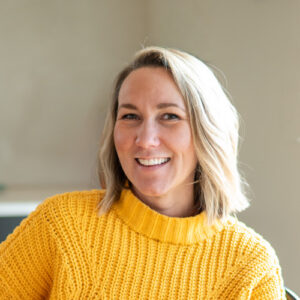
Maddy Roche: [00:00:00] Hello everyone. I am Maddy Roche, I’m one of the hosts of Childfree Life by Design. Last week, we talked about why community matters, what the research says about the impact on our health, our longevity, and our sense of meaning, and why it deserves a seat at the table when you’re designing a Childfree life. Today, we’re picking up right where we left that conversation off. I’m sitting down with four incredible community builders to talk about what makes a community actually work, what to look for when you’re trying to find your people, and introduce you to three different organizations that you may wanna check out.
Intro: From Childfree Insights, this is Childfree Life By Design, the go-to resource for building the childfree life you want. Every episode gives you practical guidance, clear direction, and meaningful conversations to help you live intentionally and design a future on your terms. This podcast is for educational and entertainment purposes only. Please consult your advisor before implementing [00:01:00] any ideas heard on this podcast.
Maddy Roche: Today, I’m joined by four incredible community leaders. Kari Cardinale is part of a team of MEA, the Modern Elder Academy, a transformational science-backed retreat center on a mission to reframe aging and help people thrive in midlife and beyond. Florence Wlodarski is the founder of Parallel Social Club, a membership community and social club built for adults without kids, whether by choice or circumstance, that exists for real friendships and a social life that reflects the season you’re actually in. And last but not least, we have Charlie and Ali Higgins on the team behind DINK Social, the social app built exclusively for Childfree couples to connect, discover events, and build real friendships with Childfree couples. Hello, everyone. It is so nice to see you. It’s a unique day today when we have four guests on one podcast. We’re gonna jam-pack this conversation with as much information as possible, and I feel really lucky to be the one to [00:02:00] interview our great community makers in our space. So Kari, would you mind introducing yourself and your community?
Kari Cardinale: Yes. Thank you so much, Maddy, and hello everyone. It’s such a pleasure to be here. Kari Cardinale. I’m a partner and chief content officer at MEA, which is a midlife wisdom school. Started about eight years ago by a social entrepreneur named Chip Conley, who recognized that midlife is extending, so social scientists now say midlife is 35 to 75, which is crazy, and during that time, we have lots of transitions in our lives, and there’s this desire to build new friendships and explore our lives and do new things. And there are lots of opportunities to explore that in our organization. So we have campuses in Baja, Mexico, 90 minutes north of Cabo San Lucas, and on a beautiful ranch in near Santa [00:03:00] Fe, New Mexico, and a digital campus with classes online, and a very vibrant alumni community that I’ll talk more about today.
Maddy Roche: Fantastic. Thank you, Kari. Charlie Ali would you introducing yourselves and your community?
Charlie & Ali Higgins: So I’m Charlie, and I’m Ali. We co-founded DINK Social. DINK Social is really a platform specifically focused for Childfree couples, so really honing in on the couples phase. We moved out to Amsterdam for our work, and quite literally many of our friends visited us and then decided to have kids, so we really lost the couples connection that we so deeply miss and enjoy traveling and whatnot. And so we looked for a place for it, and we couldn’t find it, so we ended up building an app for it to help create those in-person connections amongst Childfree couples. That’s where we’re focused. We just surpassed 2,500 couples using the app the other day, so really excited about that. Thanks to Ali, we’ve got a pretty neat social platform as well. It’s fairly new. We just started [00:04:00] posting about it online less than a year ago, and we launched the app in January of this year. So the app itself is only about five-ish, almost six months old. So it’s absolutely taken off. It’s been great.
Maddy Roche: Audience members, pull your phone out and start taking some notes and pulling up these websites and getting these apps. What fun. Thank you for sharing. Florence, you are a veteran of this podcast. You’ve been on before. Please introduce yourself and your community.
Florence Wlodarski: Hi, everyone. My name is Florence Wlodarski, coming to you from Los Angeles. I’m the co-founder of Parallel Social Club. We are a social wellness community focused on providing social wellness opportunities for DINKs, SINKs, Childfree, childless, those who aren’t on the parenting journey right now. There are a lot of nuances across the board for those who are in this community. So we welcome both men and women. And we are right now only in Los Angeles, looking to expand to other [00:05:00] cities. We provide in-person social experiences. So we offer 10 events in person in LA at the moment per month. So lots of opportunities for people to connect because just like everybody else on this panel, we all know that finding community is really hard. for those who are on this life path and doing this version of adulthood, that commonality brings people together. And so we are in the world of community building for this community.
Maddy Roche: I am just so impressed because it’s not every day that everyone wakes up and is like, “I’m gonna build a community.” I wish all of us did it, but only so many of us have the courage to, and the resources to, and the thoughtfulness to. So Kari, I’d love to ask you around why was it important to continue to build this community and foster it to you?
Kari Cardinale: Early on as I was working with Chip, the founder, as we [00:06:00] started this program, small groups of people were coming together for a week-long immersion retreat. And what happened is everyone got to know each other from the inside out, which was the best part. So no one actually talked about whether they had kids or didn’t, or what was on their LinkedIn profile, or what their job was. It was just about all the life things that bonded everyone together. And after a week of that deep intensity, everyone wanted to stay together. So we launched an alumni community as a offshoot of this retreat center. So we have now 8,000 alumni from 60 countries who love each other. They love supporting each other. They’ve peeled off into various affinity groups. We have local chapters with volunteer leadership. We have settled on supporting just broad social connections. And I know that a lot of the solo agers have found also good friends within the parents who feel kind of like solo agers as well. [00:07:00] A solidarity of those who are not that close to their kids, or they have some estrangement or whatever it is. Creating this focused space for exploring what’s next in a broad community, and it has been so effective, and I’ve been so astonished to see the hope for humanity that starts to come when you get to meet people from all over that really have the same story that you do, and suddenly you feel like you’re not alone. And I think that is probably what’s underneath all of our desires to build community, is to remind us that we aren’t alone, and that information, that knowingness can change everything.
Maddy Roche: Beautifully said. I don’t think there could be enough communities to serve us all. Florence, from what I know of you, you are a busy lady. Tell me about what prompted you to build this community from the ground up.
Florence Wlodarski: It’s tied to our own story. My husband and I, we met later in life in our 40s, [00:08:00] and once we got married, we had the question of, “Wait, do you want kids? Do I want kids?” We had to ask that question. I was 43 at the time, and I said, I don’t even know, 43, who knows? Because there’s that biology piece, let’s be real. And then we also said, “Well, we really enjoy this lifestyle. We don’t know if we want kids.” Fast-forward once we decided we are going to embrace the DINK life, once we had made that decision and came out of COVID, we looked around and saw that most of our friends were parents, and they were very busy. And although I love my husband, I wanna spend time with other people, too. And we found it really difficult to find others that whose weekends are open. So where do you find those who are living your lifestyle? And so we said we want to find people who are, they’re on this life path, but also that live in LA, that don’t live two hours away. So [00:09:00] we started this community after we gathered some folks, we met some people, and then we realized that there are a lot of friction points in adult friendships. I think we can all agree that friendships in adult life is really hard. Making new friends, maintaining them. By the time you get to a certain age, especially in your, midlife, it gets challenging. Especially if you move, et cetera. So we were looking out to address all of those friction points in adult friendships so that we can optimize the opportunity for people to meet each other, actually make friends, and build a sense of community. Because we can throw the word community around all the time, but there are a lot of friction points to actual getting to feeling community and feeling that sense of belonging. And so we’ve been systematically diagnosing what’s happening in adult friendships. How can we help support this community of people who are [00:10:00] Childfree, who don’t have that built-in social infrastructure? So we decided, let’s build the social infrastructure in real life and make it easy for established professionals who are leading very, very busy lives. That’s one of the reasons why they say, “I’m gonna back burner my social life,” right? How many people do we know where, they’re just busy going to work and the gym, let’s say, and they don’t really prioritize their social life? What we do is we provide all of the events and all of the logistics. We take care of everything for people so that they can just show up and just connect. That’s been something that I’ve been looking at for my life, the challenges that I’ve seen. So we designed Parallel to address all those friction points.
Maddy Roche: If anyone’s watching this podcast, you’ll see all of us nodding to each other in unison, and I suspect our audience may be on their walk nodding and finally feeling and heard and seen in some of the language you guys are all [00:11:00] using. So Ali and Charlie, tell me it’s not every day people wake up and they’re like, “Let’s build what’s missing.” And I applaud all of you for doing it, but what gave you the courage? What made you say you guys are the ones to create it?
Ali & Charlie Higgins: That’s a good question. And I first wanna say it’s so funny, Florence, when you were talking about how you started building Parallel and your path with your partner, I wanted to look at Charlie and she’d be like, It’s the same exact story.” So literally, it’s like I’m in a mirror right now. It’s almost word for word exactly how our journey was. But in terms of why us? I’ll be honest, we’re not special. We were just having dinner one night, and we were just talking about how we hadn’t seen our friends in quite a while. And of course, us moving to Amsterdam makes it even harder, right? Because then we’re also a whole ocean away from all of our friends, whether or not they have kids. And it was actually [00:12:00] Charlie who was like, “Well, let’s see if there’s something out there where we can make more friends. Like, where can we find other Childfree couples? We’ll look online. We’ll see if there’s an app. We’ll see if there’s something so we can connect with others.” And a few days went by, and you had done quite a lot of research to try to see if there was anything out there. And we found a handful of communities that were built for Childfree people. There’s a lot of communities for a single Childfree woman just broader communities, but we really wanted to focus on couples so that we could hang out with couples and travel with them and go out to dinner with them, and whose weekends are free. And I just remember Charlie one day goes, “You know what? I’m gonna build it. I know someone else is out there looking for this exact thing.” So I said, “All right. Let’s start talking about it. Let’s start posting on social media, and let’s see what happens.” And that’s when we realized we were onto something. We hadn’t built anything. I just started posting on social media and was like, “Hey, we’re Charlie and Ali. We’re thinking of building [00:13:00] this community, DINK Social. We’re looking for other DINKs.” And it just absolutely popped off on social media, and that’s when we thought, “Oh my gosh, okay. Go, go, go. Everyone is looking for this. It’s really not just us.” And that lit a bit of a fire I would say under us to realize this is really needed. I think the numbers also speak for themselves with how many folks are a part of the community. It’s great.
Maddy Roche: If you build it, they will come, right? Because our podcast is all about being Childfree and designing a life with intention around that, why was it important to build a community for Childfree people? And did you hit any barriers in terms of it being an exclusive community to that? And correct me if I’m wrong if any of you guys do let parents into your communities. Florence, I’ll ask you first.
Florence Wlodarski: I think it was important because, first of all, It originated from a personal necessity, just like Charlie and Ali. James and I were looking around saying all our friends have kids, because we’re in our 40s. And even though we’re in a large city like Los Angeles, where there are millions of [00:14:00] people, it was still difficult to find them. And we wanted our weekends to be full of travel and dining out and all those things. So we built it because of personal necessity, but what we quickly learned was that there were a lot of people out there that were looking for the same thing. But at the same time, they didn’t necessarily identify as Childfree or DINKS or childless. They didn’t even know the terms. When I would say DINK, they would just laugh and say, “What is that, pickleball?” What I found in talking to different people and building community here in Los Angeles was there are a lot of people who don’t know what they don’t know. They didn’t even know that this kind of community exists because, well, it didn’t, but they didn’t know that they had a need for it. But once they learned about it, the light bulb moment saying, “Wow, I didn’t even know that there are people that I get to hang out with that are having a similar shared life experience.” And I’ll quote one of our members who is single. She’s an [00:15:00] attorney. She’s in her 40s, and all her friends had kids. And she just thought, “Well, I’m the single girl in the group.” She somehow came upon us, learned about us, came to an event, and then I posted about this on our social media, but four months later, she contacted me and said, “This community has been a game changer.” And she used that word because for her, she was the only person she knew that didn’t have kids. People at work, people in her social circles, people at her gym, they were all in a different version of adulthood in their 40s than her. And so she didn’t even know that the types of conversations she could have could be this refreshing. So I’m sure Charlie and Ali and Kari, you’ve all experienced this as you’ve been building your communities. But what’s really neat is that we’re building something that people are now recognizing is something that is refreshing, something that is nourishing, and something that they didn’t even know they needed. But [00:16:00] once they experienced it, then they were saying, “Okay, now this is it.” So I think it’s really important for us to identify the gaps, and I think all of us have identified that through personal stories. And then we were able to see what’s going on in the marketplace. And providing a service and a platform for those who need it, and those who will soon discover that they need it.
Maddy Roche: Kari, why was it important to narrow your audience to who you did?
Kari Cardinale: Our community have been very interesting in that they are self-selecting into various affinity groups. And so solo agers, couples without kids are organizing as well as LGBTQ+ and Third Act and love and romance and caregivers. It’s very interesting to see that need for finding folks who are on a similar path. And certainly what we found is that those who are moving through this midlife stage without [00:17:00] kids, that there’s a new phenomenon with a lot of adults with kids now, that it’s a much more consuming world than it was when we were growing up. That most of us were latchkey kids, and our parents were barely paying attention to us at all. And by the time we were 18, we were on our own, and somehow we could keep an apartment and a car payment by waiting tables. But what happened to that? So it’s a very different world now that adults with kids and adult kids are consumed because it’s so much more demanding to be focusing on kids for a lot longer that I have been focusing on this final decade of 18 to 28 years old is still very consuming for a lot of adults, which would’ve been the time that there would’ve been a little bit more spaciousness. So that’s one thing. But I think the other that, from our world is we have found that people are really starved for authentic conversations. And we [00:18:00] have structured opportunities to allow us to go a little bit deeper, that’s where those connections can really form. And sometimes it’s with that third tier, that when you meet folks that aren’t in your inner circle, you’re able to talk more about what’s going on in your life. And we were given an interesting example of this from Aaron Taylor, who’s a professional football player, and he did a lot of work with athletes who retired from professional sports, who found a cliff of identity loss and friendships, and they may not have had kids, and really struggling with what to do next. And he said, what he recognizes, a lot of us get stuck in these surface level conversations. When you first meet people, even in a community environment, the first question is often, “What do you do?” We live in that world of what do you do? So we’re just rattling off the facts about our lives. I work here, and I’m from here, and I love this sport, and facts, there’s that. And then he calls it the [00:19:00] second vault, like going down a little bit, would be the stories of our life. Well, I live in Los Angeles, and I started this new community, and we have 10 groups a month, and I had this thing. The stories that we tell, and most of us stay there most of the time, but as we get older, there’s this desire to go to what he calls is the third vault. Like, how are you doing as a human? And to feel that capacity to be vulnerable and have those conversations, that’s what’s so nourishing to us, is to have the opportunity to drop in a little deeper than just the day-to-day stories, ’cause that can get tiring after a while. So I’m very curious to hear how Charlie and Ali and Florence have seen that opportunity emerge for those really deeper connections to come through, and the result of having that. ‘Cause for us, it has been an utter game changer.
Midroll: Don’t let the conversation stop here. Get inspiration, quick [00:20:00] tips, and behind-the-scenes content tailored for the Childfree life by following us on social media. We’re most active on Facebook and LinkedIn, just search for Childfree Insights. And for our deepest dives and event invites, make sure you join the inner circle by signing up for our weekly newsletter at childfreeinsights.com.
Maddy Roche: Thank you for that. And Ali and Charlie, I wanna switch the script from my original question really to Kari’s question, is what are you hearing from your community members right now about why this is important?
Ali & Charlie Higgins: It’s funny, I was just thinking about something that happened this past weekend because we met with a DINK couple here in Amsterdam. And they’re also expats like us, so they’re from, I believe, India. But they’ve been in the Netherlands for quite a while, and they’ve obviously chosen to be Childfree. And we were chatting a lot about being Childfree, their decision-making process, what’s the hard part about making this [00:21:00] decision? Were there easy things? What experiences has it opened up for them in terms of their lives? They love to travel, so we talked about all this. And at the end of the conversation they actually said to us, they’ve almost felt like there was a bit of a weight off their shoulders in a sense where they never really openly talked about it. It’s not fully accepted in their family, so they don’t ever openly talk about this decision and how great it is and how they’re building their lives. And then they also don’t have any DINK friends, although their friends also have kids. So they haven’t been having these conversations with anyone, and they said, “I think we were the first people that they truly opened up and talked about this process.” And that to me it was a little bit more of a similar conversation that I’ve had with many people and what we talk about on social media often. But I didn’t realize how important the conversation is and finding another couple or just [00:22:00] people or community to talk about this with, and just open up about it. And they hadn’t been able to do that. So that was really cool. Our community, it’s very much community driven. So what that means is all of our events are created by DINKs who are in the app. So for example, we have a couple in Atlanta that likes to put on events, and Chicago, and Charlotte, and New York, and really all over. Anyone can create their own event. It could be something like, “Hey, we’re gonna go have a picnic in the park. Bring your dog. Let’s go. Let’s all meet up,” or, “We’re going to this brewery.” So it’s very low effort, I guess I’d say. Just show up. Chat with people, have a drink, take a walk, do what you wanna do. We do hear a lot from those events again, on just how needed it is and how they didn’t realize, wow, there are so many people in my neighborhood, right near me, that I would have never met. And I think that’s the other cool thing is Charlie and [00:23:00] I, we have all of our friends and we’ve had a little bit of blinders. Florence, I think you were the one that was talking about it, it’s like work, work out, go to sleep, feed the dogs. It’s the same thing. So having this community, we’ve also had a lot of couples that come and travel through Amsterdam. They reach out to us and they’re like, “Hey, we’re in Amsterdam. Do you wanna grab coffee? Do you wanna get a drink?” And we’re like, “Yes, absolutely.” So we’ve also just met people traveling through here that I said to Charlie, “We would have never come across this couple in our life.” And the amount of things that we have in common, like I went to the same college as two different people from two different couples, and it was just like how? What? So it’s not only just having the same identity of being Childfree, whether by choice or by circumstance, whatever it is for them, but then you have these conversations. It’s like, “Oh my gosh, us too. I did that. We like to do that.” And so it just opens up this whole new door for us. It’s been really great to see so far.
Maddy Roche: I appreciate hearing that because I’ve experienced that in my own life, how [00:24:00] much I crave to be able to talk about being Childfree. Just the way my friends who are parents crave to be able to talk about being parents. It’s a whole identity of mine, and it’s a whole part of my life, and it’s one of my favorite things to riff with people on. Florence, I’m sure you’ve got commentary on what our lovely other guests have said. Thoughts from you?
Florence Wlodarski: Kari, you had said that you talked about the vaults and the level of depth. What I have observed from our community, the first year we were bringing people together for some things. Let’s go and explore the city, go have dinner, go on a hike, go to a baseball game all the fun things that people would wanna do and build social connections while enjoying this robust social life. And then the second year, we heard from our community, and they said, “We wanna go deeper.” It’s really fun to go out and meet people and then, follow up with them, go out on our own to have dinner to get to know them better. But we wanna have real conversations, and so we started a program called Parallel Commons. Parallel Circles is [00:25:00] around where we bring people together around similar interests. So if they like hiking, if they like travel, there’s Parallel Book Club. Those are circles. Parallel Commons, we decided that to address that need that everyone here has been talking about, that need to talk about things that are just life, shared experiences. And so, we’re bringing people together based on a common shared experience, such as career transitions. There are a lot of people in our group that said, “I wanna leave corporate life. I’m scared to do it, but I wanna design my life. But can I talk to other people who’ve done it, who are also Childfree?” Because that adds a different element, right? So we’re basically playing matchmaker and bringing people together so that in small circles, they can actually have intimate, real, honest conversations around that experience. Here’s another topic that we’re doing, navigating aging parents. And people said, “I wanna meet others who are [00:26:00] navigating that. We’re not the sandwich generation because we don’t have kids underneath it, but it’s overwhelming. There’s a lot we need to think about.” And so they wanted to meet other people who are going through that life experience. So the fact that people want that and observing that people want deeper conversations, the entry point is a social outing. And then what people really want is to go deep, and they want real connections. And I think if we study human relationships and friendship science, if there is one, it’s all about — roofing on commonalities and a common shared experience. That creates a bonding experience. And so I think it’s been really great to witness people having conversations about real-life stuff because I know that that is actually creating the bonds to help them actually make real friends. That’s another thing that I think all of our communities, if we can do [00:27:00] more of to create those opportunities for people to connect in this digital age, in the age of AI, the more people that are out there that are helping facilitate shared experiences, I think the better we’ll all be.
Maddy Roche: Now, I think anyone listening to this podcast would agree with that statement, but I do wanna speak on behalf of, I’m an extrovert, and I think we all are extroverts on this call. But any of our introvert listeners who might be cringing at the idea of needing to do that on their own, Kari, can you talk a bit about what does it take even for an introvert to come into an organization like yours and a community like yours to get the most out of it? Like, what tips do you have, and how can they navigate what comes easy to some people but is objectively quite hard, which is meeting strangers?
Kari Cardinale: Well, spoiler alert, I do identify as an introvert. I can bring it on, and I’m a teacher, and I am a leader, but my battery runs out. And my worst nightmare was [00:28:00] going to those social networking social things where you have your lanyard and your cocktail, and I’m 6’1″, and I just felt like the scarecrow. And I would go hide in the corner and at least find one person that I could corner for the conversation. So I empathize all you introverts out there that going to social gatherings with a lot of people you don’t know and trying to get into those deeper conversations is indeed challenging. And so I love, Florence, you were offering sort of affinities around things. I like hiking. I like a book club. I like a supper club. I do feel like most people are similar, that we love dinner table sized things, a supper club, a small group of people, that’s manageable, bite-size, and you have enough time to connect with each other. And how to make those types of opportunities more available is absolutely the trend, that you’re seeing this more and more and more. Even local restaurants and bars that are [00:29:00] creating snackable talks and bringing folks together, game nights, and bringing out Mahjong, and all these things, because I think that’s what we’re used to. We used to have meals together all the time. You guys are in Europe. You certainly see a lot more of that than the States, which is just take out our food, eat on the run. There’s no time. There’s no tables outside. People don’t sit on their front porch anymore. We’ve removed a lot of those really fundamental opportunities for conversation. And I wanted to pick up something that you were sharing, Florence, that in our research, the social science around longevity and aging. So yes, taking care of aging parents, ’cause we are living longer, and our parents are living longer, and the cost of caring for our parents is high. And we’re in a culture where we don’t live with our parents, they live in a different city, and it’s become very expensive and complicated. Caregiving is enormously expensive and draining. And here’s an interesting factoid for [00:30:00] everybody, that there’s a study at Harvard called the Harvard Study of Adult Development, and it has been in play for 80 years. And we have had three directors, JFK was actually in it early on, studying humans throughout their lifetime. And what they have discovered now, after many, many years of tracking many different people, is there are certain factors that lead to a long life. And actually, exercise has nothing to do with it. And what you put in your mouth to eat has nothing to do with it. And whether you have wine or cocktails has nothing to do with it. But what does, the one thing that contributes to a long life, is the quality of your friendships in midlife, in your 40s and 50s. The quality of the friendships you build at that stage provides all of these reverberating benefits to living a long life. Now, if that’s not something to be excited about and to be hopeful about, [00:31:00] then I don’t know what is. You can have your coffee and have your donuts and have your glass of wine. It’s okay. Just do it with others, and sit down at a cafe while you’re doing it.
Florence Wlodarski: [Nods]
Maddy Roche: Thank you. I go to aging conferences a lot, and they do talk about chronic loneliness as being worse than smoking 20 cigarettes a day and all these things. It really is incredible. So, Florence, I’m interested in your advice to anyone who might feel a little outside their comfort zone when getting involved in your community.
Florence Wlodarski: I just say show up and take a risk, but choose wisely. Because I know that people can choose different things and say, “I’m gonna go to these 10 things,” and then it is such a bad experience that then they retreat and stay home. And I say choose wisely. The interesting thing, when we first started building Parallel, we thought we’d get a lot of extroverts because it’s a social club. People wanna be out with people. Actually, most of our members, the majority, more than 50%, are introverts. And almost all of them, except some of the [00:32:00] couples, even with the couples, only one side of the couple is a member. Because the other side is busy or traveling for work, et cetera. But people would show up solo. The one common theme that I’ve seen amongst the introverts who are showing up solo, who are actually taking action, being proactive, first of all, applying, going through a Zoom chat, and then clicking on the link to create a member profile on our app and showing up to their first event, that’s a lot of effort. For introverts, that sounds ah, right? But for the introverts out there, if I can share with you real-life stories, we have so many people who have done just that because they’re in a phase of life where they’re saying yes. They’re saying yes to more things. They know that they need to go put themselves out there, and there is a reward at the end. So there are people out there who’ve tried so many different kinds of social clubs, and some are a part of two or three different platforms to try to meet people. We keep [00:33:00] our events, we have 10 per month. They’re designed to be small because we keep in mind our membership who are introverts. That social battery will run out fast, and they won’t want to come to more than one or two event if there are 50, 60, 80 people at each event and it’s a big happy hour. No. So each dinner, hike, wine tasting, whatever experience we put together, we’ve got between six to 12 people who show up so they can actually get to know each other. And that’s how it’s structurally designed because we know that’s another friction point. Just that fear of getting into a room and having to, ugh, network. Not networking. This is just all personal and social. So if people are good with showing up to something where it’s just a couple people and they’re vetted, there are commonalities, I would say to those introverts, go find those groups in your cities, or if there isn’t a group, at least join an online community. That’s better than nothing, right? But I think it just takes those steps of in your [00:34:00] mind saying, “You know what? I’m just gonna try.” But like I said earlier, trying and being selective. You can optimize your experiences to have, make sure it’s a good experience.
Maddy Roche: Really good advice. Charlie and Ali, any commentary from you around how to get the most out of it?
Ali & Charlie Higgins: I would say we’re all probably very similar. I think the unique thing about our focus is it is truly couples based. We love doing things together. We wanna do things with other people together. And that could be having conversation, that could be traveling to their country. So it could be a mix of anything. And I think the one thing that we’ve realized, especially specific to DINK’s, is you’re three times more likely to move and you travel a lot. And so friendship maybe plays a different form, depending upon what you’re looking for. I mean, we would love local friends, but we would love also to have friends that we meet up with and maybe we see once a year. And so I think, for the introverts, especially out there, Ali’s a bit more social than I am. I’m a bit more introverted, except for maybe work purposes. But I’m comfortable when I’m with her, and so it’s easy for us to show up at these places and just [00:35:00] see what turns out. For us, there’s a bit of comfort in some of our users that they’re going with somebody. So our events purely are couples based. I don’t know that we’ve had a solo person show up because their partner was not available yet. The only other little thing for us is because we are an app, it is online first, right? We don’t really showcase our events just widely for anyone. You have to be in the app in order to RSVP to go to them. Some of our DINK couples actually host events at their house. So of course we’re not sharing any addresses widely. But I think that’s another thing is you can see who’s going, and you can look at their couple’s profile. So already going into the event, you’re like, “Okay, I know, Joe and Susan like pickleball and they like reading and they like playing. Okay, We’re gonna vibe with them probably.” The way the profiles are set up, you could see what you vibe with, so based off what your couple interests are and what the other couple’s interests. For the folks that like to feel prepared, like myself, before meeting someone, you can do your stalking. And you know a little bit about the folks that you’re gonna be meeting with, so [00:36:00] it’s not just blind. Do they have dogs? So that’s the first thing I look at, I’m like, let me see their pets,” and I can get to know their pets’ names and everything about them before I meet them. But I think that also makes it a little bit more comfortable so you can already know the folks that you’re gonna be meeting in advance.
Maddy Roche: We really should have had a four-hour podcast, folks. We wouldn’t have even just been scratching the surface at four hours. But I must wrap this up. And with that, I would love for each of you guys just to let us know where to find more information about each of your communities. Charlie and Ali, where can we find you?
Ali & Charlie Higgins: You can find us on Instagram and on TikTok, all the socials, just @DINKsocial. And we post a lot about the Childfree Life, but also a lot about the app and the community. And then of course, just DINKsocial.com has more information about the community, what you can expect, how you can download the app, the whole process of onboarding and everything. So if you type in DINK Social anywhere, we will pop up and you can learn more about us. It’s in the iOS and Android, so easy to just go straight to those stores too.
Maddy Roche: Okay, great. Florence, [00:37:00] how about you?
Florence Wlodarski: We’re on parallelsocialclub.com, and we are also on Instagram as Parallel Social Club. And our app, just like Charlie and Ali it’s for members only, so you can’t check that out. But you can go on our website and get a sense for what that looks like. So Instagram and website.
Maddy Roche: Great. Kari, how about you?
Kari Cardinale: You can find the MEA Wisdom School at meawisdom.com. And we are also on Instagram and Facebook and LinkedIn, and have lots of free events and opportunities to explore all the topics we talked about today of navigating midlife.
Maddy Roche: Okay, it’s my job to sum up three major lessons from this podcast. The hardest part of the podcast, of course. But with this one I think it’s quite easy. I think the first one I was writing down is that the world is different than it was even just 20, 10 years ago. And we do need to be intentional as we build community, and I applaud all of you for building communities. I think the second point is that loneliness as we age, and even when we are young, is a real problem. [00:38:00] And people are building communities like these four incredible people with really low stakes to entry and making it easy to come and be social. So, look for these opportunities. And three, I think it’s if you build it, they come, right? If you see a need and there’s a reason to get people together, go ahead and do it. It takes people like us to do that. And with that, I think we’re gonna end our podcast, folks. That’s all for this episode of Childfree Life by Design. Remember, intentionally choosing to invest in moments of joy is just as important as investing in your future. Until next time, happy designing.
Outro: You’ve been listening to Childfree Life by Design. Make sure you follow the show, leave a rating or review, and connect with us on social @childfreeinsights. For more resources, guides, or upcoming events, visit childfreeinsights.com.