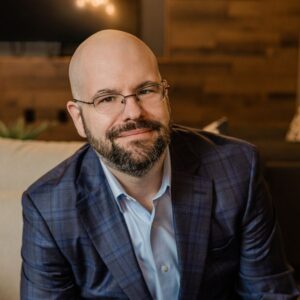
Dr. Jay Zigmont, CFP®: Welcome to Childfree Life By Design. Today, we’re talking about navigating aging solo and building a secure future without kids or family caregivers, and what it means for people who are building a Childfree life on their own terms. I’m Dr. Jay Zigmont, and in this episode, I’m joined by Carol Marak. We’re covering how to assess your top aging risks, how to shift your mindset from problem-solving to possibility thinking, and the tools you need to design an independent roadmap for your later years. If you’ve ever wondered who would care for you when you’re older if you don’t have children or a spouse, this conversation will give you the clarity and tools to make the intentional decisions that support the life you want.
Intro: From Childfree Insights, this is Childfree Life By Design, the go-to resource for building the Childfree life you want. Every episode gives you practical guidance, clear direction, and meaningful conversations to help you live intentionally and design a future on your terms. This podcast is for educational and entertainment purposes only. Please consult your advisor before implementing any ideas heard on this podcast.
Dr. Jay Zigmont, CFP®: Carol, I’ve known you for a little bit here and I’ve seen you everywhere. You’ve been around forever. You’ve got a bunch of books on this. You run one of the Facebook groups. In your words, who are you?
Carol Marak: Let’s see. Well, I’m aging alone. I’ve been on this mission to, not only help myself prepare, but to help others plan how to live safely and securely alone without relying on the traditional support systems that some of us are fortunate to have, and others aren’t, like me, and I think you too. So, that’s who I am. I was a family caregiver many, many years ago. And from that experience, it really, really scared me, because I realized, oh my gosh, that’s a lot of work. Who’s gonna do that for me? My parents were fortunate to have three loving daughters who looked out for them. And I don’t. I have no one. So here I am. I’m moving right along. I put a lot of thought and planning into my own independence and relying on myself. And I’m pretty happy. So far so good.
Dr. Jay Zigmont, CFP®: I was reading an article recently and they were talking about Childfree people over the age of 50, and do you regret it or do you feel like you don’t have the support system because you’re after 50? How do you look at that?
Carol Marak: You mean regretted in terms of not having children?
Dr. Jay Zigmont, CFP®: Whatever. There’s assumptions that solo aging comes with regrets, and I don’t know that I agree.
Carol Marak: Gosh, that’s a tough one. No. Occasionally I might think that I want a daughter or a son, but, some of my friends who have daughters and sons, they’re not around, nor are they the people that my friends had thought they would become, raising them. No, I’m perfectly content. I don’t have a spouse. Would I’d like one? No. I’ve been married twice. I know what it’s like. So no, I’m good. I have no regrets.
Dr. Jay Zigmont, CFP®: And that’s why I ask the question is, people often, whenever I talk, they’re like, “Well, what if you regret it? What if you regret not having kids?” And I’m like, “The data says no.” In the spouse question or not, back and forth. People have a whole bunch of things, but there’s just misconception that because you’re solo, you are unhappy.
Carol Marak: Don’t you think that’s part of society though? And the norms, our culture, we’re supposed to, especially here in Texas, we all have family, right? Tradition. And we get together on the holidays and, it blows my brother away because he has a pretty big family. He has three children, and all of them have two or three kids. So he has a big traditional family. And he thinks, “Well, don’t you wanna come here for Christmas or Thanksgiving?” And I do occasionally, or most of the time, but not always. I don’t celebrate holidays with my family. I’m either alone, or I celebrate with my friends. My neighbors are my friends, and a lot of them have become my family. We rely on each other. We check in on each other. So no, I’m good. I see too much in the world.
Dr. Jay Zigmont, CFP®: It’s funny ’cause to your brother that seems weird. I am married. We’ve decided is later on the holidays we’ll do one with the family and one by ourself. And people are like, “Why would you do that?” I’m like, “‘Cause that’s how it works.” You’re not required to do it with the family. I think, you’re right. We’re just living a different life that the system doesn’t get. I’m in Nashville, and just last month in Tennessee, they got rid of Pride Month and replaced it with Nuclear Family Month. Everything’s about you gotta have one man, one woman, and kids. And I’m like, that’s an option, but doesn’t have to be the only one.
Carol Marak: No, it sure doesn’t. We’re all different, thank goodness. And we all have our own perspectives of how we wanna live and how we want to share our time and love with people, and care.
Dr. Jay Zigmont, CFP®: You started a Facebook group many years ago to really bring this together, and it’s called Elder Orphans. And I don’t know if I love that term, and I’m just gonna call it out. Maybe nowadays you might have called it something different, but what do you think about the term elder orphan?
Carol Marak: I don’t like it either. The reason I use it is because it’s a geriatric term that was coined back in the ’80s in the UK. It was a geriatrician. He worked in nursing homes, and what he discovered are several things. The people who have no family or who are ignored by family, are the most depressed. They come with a several kind of risks, and those are exacerbated, chronic illnesses, depression, cognitive decline, early death. And so he just coined the term elder orphans, and I use it not because I want people to feel sorry for us or for me. I use it because, wow, that really gets your attention, doesn’t it? And not only that, the reason I used it primarily is not only to get your attention, but secondly, okay, now you know that being an elder orphan, you’re likely at higher risks, so start doing something about it. Start planning now. And because you are at risk of much more disease, just the risk itself, the complexities of aging alone. And it’s more to draw awareness to people because I like waking people up. Cause it’s so important, Jay. It’s not like I want people to feel sorry for us. I want everyone to wake up to the fact that we’re aging, and a lot of us will age alone eventually, whether we want to or not. You’ve heard the saying, we come into this world alone, we leave this world alone. And I know you agree with this. You have got to start planning, and the sooner, the better.
Dr. Jay Zigmont, CFP®: So where do you say for people to start? ‘Cause I have my own answers, but people are always like, “Where do I start?” And I’m like, “We could start in 10 different places.” But where do you say to start?
Carol Marak: Financially. I think that’s centric to our holistic life. Plan holistically. I like to think of it of as 10 domains, and finances in my opinion are centric to what makes everything work well. Finances does, course health does too, however, if we don’t have finances, how well can we take care of our health, right? How well will we age in a place, like a home, that is age-friendly and will keep us safe and secure? So that’s where I say we start. But unfortunately, when you start thinking about or start talking about finances, people automatically think, “Okay, finances, I got that set. I’m good.” And then they stop. You can’t stop. There’s your health, there is social connections, support network, all of those work together. For example, here’s a good scenario. Let’s say tomorrow morning you wake up in the hospital and nothing catastrophic. It could’ve been a fall, it could’ve been a simple surgery, whatever. There are three things that will immediately come to mind. Number one, who can speak to your physicians if you can’t? Who has access to your finances if you can’t pay your bills? And number three, who will show up physically to advocate for you and also to make sure that your next steps in the care plan will be created and followed? They all work together. Social connections, support, finances, legal matters, they all work together. ‘Cause if one fails, you’ll start to decline and things go into chaos.
Dr. Jay Zigmont, CFP®: I love your framework of those three things, and that’s really what we built Childfree Trust® to do is to be that person for you. But I’m gonna add a fourth one, and maybe this isn’t on your list, but I just wanna add it. The fourth one is, and who’s gonna take care of your dog? Which sounds silly, but 76% of Childfree people have pets. I’m with you on all three, and I’m like, and.
Carol Marak: Good one. Yes, I agree. I don’t have a pet, so that’s why it doesn’t come to my mind.
Dr. Jay Zigmont, CFP®: Do you have a pet?
Carol Marak: Do you have a pet?
Dr. Jay Zigmont, CFP®: We do. We have a dog and a cat who’s a jerk. But I swear his name’s right now is Murder Mittens, ’cause he’s one of those. We happen to call solo agers soloists. But we find often for the soloist, I might be able to get them to do their paperwork or their finances and get it in place more for their pet than for themselves.
Carol Marak: Hey, you gotta have something to motivate you, right?
Dr. Jay Zigmont, CFP®: And I think if we swing back to finances, and then we’ll kind of walk through your list, one of the things on finances that people overlook is being single across your life costs you somewhere between $400,000 and a million dollars extra across your life. We call that the single tax. You can’t split rent, you can’t split utilities, you can’t split a gallon of milk, all of that. You’ve been researching the solo world for longer than I have, in that Childfree world and I cross over to solo world, but I’ve been doing it for five years, you’ve been doing it for 10. And what I found is that for soloists in particular, they’ve either done really good work to make sure they’re set or they’re broke, and there’s not much in the middle. Is that what you see?
Carol Marak: Yes, I do.
Dr. Jay Zigmont, CFP®: It’s an unfortunate truth. 80% of our followers on socials are women, particularly single women, I’ve found they either have done really good, like they manage all their money well, we can help those financial planners to get some tweaks on it, but they’ve done really well to save and plan, or the amount of money it costs to be single just wiped out their money. I asked the same question to Dr. Sarah Safgeber, who you and I both know, and we ask you the question, which is, all right, for the folks that don’t have the money, ’cause there’s a lot of them, what do you tell them?
Carol Marak: It depends on what their age. For example, when I went through that huge wake-up call, fortunately for me, I was 55. And I can’t say that I was poor at the time because I really wasn’t. But it still was my wake-up call, and that was the first thing I looked at, was my finances, and I realized, “This isn’t gonna cut it.” And that’s when I honed in on my finances. Depending on your age, if you’re under around 55, you still have some ample time to beef it up if you can, and I highly suggest you do that. Now, if you’re 75, oh, that’s painful. Is it possible to work part-time? Can you share a home with a friend or rent with a friend? Any way to make a budget that works on your limited income perhaps? But Jay, that’s a tough one. That really is in this day and age, especially this time, right?
Dr. Jay Zigmont, CFP®: It’s the one that keeps me up at night. We primarily serve 55 and older, and if you look at the US, there’s 15 million Childfree people older than 55, and 60% of them are single. So we’re talking millions of people that are soloists. And at Childfree Trust®, we serve as a medical power of attorney, financial power of attorney, executor and trustee, and we charge $1,000 a year for that. And I get people go, “Well, that’s great for people who have money, but what do I do?” And it breaks my heart ’cause I’m like, I want to help them, but I don’t know what to do. I mean, when I started creating Childfree Trust® and trying to figure out a way to structure, I thought it was gonna cost 10K a year to do, because, you can’t usually get professionals to do these services. But at the same time, they’re like, “But what about me?” All I can say is I’m sorry,” and I don’t know how to help them past that because the question is, all right, you can get social support, you can find some friends to help you. But the unfortunate truth in the US, and you were talking about health and finance, is having money buys you health. It really does. You can get better care. I’m working with a group right now, it’s called Private Health, and they work with folks that have cancer and other things. And one of the things they do is they work with people who have pancreatic cancer, and they find that if people work with them, they get four times the lifespan of somebody that doesn’t. Now, mind you, it costs $150,000. And they’re like, I’d love our healthcare system to have that care for everybody, but it’s a great example of, look, if you have $150,000 and you have pancreatic cancer and you would work with a group like this, you get four times the amount of life. And it breaks my brain ’cause I wanna help everybody, but it’s you’re in one bucket or the other.
Carol Marak: I agree with that. However, I think we need to create buckets for those that don’t have a lot of income or revenue or money or reserves. Like better shared housing, better ways for people to live together and share housing and share transportation and to create their own support network. That’s what I believe in because that’s what we started here in my own building. I live in a high-rise. It’s not a 55 plus. However, there’s quite a few of us who are 55 plus. We do help take care of each other. And not many of us share homes because most of us live in one-bedroom condos. And fortunately, our building is in a great neighborhood. However, the building is very old, so it’s pretty affordable. I feel very fortunate, and so do others around me who live here in my neighborhood. And this is what we need for solos like me. Is places like this where we’re so close to each other. I mean, you walk out the door and you have a neighbor. And if I need a ride or if my neighbor needs a ride, we help each other out. That’s what I really would like to see more of what recommend people do, is put themselves in a situation where they build a support system that’s right outside their door.
Dr. Jay Zigmont, CFP®: I was at the LeadingAge conference last year. I don’t know when it is. I’ve lost track of where I am in the year. But there was this group, they work out of these green homes, and what they do is it’s almost like college dorm living. You all have your own bedroom and your own bathroom, but then you have shared housekeeping, shared dining. Six or eight people with common living area. And I was like, “That’s smart.” You still have your own private space when you want it, but you have a community space together. And this is on that border between assisted living and not, because some of the places, they have a caregiver pop in once a day to check on on people, and others it’s just we watch out for each other. You like cooking? Great. I like cleaning. Great. We can find it. And I was like, this is a brilliant model, but it’s not the way our housing systems are set up.
Carol Marak: Not at all. As a matter of fact, where I live, I’ve often thought that this would turn into a great NORC, which is a naturally occurring retirement community. And you could even provide a condo for a nurse or two to help out. All it takes is creativity, right? I mean, sure, some money. You gotta have some money. You can’t live for free, unfortunately. But no, I just think it takes creativity, and people pitching in and helping out, and coming up with some of these ideas.
Dr. Jay Zigmont, CFP®: You might have heard this before, this is new to me, but let’s see. Somebody recently was posting about what about the concept of an au pair for elderly people? And I’m like, brilliant. That’s just a little support. They get some free housing, they get a little money, and they help out.
Carol Marak: Exactly. Isn’t there a website or an app? Is it started in Florida where they had college students do that, live with the older people in their homes. They’re given free rent, a free room and board to help out, do chores and drive them around if they need it. It does exist.
Dr. Jay Zigmont, CFP®: I’ve heard of people doing it. I haven’t heard of the website. And I think what we’re saying and the overall message is, frankly, as a soloist, you need to both buy the support you can get and then build the community to support it. It’s not one or the other. It’s I need to have a team.
Carol Marak: That’s right. And it’s possible, Jay. It just takes patience with yourself, and give yourself enough time. Don’t do it when you’re in an emergency, for crying out loud, or near an emergency. But if you’re in a situation right now that you’re pretty good, start now. Start thinking. Reach out to your neighbors. Get to know people who live around you. Your friends, pull them in. Create something together. And that’s another thing. Our society has this thing about being independent, meaning that we have to do everything ourselves. No, you don’t. No, it’s building the right structures with the right people. That’s all it is. That true independence.
Midroll: Planning your Childfree life means tackling both your finances and your legal future. You need to do two things. First, get your money right with a Childfree Wealth Checkup. Second, protect your estate and your legacy with a customized Childfree Trust®. We’ve made it easy to take control of both with our three-meeting estate planning package. Visit childfreewealth.com now to learn more and book yours today.
Dr. Jay Zigmont, CFP®: I always think about this, ’cause there’s a lot of talk about the housing crisis in the US, and by the way, housing prices are stupidly expensive. There’s definitely an issue. And if you go back to the early 1900s, when people came to the US, they lived in family housing where they had six people under one roof, maybe one bedroom. They were sharing space. And that was the norm. Then in the ’50s, we built this bedroom communities where everybody had their own bedroom, everybody had their own house, everybody had their own thing. And people go, “Well, housing’s not affordable. It used to be affordable.” It was affordable back when you shared it with people. And now, I’m with you. Let’s be real. Me and my wife, we have a three-bedroom house. We each have our own office. We have more space than we need, but that’s part of our plan, and that’s how we pay for it. And I don’t know that I personally could have a roommate, just ’cause the way how I think about things. But I do like that concept. I’ll hear soloists talk about, “I wanna do the Golden Girls home.” A whole bunch of ladies taking care of each other. But the problem is you’re all the same age. Somebody will be like, “I’ll be their power of attorney, and they’ll be my power of attorney.” I’m like, “Somebody’s gonna be out of luck at the end.”
Carol Marak: That’s funny.
Dr. Jay Zigmont, CFP®: Is it true?
Carol Marak: It is true. That’s why you have to have a college kid involved.
Dr. Jay Zigmont, CFP®: Alright Carol, I gotta tell you this story ’cause you’ll get a kick out of it. So I talked about that at a presentation and this woman in the front raised her hand like, “What’s Golden Girls?” And I’m like, “I’m old. I’m old.” It was a college kid. So you teach a course and coach people on how to do this solo living. If you like boil it down, what are the one or two things you’re like, “They absolutely have to learn this”?
Carol Marak: That I gotta start doing this now. And fortunately, because people don’t know what they don’t know, they just know they don’t know. My whole thing is if you just take a deep breath and take one risk that you possibly have, it could be health, it could be finances, whatever that is, not having any support or social, many friends, take that one thing and do one thing to help improve it. And you don’t have to do it all in five months. Just start taking small steps. Cause I remember when I started looking at my plan, and this is right after my parents died, and that’s when I was scared to death, and I thought, “But where do I start?” I mean, there was so much. And so that’s when I said, “Okay, let’s pull back and let’s look at Mom and Dad. Where did they need the help the most? And let’s just break it down.” So I came up with 10 domains and I thought, “Which one do I start?” And I figured out this little assessment for myself and I came to the conclusion that it was finances. That was my lowest score. That’s where I started. And it was just one step at a time. I talked to a financial advisor and I thought, “Okay, let’s do this.” And so we just took it slowly and eventually in five years it changed my life, working on my finances. So it’s just do something. Don’t sit back and think, “Something will change,” or, “Something will happen.” You have to take the first step. I don’t like using the word control, but you have to be responsible and start taking the proper steps. And if you don’t know where to start, call me. Call Jay.
Dr. Jay Zigmont, CFP®: And you and I look at through slightly different lenses, but we get to the same point. So we have something we call Childfree Wealth® Checkup. We charge $250, and a financial planner looks through all your stuff and goes, “Here’s the red, yellow, green. You’re good here. Eh. Whoa, we gotta do work on this.” What I say to clients is just pick one of them and work with it. And also, I do think working with somebody to help you matters, whether it’s somebody like your course, someone like we do with financial planning. You need to have people that understand how you’re different because you’re a soloist. Your brother means well, but his advice is not gonna fit you.
Carol Marak: Absolutely. As a matter of fact, he says, “Come be with us.” And it’s like, oh, that sounds painful. I love my brother and I love the family, don’t get me wrong, but being around all those people?
Dr. Jay Zigmont, CFP®: The hard part is somebody who’s not living our life, it’s very hard for them to understand. And I’ll give you an example. So a colleague and I were talking, and his brother is Childfree. And we were talking about legacy. And I’ll get back to you in a second, Carol, I’m gonna ask you about you, about your legacy. And what happened was I said, “Hey, Childfree people, we’re trying to figure out what’s the second line of our obituary.” So the first line’s your name. The second line’s normally like fathers, really, you had Jack, Joe, and John. And this colleague I was talking to was like, “Yeah, my brother’s legacy is his nieces.” And I’m like, “No.” He’s like, “But he’s very engaged with his nieces. He’s very nice to them. He gives them money.” And I’m like, “That’s just being a good uncle. That doesn’t mean it is his legacy or his impact or what the center of his life is.” But my colleague just couldn’t get it because to him, his kids are his legacy. And for us it’s not, but just the way he was talking about, “My brother will then make my kids his legacy.” And I’m like, “You’ve messed up.” How do you think about legacy, Carol, that second line of your obituary?
Carol Marak: Oh, legacy. To me it’s how are you gonna leave the world. What mark are you gonna leave on the world that people might remember? My legacy, I hope, is to plan. Start planning straight away, even straight out of college. That’s my legacy. I mean, I want people to really look at growing older is really a blessing. It’s not something to dread. And I think the more our society dreads it, the more we’re gonna put it off, right? We’re gonna put off what’s needed, what we need to think about. That’s my estimation, so if I can wake people up to that fact, that aging is not bad. It’s a fact of life. So what is your legacy?
Dr. Jay Zigmont, CFP®: So I play a long, I’ve been using this second line of your obituary thing to focus me. I use it with clients ’cause, how do we make sure your money’s going in the right direction? How do we make sure your impact’s there? And mine today, and I say today ’cause it changes. If I had to write my second line, something like loving husband, world traveler, author, and innovator. It’s something like that. To me, a lot of the work I’m doing on the Childfree Financial Planning, estate planning, all that, is becoming further and further up the list of legacy. But it’s really about innovating in areas that otherwise couldn’t get support. How do we help and serve people? I think that, people say, “Well, I don’t care about my obituary.” And I’m like, “It’s not about the piece of document. It’s not about the line. It’s not the print.” It’s about how do you have some type of purpose or focus or whatever it is that gets you up each morning and you go, “I wanna work on that.” So I had a client who said her legacy was to have that garden that everybody stops by in the neighborhood, sees the flowers, sees the butterflies, and smiles. And I’m like, “That’s beautiful.” It doesn’t have to be, like, I wanna leave a whole bunch of money and have a building named after me. But I do think that as we age, if you don’t have some type of direction, let’s call it that, you can wander and not be happy.
Carol Marak: Without purpose, what’s the sense of it all?
Dr. Jay Zigmont, CFP®: I will jokingly ask my clients, “What do you wanna be when you grow up?” And by the way, I don’t care what age you are. “What do you wanna be?” And they’re like, “Nobody asked me that question.” Cause you just go through life and you’re like, I go one step after another, and then you get to a point in your life and you’re like, “I have 40 years left. What do I wanna do with it?”
Carol Marak: Isn’t that the truth? My sister retired at 58, if you can believe that. It blows me away. Because between you and me, she really doesn’t have a purpose, and hasn’t had one. Not that she’s depressed, but it’s like, oh my gosh. Like you say, what gets you up in the morning? Coffee?
Dr. Jay Zigmont, CFP®: Caffeine does do it, and Carol, if you haven’t read the book yet, I always recommend his book called The Purpose Code, and he talks about it as your capital P purpose versus your lowercase P purpose. And this is a hospice doc, so he’s talking to people end of their life. “The capital P purpose is that big, hairy goal, like I wanna change the world,” or whatever. He goes, “If you’re trying to set the big goal, you’re never gonna be happy. If you do your lowercase P purpose, which is more about the journey than the destination, you’re always happy.” And I was like, “Yeah, he’s right, but boy, is that hard.” So I think the other question, you were talking about planning and all this, and I talked to a reporter just last week, and she’s like, “At what age do you think people should start planning?” We’re talking specifically about estate planning. And I’m like, “Today. Now.” But it’s hard, but most people do what you did, which is you take care of your parents and then you’re like, “Oh, now I need to do this for me. How do I do this?” Is that kinda what you’re seeing?
Carol Marak: As a matter of fact, that one of the reasons why people get in this business, is because they help their parents and they wake up. It’s like, “Oh, geez.” And that’s why I started the Facebook group, because I wondered, who else is like me? Who has no one, not a spouse or kids? Are there many of us or just a few? A few of my cousins are single, never been married, and no children. My sister, she’s never been married, no children. And I thought, well, who else is out there? Is it just us? When I started writing to promoting the group to really big publications like New York Times, well, they picked it up. And they published a story about the group. That day I got 1,000 people that wanted to join. I thought, “Holy moly, I guess there’s a lot of us.”
Dr. Jay Zigmont, CFP®: We actually find that most people don’t know what to Google. Do you Google solo aging, elder orphan, Childfree, whatever it is. Once they Google it and find a group that’s like them, they’re like, “This is it. I’ve been looking for this forever. I just didn’t know which words to put together for people like me.” So I appreciate what you’re doing. To bring things together, what we’ve talked about is, aging is not a regret, happy as we go along. Finances are really something you gotta start with, and then really about how do you build that community around you. I know you have a bunch of resources. Where could people find you, find your book, find the group? And we’ll link to them in the show notes.
Carol Marak: Carolmarak.com. And that’s M-A-R-A-K. That’s where you can find me. I’m on also Facebook is the Elder Orphan Facebook group. We’re the one that’s smaller. We only have 11,000 rather than close to 18,000. Because me and the moderators are very particular who we let in the group because we want it to be a safe space. So that’s where you can find me. I’m on LinkedIn, Carol Marak. So it’s pretty simple.
Dr. Jay Zigmont, CFP®: That’s great. One of the last things we do in every podcast is we call the deliberate detail. It’s a segment where we ask you to share a small intentional thing that you’re doing to design an amazing life. We share what it is, why it matters to us, and what it costs. So what do you got?
Carol Marak: Mine is very personal. And it doesn’t cost anything. But as I’m getting older, I have really dedicated my life to my faith in the Lord. That is what’s really changing my life, and it’s beautiful. And it doesn’t cost me anything.
Dr. Jay Zigmont, CFP®: I mean, you make some donations, but yes. So that’s all for this episode of Childfree Life by Design. Remember, intentionally choosing to invest in moments of joy is just as important as investing in your future. Until next time, happy designing.
Outro: You’ve been listening to Childfree Life by Design. Make sure you follow the show, leave a rating or review, and connect with us on social @childfreeinsights. For more resources, guides, or upcoming events, visit childfreeinsights.com.