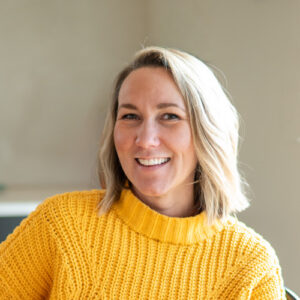
Maddy Roche: Hello, everyone. Welcome to the Childfree Life by Design podcast. Today, we’re talking about aging as an LGBTQ+ older adult and community member, and what it means for those of us who are building a Childfree life on our own terms. I’m Maddy Roche, and I’m here with Sherrill Wayland, senior director of special initiatives and partnerships at SAGE, the country’s largest and oldest organization dedicated to improving the lives of the LGBTQ+ older adult. And today, we’re talking about the work that Sherrill does and the incredible work that her organization spearheads. If you’ve ever wondered what work is happening front lines and behind the scenes to protect the rights of LGBTQ+ older adults, then this podcast is for you.
Intro: From Childfree Insights, this is Childfree Life by Design, the go-to resource for building the child-free life you want. Every episode gives you practical guidance, clear direction, and meaningful conversations to help you live intentionally and design a future on your terms. This podcast is for educational and entertainment purposes only. Please consult your advisor before implementing any ideas heard on this podcast.
Maddy Roche: You and I are coming up on one year of knowing each other. We met at the US Aging Conference in June of 2025, and we’ve been in touch since. And I’ve really looked forward to having you on today’s podcast. Sherrill, I would love for you to introduce yourself, and a little bit about what you do, because I think it’s gonna be quite interesting to our audience members.
Sherrill Wayland: Sherrill Wayland, and I use she/they pronouns, and I’m the senior director of special initiatives and partnerships at SAGE. And SAGE is a national advocacy and services organization that supports lesbian, gay, bisexual, transgender, queer plus communities. And it’s just been, really a dream of mine, to be doing this work, not only for myself, but also for the folks that I consider my family, as well as all the other LGBTQ+ elders across the country who I’ve not met, but I know that our work is having a direct impact on their lives as well.
Maddy Roche: Fantastic. Can you talk a bit about kind of the breadth of work that Sage does, just so the audience really understands how really quite broad the organization is and the kind of different components to the business there are in terms of how you serve our community.
Sherrill Wayland: Yeah, I would love to. So we have a national arm that works to provide advocacy and cultural competency training through a program called SAGE Care, as well as, underneath my portfolio of work, we oversee the National Resource Center on LGBTQ+ aging, which was the first and only federally funded resource center dedicated specifically to serving LGBTQ+ older adults, as well as the organizations within the aging network. So area agencies on aging, senior centers, you know, other nonprofits serving older adults. We provide services and outreach and resources to those organizations. As well as a couple of other programs that I’d like to highlight. One is called SAGE Collab, which is our partnership program that serves LGBTQ+ older adults on the community level. So we have a growing network of over 120 nonprofits as well as social support groups who are serving LGBTQ+ older adults across the country. And then we also have another program called SAGE U, which is our virtual learning platform, really centering the experiences of LGBTQ+ older adults. It’s a really a gathering hub where we’re offering webinars and social support groups and resources really targeting LGBTQ+ elders. So it’s a place for them to go and have a safe place to be in community and learn from others and from each other as well. So that’s a little bit of our work at the national level, and then we have direct services and supports in New York City and in South Florida. In those programs, they’re doing housing, care management, social supports. Just a number of programs that we’re offering.
Maddy Roche: I’ve always been so impressed with the training programs that you offer to organizations to become equipped to be able to serve our older adult population. I think that, among all the impressive work Sage does, that has always spoken to me because it’s so needed in the corporate environment and in the business environment to be well aware of the intricacies, the history, the background, and the experience of our community members as older adults.
Sherrill Wayland: Right. Yeah, the cultural competency program through SAGE started in 2016, through our program called SAGE Care. And again, that program is available to organizations across the country who are wanting to learn how to be better allies and advocates for LGBTQ+ older adults, and really make sure that at the community level, they’re providing services and reaching folks most in need of those services.
Maddy Roche: And you are one of those lucky people that have had a really beautiful tenure at a really beautiful organization. If you wouldn’t mind just telling us a bit about kind of what got you into this work and how it’s evolved at Sage.
Sherrill Wayland: Yeah, the story is one I feel like I fell into. I actually started out my professional career advocating for folks with intellectual and developmental disabilities, and it was through that work that I really learned to be a self-advocate and what that meant to advocate for others and for myself. And I decided I wanted to do something for the LGBTQ+ community, and I thought I would start working with youth. And then some of my friends were like, “Well, there’s nothing happening in St. Louis for LGBTQ+ elders.” And I live and work in St. Louis. And so it was during that time that I really recognized that there was a need for services in St. Louis to serve LGBTQ+ older adults, because a large majority of my friends are 15 to 20 years older than me, including my wife. And so I really felt like this is something I need to be doing, not only for myself, but for those closest to me. And that’s what led me to SAGE, was really this focus on serving our LGBTQ+ older adults.
Maddy Roche: I have to compliment you that you were that kind of open to what was calling you, ’cause I don’t think everyone is as available to what is really our truth. And I love that term, you know, becoming a self-advocate for yourself. But how did you know and really what gave you that confidence and access to know that that was the right next step professionally for you?
Sherrill Wayland: Yeah it really was finding my purpose. And the funny side to that story was, like I said, most of my friends were 15 to 20 years older than me, and they looked at me as the younger person in the group, and the majority of us did not have children. And so my friends would look at me and say, “So one day we’re all just gonna live with you.” I thought, I’m either gonna have to build a much bigger house or start a nonprofit. And so that became my purpose. And I guess that’s really where the confidence came, too, was like, I can’t do this on my own. I need to be finding the providers in our community, the aging services in our community that want to serve LGBTQ+ elders and forming those connections at the community level to make sure that my friends and family had access to services.
Maddy Roche: There’s a lot there, and we’ll come back to some of the things you touched on. But you know, Sherrill this podcast is all about designing a life around being Childfree. You’ve offered it to the audience that you yourself are Childfree. I’m interested in kind of as you look back at your career, through your personal life, how has being Childfree impacted it in a positive or negative way?
Sherrill Wayland: I would say we were Childfree by choice. My wife and I have now been together for over 30 years. And, we had different parental wants at the time. When I wanted children, my wife didn’t necessarily want children. And then when my wife decided, “Hey, maybe we should have kids,” I was like, “Are you kidding me?” You know? Not at this point in my life. And so, you know, we made that decision that having children was not the path that we were going to take. And that also afforded us, I think, an ability to have a little more freedom, and also enabled us to be wonderful aunts. You know, we were aunts to my nieces and nephews as well as, my wife has, her sister has children on their side as well. So, we’re wonderful aunts, and we’ve really enjoyed that opportunity to serve as mentors to the younger folks in our family. And so we’ve really enjoyed that. And again, it’s allowed us that freedom to, I think, to be more adventurous in our lives as well.
Maddy Roche: Yeah, One of the things we as Childfree people hear sometimes is that we’ll regret it. And I’m just wondering from your vantage point working with LGBTQ+ older adults, being Childfree yourself, what’s the kind of ground level experience that you witness among people that have chosen not to have kids?
Sherrill Wayland: I think for me, I oftentimes would joke that I didn’t have children, but I adopted older adults instead. So, I’ve been a caregiver. I have a caregiver’s heart and a caregiver’s soul. And so I have found myself providing care for others and largely older adults. And so I haven’t felt like I’m in that sandwich generation that a lot of people my age find themselves in, where they’re caring for their older parent or partner and children and grandchildren at the same time. And so I think for a lot of folks who don’t have children, it provides that flexibility in how maybe we can care for others that are closest to us.
Maddy Roche: I think that’s so well said. I find myself often recognizing that through my choice not having children, that I’ve given myself the capacity to care for people in different ways, and show up to people in, just friendship relationships, to my family differently. And I’m so thankful for that because it’s, it’s unique. And we do have much more capacity in a lot of different ways. Not to say that we don’t have our busy, full lives ourselves, but, we have an opportunity to really shift the relational world because we don’t have kids. We’re not caring for kids in the same way as other people are.
Sherrill Wayland: Right. And I also would say my sister has felt like she’s missed out on being an aunt because I didn’t have kids. So I also recognize that, you know, that for people in my family, the fact that we didn’t have kids, they’ve felt that they’ve missed out on that piece of me by not having kids.
Maddy Roche: One of the things we hear a lot is that we’re promoting being Childfree. And, you know, I don’t think any of us are sitting around screaming from the rooftop, “Be Childfree, be Childfree.” It’s just, there’s this level of respect that we should grant to everyone to choose the life that works best for them, design the life that works best for them. And choosing not to have the traditional next of kin is just one of the many identities and ways that we can be that deserve respect.
Sherrill Wayland: Exactly. And, you know, we’ve seen within the LGBTQ+ community, one of the statistics that we oftentimes use is that we are less likely to have children and more likely to be single as we age. That doesn’t say that everyone within the LGBTQ+ community doesn’t have children, right? And so that’s kind of been a myth, and I think we may see that shift a little bit as well, as it’s been more accepting and, you know, across cultures and society to see LGBTQ+ families and couples raising children, that we’re probably gonna see more LGBTQ+ people also have children. And we are seeing that. So it is about choice, and for a number of reasons, people may make that choice not to have children and that’s okay.
Maddy Roche: The reasons around why people choose not to have kids is really as varied as the reasons people choose to have kids. I’d love to shift a bit to some of the harder stuff that you and I have talked about over our months in conversation, which is the temperature right now in America. And I admire you and other folks who are doing the real hard work of protecting the progress the LGBTQ+ community has made in the strides of both in terms of visibility, visibility but also policy and creating resources and access points for our community. It goes without saying that we are in an interesting political environment, and we have been, going on, I don’t know, what, six or eight years now. I’m interested from your perspective, Sherrill where are we right now? What’s on the docket for SAGE in terms of priorities, and what are you seeing among our community as being some of the most important things to protect and work towards?
Sherrill Wayland: There are so many ways we could answer this question, sometimes we get so caught up in what we feel like we can’t do that we forget all the things that we can do. And the LGBTQ+ community has a long history of resiliency. And so it’s leaning back into that resilience, whether it’s as an individual or an organization. You know, showing up is so important, and right now, how we show up for one another, I think is key to our success as organizations and businesses that are supporting older adults. Because, the difficulties are not just for one segment of society. All older adults are at risk today from funding cuts, from organizations not feeling like they can maybe reach into some of their more diverse communities because of the political rhetoric that’s happening. And, and so I just continue to remind people, you know, continue to find ways to show up, to be in community, to support those that need our support the most. Look for the goodness. Look for the opportunities to continue to reach out and serve people from just a sense of neighbor helping neighbor. And so how do we continue to really push that for folks?
Maddy Roche: What are you seeing in terms of the creative action on behalf of some of the people, whether they be at agencies or nonprofits? The pivots that folks have had to make, everything from the budget cuts to the language choices to how they promote activities and, you know, whether, we’re gonna release this podcast during Pride Month, whether people can proudly announce Pride Month within their initiatives. What kind of creative ways are being most taken by your community and what you’re seeing organizations do?
Sherrill Wayland: I had this conversation a couple of months ago with some local providers here in St. Louis, and, we really encouraged people if their organization didn’t feel like they could be as out front on their LGBTQ+ work as they were two years ago, to lean into those relationships that they have. To reach out to an LGBTQ+ organization and work with that organization individually and say, “We’re still here. We want to support you. We wanna make sure that our services are still available.” A couple of years ago, I wrote a blog post called “Beyond the Rainbow Flag.” And so many times we get caught up in, it’s Pride Month, we’re all gonna put our rainbow flags out to show that we’re here, and we wanna be a part of the LGBTQ community and know that you’re welcomed here. Well, that sense of being welcomed doesn’t happen just once a year. But as soon as those rainbow flags come up, they sometimes come back down. So really getting people to think about how are you in community with LGBTQ+ organizations 365 days out of the year. So it’s showing up for their activities that may be happening. It’s inviting LGBTQ+ people to be a part of your advisory groups, your boards of directors. There’s so much more that we can do that truly show that sense of community and belonging than simply raising the rainbow flag in June.
Maddy Roche: Truth. I think it was on one of your calls. LGBTQ+ older adult who’s doing the hard work talk about, to some of us younger folks on the call, that, you know, we’ve been at war for these rights and the visibility and access for years and years and years. And what we’re feeling right now, as acute as it feels, is just a battle. And I really appreciated that perspective, and I think, as I walked through the cultural competency programs that SAGE has, I was really floored with how much history I didn’t know about our community. And I left slightly embarrassed that here I am as a proud gay woman, unaware of so much of the work that had been done and has been done over the years. And I’m interested in your perspective, Sherrill of just, like, where we are now versus where we were. And if you can speak directly to our audience members that may be in our community, what kind of reassurance can you give us around 2026 and where it stands from a longer-term perspective?
Sherrill Wayland: You know, again, it’s the resiliency. Knowing that 15, 20 years ago, would we be having this conversation on a podcast? Maybe not. So this is a sign of progress, and these types of conversations will continue. And, you know, 20 years from now, what is that conversation gonna be? Are we gonna look back on this time and say, “That was a big hurdle”? The resiliency of these communities that have fought for so many years for just the basic rights, we’re not going to stop, and we’re going to continue to show up. And there are actions being taken across the country, you know, where I just heard about a group the other day that wanted to have a community awareness event, and they asked people, “Show up. We want to make sure that our elected officials and our community partners know that we’re here and we’re not going away.” And while only, like, 15 people felt comfortable to register in advance, they had over 50 people that ended up showing up to be a part of that event to say, “We’re still here. We’re not going away.” And, you’ve heard of this happening across the country where people have said, “You know, it’s really hard. It’s hard to live in a state that is more conservative right now. But I’m not going anywhere. I’m going to stay here in my community and continue to do this work that’s so important to make sure that the rights of LGBTQ+ people and other marginalized communities continue to be at the forefront of what we’re talking about.”
Maddy Roche: You and I are in the aging industry, which not everyone is in the aging industry. I’ve said this to Sherryll a number of times, audience members, that I come from the financial planning industry, and as I’ve started navigating aging industry conferences, it is so delightful to be among people who are just so passionate, are doing mission-driven work to the real definition of mission-driven, and you can hear it in Sherryll’s voice and is exemplified in her work, that this is just a community that I have a hard time ever visualizing leaving this industry because of how beautifully motivating the work is. Just for the audience members’ purpose, this Older Americans Act is an important piece of legislation, and it’s not something that’s in everyone’s daily vernacular. And I’m wondering if you’d be willing to kinda just cast just a broad brushstroke over the inclusion and exclusion of LGBTQ+ older adults within that act and kinda where we stand today.
Sherrill Wayland: So, you know, the Older Americans Act is critical for the care and support of older adults across the country, and one of the nice things about the Older Americans Act is that the only requirement to receive services, for the most part, is your age. So they don’t look at your income. They don’t look at where you live. There really are no deciding factors that say, “We serve you, but not you.” But within that, there are ways that we can make sure that we’re meeting the needs of those at greatest risk, and that’s through terminology that they use around greatest social need. And so we know that for many marginalized communities, by being recognized within the Older Americans Act as a community of greatest social need, that allows organizations to say, “We know that we have a number of older adults in our communities that are at greater risk for food insecurity, for discrimination, for not having access because of lack of transportation or just a number of things that can come into play.” And it allows those communities to say, “We need to make sure that we’re doing a better job of reaching out to folks that are considered to be communities of greatest social need.” So we just recently were able to advocate and win policy gains that showed the LGBTQ community as being a population of greatest social need. And this was so important because it then allows the area agencies on aging to plan accordingly. We know we have a large group of LGBTQ+ community members. We can now really make sure that we’re reaching out to them and inviting them into our programs and services. And so they’re required to write goals and objectives around how they’re going to reach out to these communities of greatest social need, including LGBTQ+ elders. If that goes away, then it means that there may be a whole community of older adults who feel like they’re being left out and being left behind because we aren’t doing the strategic work to ensure that they’re included. And so that’s what’s at risk right now, is that LGBTQ+ older adults would be removed from the Older Americans Act as a community of greatest social need.
Maddy Roche: Aaron Tax is a teammate of yours, I believe leads a lot of the policy initiatives that SAGE is involved with. One of their incredible sessions at the American Society on Aging conference a couple weeks ago… and I was just really taken by how much work is going into these wins and to securing these wins. And I think it was during one of the sessions I attended that it was said, you know, “We’re playing defense right now, we’re not playing offense.” And I thought that was a great analogy. But there are these huge amount of work going into protecting this community, and I encourage our audience members that you don’t see it on the front headlines and it’s stuff you may have to search for. But I encourage you all to go to SAGE’s website and explore some of the wins and work that they’re involved in because they’re at the forefront of this. And we wouldn’t have these kind of protections and progress if it wasn’t for you and your crew over there.
Sherrill Wayland: Yeah and I would just add to that that you can sign up to be part of our action squad. So any time there’s a policy initiative that is coming up that we want to alert the community to, you can get an alert from SAGE that says, you know, “Here’s an opportunity to engage in advocacy with your elected officials to make sure that they know that this is a concern that we have for our communities.” The latest action alert went out around HUD and some changes that they’re making at HUD to the equal rights provisions within HUD. So those are things to just make sure that we’re aware of.
Maddy Roche: Totally. And we’ll link to those in our shownotes. Sherrill, I’m interested, since we’re in the aging industry and this is kind of our space, what considerations and pieces of advice do you have for the LGBTQ+ community as well as the overlapping Childfree community around considerations as we age?
Sherrill Wayland: Another thing I oftentimes say is that it’s never too early to plan, but it can be too late. Planning for our aging selves is something that I don’t think comes naturally and is not something that we look forward to. But it’s so important that we do the work to plan for our future. And part of that is thinking about who is going to be there? Especially as a person who’s Childfree, who’s going to help take care of my finances as I age? Who’s going to be my power of attorney for healthcare? You know, what do all those things look like? It’s never too early to plan, but it can be too late, and I’ve seen what happens when those plans aren’t in place where the family that you’ve not had any interaction with in 20 years is now your next of kin, your legal next of kin, who may be making these decisions on your behalf without that planning. And so I think that’s just critical.
Maddy Roche: Yeah, and I’ve discussed with my community members around some of us are estranged from our families. Some of us, you know, have families that haven’t respected or accepted our lifestyle while we’re fully there and you know, while we’re not in emergency, and if those are the people that are next in line to make decisions for us, how can we trust that they would respect our wishes when emergencies come?
MIDROLL: As a Childfree individual, who’s going to manage your affairs if you can’t? Traditional estate planning often falls short for our community. That’s why we created Childfree Trust. It isn’t just about a will. It’s about providing a fiduciary solution to protecting your assets, your legacy, and your wishes with people who understand the Childfree path. Don’t leave your future up to chance. Learn more and get started on securing your peace of mind at www.Childfreetrust.com.
Maddy Roche: I’m wondering, Sherrill, I’ve also heard, you know, considerations around the communities we build long term and where we may wanna be in senior living environments. It’s been so incredible to be in this space because I’ve heard of these great senior living communities, 55 and older communities that are LGBTQ+ friendly. And just to recognize that these places exist, and they’re incredible. Top of mind is in Hyde Park, Boston, there’s Pride. That’s a beautiful rebuilt schoolhouse, turned into a really, really incredible residential facility. Any considerations for how to scope out those places and identify them?
Sherrill Wayland: SAGE is your go-to answer for scoping out those resources. So, you know, through programs such as the Long-Term Care Equality Index, which is a program that’s been in partnership with the Human Rights Campaign Foundation, our National Housing Initiative, as well as SAGE Care. We’ve worked with a large number of LGBTQ-affirming affordable housing communities, as well as your long-term care, retirement community, assisted living, skilled nursing communities across the country. One way is to ask that provider in your community, “Have you received training? Do you serve LGBTQ+ community members?” For the groups that we’ve trained and that are part of our work, you’re going to find them listed on our website, and then we’ve also created some checklists for the LGBTQ+ elder or family member or caregiver. You know, here are questions that you can be asking should you go into a long-term care community. Here’s a set of questions that you can ask to help evaluate, is this a place where I would want to live or that my family member would feel comfortable? Are they going to be treated with dignity and respect? So much of this, you know, if we know the right questions to ask, then we can start to assess. Are you serving other LGBTQ+ community members? Do you have LGBTQ+ employees? Those are all signs that are gonna help you see, is this a place that I might feel comfortable?
Sherrill Wayland: I think it’s also important that people feel empowered to start thinking. You know, for me, I live in St. Louis right now. I don’t plan on moving. And so for me to think about where would I live one day should I need to move into a long-term care community. I’ve already started scoping out those places personally. So it’s okay to do some of that legwork. This is where I might wanna live. If you find a community that you think is welcoming, take them information about SAGE. You know, have you learned about this cultural competency training? You know, we’d love to get you connected with this organization called SAGE so that you’re ready to serve our community.
Maddy Roche: You mentioned the Long-Term Care Equality Index, and mind kind of just talking us through that real quickly.
Sherrill Wayland: Yeah, so that’s a program started in 2019. And like I said, it’s been in partnership with SAGE and the Human Rights Campaign Foundation. And our work is to help long-term care communities assess their own policies, practices, and procedures and look at areas that they need to change to make sure that they’re fully inclusive of LGBTQ+ older adults and their employees as well, LGBTQ+ employees. So do they have policies and practices in place that are inclusive? And then along with that, there’s the LGBTQ+ cultural competency training. So we’re providing training for their staff, as well as helping them look at their policies and practices to make sure that they’re inclusive.
Maddy Roche: You are a wealth of knowledge, Sherrill. Thank you. As we kind of wind down this podcast, you recently took a sabbatical, and we talk about sabbaticals on this podcast a lot. And I’m wondering if you would be willing to share a bit about your sabbatical, the impact it’s had, and maybe how being Childfree let you really do what you’ve always wanted to do.
Sherrill Wayland: Amazing question. And I’ll just share that I think my sabbatical has been one of the highlights of my life, and there’s a couple of reasons for that. One, this was actually my mother’s bucket list, and it was to go to Antarctica. And so during my sabbatical, I was able to go with my mom and spend a month in Antarctica on a cruise. And we were able to see just amazing scenery, icebergs, and the bluest, clearest, freshest water I’ve probably ever seen, you know, as we sailed through Antarctica. Penguins, whales. I mean, it was just so amazing. And I think part of being Childfree is also the recognition that my wife and I have had throughout our 30-year relationship is that it’s okay for us to spend time away. And oftentimes that would be with our respective families. You know, she would go home for the holidays with her family. I would go home for the holidays with my family. And that’s oftentimes extended to vacations as well. Because we didn’t feel like we had to spend all of our time together with children, we were able to spend that time with our families. And so knowing that, you know, my mom is going to be 79 and I was able to be with her on this trip of a lifetime for both of us, was, it was just amazing.
Maddy Roche: Oh, once in a lifetime. Maybe not. Maybe you’ll go again.
Sherrill Wayland: I, you know, I would go back in a heartbeat, so it was amazing.
Maddy Roche: I’m, I’m so glad that you got to have that experience, and thank you for sharing about it. Audience, I hope you have found this conversation as meaningful as I have. Sherrill, it has been an absolute pleasure to get to know you and your incredible teammates. Every single one of them I have come in contact with has been inspiring and wonderful in their own right. So thank you for doing the hard work on behalf of our community. Thank you for being on our podcast. And that is all for “Childfree Life by Design” today, folks. I hope to see you back here soon.
Outro: You’ve been listening to Childfree Life by Design. Make sure you follow the show, leave a rating or review, and connect with us on social @Childfreeinsights. For more resources, guides, or upcoming events, visit Childfreeinsights.com.