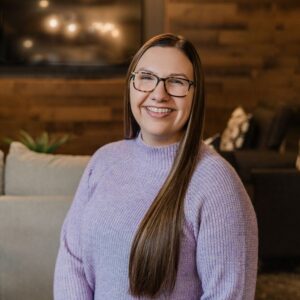
Bri Conn, CFP®: [00:00:00] Welcome to Childfree by Design.
Today we’re talking about the pressure to perform a life you don’t actually want, and what it means for people who are building a Childfree life on their own terms. I’m Bri Conn, and in this episode we’re covering how to follow your true calling amid societal noise, the practical steps of shutting debt to find freedom and the power of communal living.
If you’ve ever wondered how to stop chasing the goals others have set for you, and finally start designing the life you are meant for, this conversation will give you the clarity and tools to make intentional decisions that support the life you want.
Intro: From Childfree Insights, this is Childfree Life By Design, the go-to resource for building the Childfree life you want. Every episode gives you practical guidance, clear direction, and meaningful conversations to help you live intentionally and design a future on your terms. This podcast is for educational and entertainment purposes only.
Please consult your advisor before implementing any ideas heard on this [00:01:00] podcast.
Bri Conn, CFP®: Today I’m
really honored to have sister Monica
Clare here. She is the author of book, A Change of Habit, leaving behind my job, my career, and everything I owned. And her book, I first heard
about
it last year
when it first came out back in 2025 and a comment I read away I was going through, and here I’m seeing a sister, talking about leaving behind a life that in all terms, sounded glamorous and something many would aspire to and going, no,
this
is not my true calling. So I’m
gonna just go ahead and jump
right in. Welcome the
show today, sister Monica.
Sister Monica Clare: Thank you so much. This is a great topic. I’m so glad you’re doing this.
Bri Conn, CFP®: I was super excited. Sent the message and
saw that you booked right away. And I was telling sister before we started that when
she had sent the email back it
went spam, so I didn’t see it right away. So I was very superstitious of whether not this was going to happen, but I was like, it’s on my calendar.
And then I got another email that came [00:02:00] through, and I was very excited. So I went through and I listened to your book last year and it really is memoir of your life. And some
of
you who are listening to this
episode, might
be going, okay,
well I’m Childfree. I
or may not be in
the religious realm or believe that, how am I going
value hearing story from a sister? But
But I think you should stay and keep
listening because, the things that you went
are through, and when you talk
about
in your book that you knew from a young age, you did not
wanna get married
or
have kids.
But yet
you
still do
the
societal pressures, followed the path of going to Hollywood, getting married, doing all
all these things
And I just
found that to be fascinating. So could you
give listeners a
little
message of what your
was like and how you
grew up and then also went down that path initially.
Sister Monica Clare: Yeah, I think, the urge to become a [00:03:00] Sister, the calling really came outta left field. When I was a child. I was not Roman Catholic, nobody in my family was, and I didn’t know there was an Episcopal church that I could eventually become an Episcopal nun, which I am. But the minute I started talking about things like that, I heard all these aphorisms, like women are meant to have children, which is just based on nothing,
actually. People would say that’s what your body is built for. You have to have children. And even up until I was in my twenties, it wasn’t just my family, it was my friends also saying, after my divorce they kept saying, you need to freeze your eggs ’cause you gotta have a kid. And what my older sister said to me, you can get cancer if you don’t have children.
And I was thinking, well, you can get cancer if you do have children too. What’s the big deal? But there were all these articles coming out around that time saying that women, the ticking clock, the biological clock, that was that era in the nineties when women were getting really panicky about having children.
And deep down inside, I’m a very practical person, [00:04:00] and I was raised by parents who thought that if they had kids, the money would just come. And I’ve heard that myth so many times. One of my friends was trying to have children and she didn’t have any money at all. She said, oh, you know how it goes, babies are born with a loaf of bread in their mouth.
I said, that is the craziest thing I’ve ever heard, because they’re not.
You can talk to me, my parents didn’t have money. They had kids and they thought the American dream would support that financially, and it didn’t. We were stealing food from seven 11 to stay alive, and we were very undernourished as kids because my parents started to realize, wow, nobody’s gonna give us a loaf of bread with this baby.
And it was too late. They already had kids. So, I saw a lot of my friends, especially, I grew up in the south, a lot of my friends went right down the path of marriage and children to the detriment of their mental health. Because I’ve always said some people are called to marriage and children and good for them.
That’s a wonderful calling, but not everybody. And we really have to [00:05:00] look at who you actually are and whether that’s gonna be fulfillment and whether you practically with children, if you have the mental health stability, the financial stability, the future planning that you need to raise kids very well instead of in a life where they were deprived like I was.
That’s why I’m really excited about young women these days, especially some men too, giving up dating and marriage to prioritize their mental health. I think that’s where we should have been all along. Women and men you should prioritize your mental health. Don’t just do what others do to make themselves happy.
Think about what makes you happy.
Bri Conn, CFP®: Yeah. And
when I was listening and going through and hearing that,
that was one of the thing you said too of this is important conversation because
we
don’t necessarily prioritize those things. Instead we go, this is
what society tells me. Falling
into that continuously
listening to
you to
everything.
It did sound like tumultuous childhood to go through and
then, [00:06:00] by all extensive
means, I take improv classes. And so to hear that you were at Groundlings, and listeners, if you’re
not
familiar with what Groundlings is, Groundlings is one of the big improv
places out in La.
It’s pretty well-known if you are in that area. And I would say it probably would a lot of people strive to go for, and that’s the goal is to get there. So tell me about what it was
like to
get to that
point,
by all measures, you hit the point
of hey this is
what a lot people
want and go for, and then realize like, it’s not for you.
Sister Monica Clare: I think I started looking at it, when I was going through my divorce. That was the real
turning point for me. That was the burning down the house and having to build it up from nothing in my life.
My life burned to the ground and thank God it did, because I realized going through my divorce I felt like I was gonna go crazy. So the first thing I started doing was walking all over LA which nobody does. I [00:07:00] was taking buses and cabs everywhere I went and the weather’s pretty good there. So it is really not a big deal to take buses and cab,
and walk. And that was the way I kept from going crazy. And then I got into therapy. And therapy led me toward Al-Anon for the families and friends of alcoholics and addicts. And it was in those spaces that I started hearing the phrase authentic self. And I felt this is why I’m depressed.
This is why I sit on my bathroom floor crying for three, four days in a row. This is why I have to call in sick to work because I’ve been so anxious. Heaven is sleeping. It’s because I’m not living life according to who I actually am. I’m living it according to this model of society that’s stigmatizes people who are not the thing that’s allegedly supposed to make you happy.
And I read the book, what Color Is Your Parachute? And in that book, they talk about your values. They ask you to make a list of your values. And number one on my list was God. And I [00:08:00] thought, if God is number one priority for me, why am I not living my life to that template? Why am I living it to this other template that says love is the number one thing that we should seek in our lives?
Our society tells us that finding the one will bring you fulfillment and happiness. And then you have to marry that person and you have to have children with that person to be fulfilled. And they stigmatize people in the sense that they see ’em as incomplete. If they check off those boxes on the to-do list, you’re incomplete.
They say things like, it’s sad he never married or they’ve been together 30 years, they couldn’t have children. And which is sad if you are called to have children, but if you are fine without kids, society can make you feel really inadequate. And I was a good girl. I did what people told me too.
All these other people were finding happiness in these ways, which many people do. I’m not knocking it by any stretch of the imagination, but all these other [00:09:00] people were finding happiness for their authentic selves. I’m a strange person. I’m an exception to a lot of rules. And when I finally started talking to monks and nuns, both Roman Catholic and Episcopalian, they echoed a lot of what I was feeling, which was, feeling like the outsider, the one who’s incomplete, unfulfilled, a disappointment.
And then I read a book by, Bella de Paolo about the stigmatization of single people, it’s called Singled Out.
And it talks about how marriage and children are seen as societal virtues.
And if you don’t achieve those societal virtues, you have failed.
You failed at life. If you don’t find one, especially women, if you don’t reproduce, then you’ve not fulfilled your purpose on this earth. And I started to realize, ’cause I worked in advertising, that these aphorisms that come about like, there’s someone for everyone, there’s a lid for every pot.
If you don’t feel motherly, you’re gonna become a motherly [00:10:00] person after you have your children. And I realized it’s really mostly economic things that drive those things. It’s not about mental health or personal happiness, it’s about the economy saying, if you get married, you’re giving money to the marriage, the wedding industry, which drives the economy.
If you’re married, you’re more likely to buy a home, cars. If you have kids, you’re gonna buy a lot more stuff. If you’re poor and you have kids, you’re not gonna protest your job. If you have children and you’re very poor, you need that job more than anything. So you’re not gonna ask for higher wages, safer working conditions.
You’re not gonna fight for those rights that you need as an employee. So the economy, the corporate overlords at the top can exploit the poverty of people by having them be slaves to their jobs. And that’s when I got really mad.
I thought, wow, we’ve all been tricked
because, people are panicking about the birth rate going down.
I don’t think God’s panicking about that. I [00:11:00] think the corporate overlords because it increases the gross domestic product and tax revenue when people have kids. And when the birth rate goes down, those things decrease. So it’s all about dollars and cents. And I think what we break free of that myth of this is how it’s really supposed to be.
You’re supposed to find the one pair off and reproduce. I think that’ll be a lot of freedom for people like me who saw through it and went, wait a minute, this is not right.
Bri Conn, CFP®: Yeah. I like how pointed out, you got mad after you realized that time, ’cause it’s true. I want you to also explain the
difference between Catholic nun and Episcopal nun because that was something that, I am a queer woman I have a wife. Then I found
be fascinating I was like, wow, I could really have a conversation and
see this.
Sister Monica Clare: That’s true. The Episcopal Church is part of the Anglican Communion, which is centered on the Church of England. The English church broke away from the Roman Catholic Church in the 16th century under Henry vii, [00:12:00] and it became English Catholic. We still believe that we’re Catholics.
We’re just not Roman Catholics, as so they’ve evolved along very different tracks. We do not have a Pope, and in the Anglican communion we have the Archbishop of Canterbury. Most of our leaders are chosen, they’re not appointed by God, they’re not infallible or whatever. They’re first among equals is what they call ’em.
And when America broke away from England and we became our own entity, the Episcopal church was still part of the Anglican communion, but we evolved along these progressive lines. And it happen until the fifties or sixties.
We were just as conservative as the Roman Catholics. But all of a sudden the people, the grassroots movement of the church started saying it’s wrong to tell gay people that they’re going to hell. It’s wrong to tell trans people that there’s something wrong with them. We’ve called to love people and welcome them.
And that was very controversial. A lot of people left the Episcopal church then, ’cause they were fed up. And then in the seventies we started having female priests [00:13:00] and female bishops. We have female bishops who are gay with partners. Our clergy can be married, and so of course L-G-B-T-Q clergy are married.
They’re partnered with children, and we just see that as this is how the church is supposed to be. But nobody knows that.
There’s zero awareness of the Episcopal church in the media and the mainstream media because the mainstream media likes to promote the extremes. So most people think all churches, either Roman Catholic or evangelical fundamentalist, Christian nationalist. But there are a lot of progressive denominations out there. Including the evangelical Lutheran church, the UCC, United Church of Christ, all these wonderfully inclusive denominations that put a gay pride flag outside their church and say, not all churches are along that conservative track anymore.
And the hashtag progressive Christianity, started trending on TikTok, because we couldn’t get any recognition at all on Facebook, Instagram, any of those [00:14:00] other platforms, any American platforms. But for some reason it really caught fire on TikTok. And so you have all these creators on TikTok who are part of progressive religions, and it’s all faiths.
It not just Christianity. There are progressives in every Faiths tradition. So I’m very relieved that people are finding out that we exist and that the door is open and we love you and you’re not gonna be condemned.
Bri Conn, CFP®: Well, I was having a conversation with my friend and I said, I’m interviewing this Sister and
a gay man, my best friends. He goes, well, Bri
do you know what that means? And I said, no, no, no, no. You don’t understand. She is an Episcopal nun. I have seen a picture of her with a pride flag at protests.
I listened to her book, heard all these things. No. I grew up, I was both in
an ELCA church, what I have now come to realize is, I went to Baptist school for a while, so very conservative. Totally different ways. But then I went through and talked about where I was like, I can see, [00:15:00] this fit in a lot of the beliefs that many of us and many of the listeners that I have talked to have about being very open and accepting.
And it was something that I didn’t know Episcopal nuns existed and I didn’t know that the Episcopal church was
so open progressive. And so when you were going and you said, Hey, I’m not wanting to live this life. I’m wanting to take and really live out my true calling, which you called being a joyful daughter of charity
And
then
searching
a place to call home. Can you tell us more about what that process was like?
Sister Monica Clare: It was long.
And I’m not a patient person. The long process really frustrated me because, when I was 18 years old and I met Roman Catholic nuns, I wanted to join a convent then when I was 18 years old.
But all these things got in the way and I kept reading books about nuns. I thought, well, I’ll just be a nun fan. [00:16:00] This is gonna be a groupie of convents. And there was also that part of my authentic self that was raising its hand and saying, do you really wanna be a Roman Catholic? Can
you be behind this 100%?
Because I had left the Baptist church because it felt fake for me to sit in church and hear that gay people was going to hell, that divorced people were going to hell. It just, something hit me with a thud and I was paying attention to that and that’s why I left the Baptist church. So embracing a Roman Catholic faith, it was something I seriously considered to the point that I was emailing and writing letters to Roman Catholic nuns and saying, this is on my heart.
I just have trouble with the church’s views on female clergy, L-G-B-T-Q, brothers and Sisters and others and reproductive freedom. And I said, is there any chance that the Roman Catholic Church is gonna change its stance on this? She emailed me back and said, probably not for 500 years, but you sound like an Episcopalian.
She said, the church is [00:17:00] eventually going to change on these things, but it’s never gonna happen quickly. But the Episcopal church already has all those things. And I said, well, it’s too bad that they don’t have nuns. She said, oh, yes they do. I know some. So it was a Roman Catholic that directed me to my authentic self, and I’ll be eternally grateful to her because she was basically saying, this is where you belong.
And this was like in the dawn of the internet. So I went on Episcopal Church website, which you can do with any of the domination. You can look at their core beliefs, their canons, and all that. And I thought every single thing on here lines up with what I feel is right, that a loving space instead of a condemning, angry space. And I have never regretted that I still sit in church and believe every word. I do have some friends that are even clergy in the Episcopal church who say, well, you don’t have to believe every line of the nice saying creed. I’m like, I do. I believe every single word of it.
So, it’s wonderful to find something that aligns because then you don’t have to hide parts of yourself.
Nobody should [00:18:00] have to hide.
Bri Conn, CFP®: No, it’s not a good feeling for anybody who’s
ever experienced that. It’s hard. And we’re going become nun groupie
at age 18.
And you didn’t become a nun until age 46.
Sister Monica Clare: It was way too long and I had to go ‘ cause it was almost like, when you see a sheep being herded.
I was herded along this path with all the other sheep constantly. I was trying to go off the path into this thing that felt real, and then I would get herded back either by my friends saying, you just need to keep your heart open and find somebody to love and you’re gonna see that you’re not called to be a nun.
And then, I got into acting when I was in high school just because I was pathologically shy. And my mother really encouraged all of her kids to go into the arts because we had some mental problems as we grew up with this horrendously crazy father. And she knew that it would help us. She was a very talented artist and nobody ever encouraged her.
So she was guiding us along these creative lines. But then [00:19:00] people started hurting me along and saying, you’re really good at acting. You should pursue it professionally. I went to college in my hometown for a couple years, majoring in English and minoring theater. And my theater teacher said, you could hit the big time. You’re so talented or whatever. So I listened to people instead of listening to myself, I was conflicted about leaving my hometown and applying to New York University to Tch School of the Arts. On paper it looked like the greatest achievement of my life and I’m still glad that I completed the program because everything I learned at theater helps me as a church person.
’cause
the theater came out of religious rituals and so they’re tied together in this really mystical way. But, the whole time I was on that other path, being herded along with all the other sheep, it just didn’t feel good. It felt stressful and it felt scary. When I got to New York and saw these other actors in my classes, I thought, I do not fit in once [00:20:00] again, hello.
I’m the outsider, I’m the weirdo. And I was still very shy. But theater did help me come outta my shell enough to move to Los Angeles and pursue acting professionally. I had given myself 10 years and
at the end of 10 years, I told people I should get a special academy award because in 13 years total of education and pursuing acting, I never got an agent or a paying job.
That’s God saying
you’re not on the right path. Let me slam these doors. And it was my mother when she went to school to get her bachelor’s in psychology,
she’s told me about when she was applying to that course ’cause it seemed like a long shot. She never has felt
like intelligent, but she’s very brilliant.
And she said, I knew I was on the right path. ’cause doors just started opening. Just left right. And when I was trying to pursue acting doors just slammed in my face, just one right after the other. To the degree that I thought, does everybody get rejected 100% of the time? Same thing with [00:21:00] dating.
Shouldn’t I breaking up with someone at some point instead of them breaking up with me? So, I just looked at that in terms of this is part of the unhappiness is that I’m
not anywhere with this. I’m just spinning my wheels. And yet in church, when I finally got out of my shell and went back to church openly, instead of sneaking around to different denominations, I started attending church regularly and I just was brought into that congregation, put on a committee.
I was made into a eucharistic minister. They really encouraged me. And all these doors start opening.
And I thought, this is what my mother was talking about. When you’re on the right path, it doesn’t feel scary. It doesn’t feel stressful. It feels like I’m in the flow.
Bri Conn, CFP®: Almost in an overwhelming sense of peace too, I would think, coming with that and just being like, okay, this is what I’m meant to do,
Sister Monica Clare: Yes.
And even though, I was crushed when I found out I had to be out of debt.
‘ cause I had $150,000 in debt and I thought, it’s never gonna [00:22:00] happen. But that’s when I met the first Episcopal nun I’ve ever met in my life. And she said I felt the same way. But I remember I started out and had a pile of bills on the table.
And within a short amount of time, those bills were all paid. God will find a way if this is the right thing. And it took me years and years, but all the administrative skills and management skills that I learned in advertising, I had to learn those before I became a Sister.
So God’s time is very frustrating to me, but I still have that inner sense of peace. When I was working advertising, it was incredibly stressful. So many crazy people. The creative part was great. I was fulfilled with that. But the office atmosphere was really toxic, everywhere I
worked, ’cause that’s part of the entertainment industry is a toxicity of the entertainment industry.
And we always just thought, well, that’s how it is.
You gotta work, you’re miserable and then you die. But I always had underneath it this idea that, I would see it as me building a ladder over the prison wall
trying to get outta debt. I’m here because I’m trying to get outta debt to become a Sister, [00:23:00] and people were always screaming and yelling.
And I had this little sticker on my monitor that said, none of this matters, because in God’s great wisdom, it was all trivial. I was just there to get a paycheck and get out of debt. So that helped a lot. That inner peace gave me strength.
Bri Conn, CFP®: That was one thing I had no idea of. You can’t come to be a nun with debt, and you had to pay off all your debt when you joined. You also had to then take a vow of poverty
essentially and sign everything over.
Is
that correct?
Sister Monica Clare: That is
correct. None of us Sisters have bank accounts. None of us can be paid directly for anything. And anything, like if I do a speaking engagement or I go someplace and give a retreat. The check is written to the community.
There’s central fund that supplies all of our basic needs. And we get $50 a month cash for our allowance, the whole month. I thought, I can’t live like that. What am I gonna do? But really and truly, I’ve never felt so taken care of in my entire life. Because[00:24:00]
if you want toothpaste, shampoo, shoes, whatever, anything that aligns with your job, you can have, and we have to ask if we wanna buy something that’s very expensive, we have to ask the community. Just like you would ask your spouse. You have to say, okay, I’m thinking about getting an iPad.
What does everybody think?
And of the time they’ll say, you don’t need that. You just want it. And so you really learn to discern what you need and what you want. And all of our food is provided for us, the community, we’re not rich. The wolf is always the door, trying to get our bills paid ’cause we are a nonprofit,
but somehow God always provides us with exactly what we need and nothing more.
Midroll: Hey, child Free Life by Design. Listeners, don’t let the conversation stop here. Get inspiration, quick tips, and behind the scenes content tailored for the child free life by following us on social media. We’re most active on Facebook and LinkedIn. Just search for Child Free insights and for our deepest dives and event invites, [00:25:00] make sure you join our inner circle by signing up for a weekly newsletter at the link in our description.
Bri Conn, CFP®: When I heard you say that just now, but also your book, when my wife
and I first
started dating, I was
was still going to
pretty regularly time and trying to
figure it out, essentially. I had
been
not so nicely told get out of another one, ’cause I wasn’t conservative enough.
Sister Monica Clare: How Christian is that?
Bri Conn, CFP®: I know. It was great time in my life, not. But I remember her asking me at that time. I had come out two and two very conservative parents. And so I was
concerned that going to have anything but I wanted to give. And she asked,
why do you give? And I essentially, gave similar answer of I believe that God will provide and things will okay.
And now the situation is very different. Things did worked out, but
that
answer just resonated with me. I was like, I giving her that answer [00:26:00] years ago of giving and saying, yeah, I believe God will provide. One of those too, is when you for community, you wanted community
that would be growing.
Because part of that when you mentioned, the wolf
is always door the bills are getting paid,
and going into that, how did
you
pick the community in end of, this is one I believe keep growing? Because if I remember correctly, you used your PTO to go check out different convents during the weekends.
Sister Monica Clare: For years. And I checked out four different convents. Our communities are always small in the Episcopal church since the monasteries were revived in the England in the 1850s, forties and fifties, we’ve always been relatively small.
So the size wasn’t of concern to me. I did visit one community that’s very financially stable and to the nth degree, but I didn’t feel like the vibe was
- It was different from who I am as a sort of quirky, neurotic person,
and they were all [00:27:00] very normal. So that just wasn’t me and I visited in other communities I loved and wanted to join, but nobody emailed me back or called me back. That
was my number one choice. And my second choice, I had visited another community that was obviously, they were all like in their eighties and nineties, so the writing was on the wall. This community, I was really excited about the fact that they were so close to New York City,
to urban ministry, and I had lived in New York City when I went to college.
And so something about being close to that need, that societal need that is so prevalent in New York, really made sense to me. The community from day one, they told me, well, we’re not rich, we just barely get by. But it is a beautiful place. It’s
very peaceful and we have a beautiful campus here that we somehow maintain.
The ministries, I saw those ministries as carrying us really solidly into the future. We helped to found orphanage and [00:28:00] Cameroon and Africa. We do a lot of outreach to local food pantries and shelters. One Sister leads pilgrimages to England Island and Scotland.
So I saw these as exciting ways to interact with non Sisters, to what we call friend raise, which means
instead of fundraising you, you accumulate friends, which is something that can be this wave that has new recruits in it, first of all.
And secondly, that supports the work.
Bri Conn, CFP®: When you’re going
through part of it was, I remember it was one of the first things
that I heard
’cause that’s intrigued me, of
you saying what’s a better benefits package than being a nun. Everything
is care of, we have people who
be here to also take care of us as we age.
And part of that is you need new people to join.
Sister Monica Clare: Definitely. In the church, we look at parishes and convents and monasteries in terms of viability.
Meaning how likely are you to continue and
how vital are you right now? [00:29:00] And one thing that happened for me was when I first came in community, I had worked in marketing at the day that the internet was invented and social media was invented.
I was there for all that in terms of marketing. And we saw the internet, and especially social media as free advertising.
In the old days, convents and monasteries would have to take out a very expensive ad and a church magazine to try and recruit. They also had these huge institutions like schools and orphanages and convalescent homes where recruits would come from.
Usually that’s where they would find them. And even in the Roman Catholic churches, they’re getting out of this huge industrial model of running these huge works. They’re saying, how are we gonna let people know that we’re still here and let people who are called to this life know how to join.
And I thought social media, that’s a great way to put the word out without having to get on a plane, without having to pack a bag.
And my Sisters were horrified at [00:30:00] that idea because they thought, they’ve only read the negative articles about social media.
They didn’t want me to have a Facebook account. They didn’t want me to do anything on the internet because in their mind, this was 2012. So they were saying, people on the internet can see us.
They can spy on us through our camera. They might come here and break into the house or steal our money. They really felt that was all social media was.
And I said, it’s like anything else. It’s just like newspapers and magazine. You can use it for good or you can use it for evil. And one of the big benefits of it is connecting with people, connecting and building community.
It still has its downsides of course,
but, I try to use it for good and I connect with others who are using it for good. And I did not get rid of my Facebook page. I was very disobedient. And then I just
it hush hush.
Bri Conn, CFP®: Did you get reprimanded for that?
Sister Monica Clare: I did because, I thought none of them are on Facebook.
They’re not gonna know
that I’m still on there. And I was just posting [00:31:00] stuff that I thought was on brand for
us as a religious community. But somebody who knows the community was on Facebook and said, I’m not sure if you’re aware, but Sister Monica is on social media. So I got spoken to and reprimanded, and I still refused to be obedient.
I said, we’re gonna die if we don’t get the word up. And luckily the superior at the time slapped down the wrist and said, well just be responsible and whatever. And then I got on Instagram, very late to the game on Instagram. Then a friend of mine from LA kept trying to get me on TikTok, which I thought was just for children.
I thought it was all dances and pranks. I didn’t wanna do that. During the pandemic was when a lot of us, progressive Christians got onto TikTok and it really felt like, in the old days when they had radio and
that’s you get the message out to the people was radio. We realized that it was what the Pope now calls digital evangelization.
Instead of standing in the market square and proclaiming to crowds, you’re having this sort of [00:32:00] organic, authentic conversation with the public. A lot of us did it because the churches were closed during pandemic. We couldn’t reach the people like we wanted to. I put a few sermons up there, some inspirational stories and educational
stuff. I never expected anybody to be interested in it because it was so niche, like sub niche.
Because the Roman Catholic brothers and Sisters have been on the internet and social media forever. They are really good at it.
And thought, well, if nothing evil comes from it, then I’m gonna be inspired by them, take good tips from them on what works and what doesn’t.
Sometimes there are cases where I’ll feel uneasy about posting something, especially if about political situations.
So I have to look first at what the Episcopal church is saying about that. And I have to stay on message with the Episcopal church, which always aligns with what I would’ve said anyway.
But I don’t wanna go against church policy
and find myself getting in trouble.
Bri Conn, CFP®: what would [00:33:00] happen if you said something and it didn’t fully with align what the Episcopal Church said? Do you get just talk to? Do they say, sorry, but you gotta pack your bags and go?
Sister Monica Clare: If it was
something really bad, now that they’ve all started to accept social media,
one thing none of the religious are allowed to do is to argue with people in the comments about
anything. And name calling and curse words and stuff like that.
If I did something like that, I would get a call from the bishop
saying, what are you thinking? If you do this again,
this is what’s happen. You we’re gonna have to suspend you or suspend your account or something like that. So it’s not really punitive, it’s not really like a draconian, but it is a system of let’s stay on the message of love and inclusiveness.
Even heretical stuff is okay sometimes in the Episcopal church because
we’re the church where you don’t check your brains at the door. We’re the church where, there was a bishop that said, let’s think about, what if Jesus was not resurrected? What [00:34:00] if he was just resuscitated? He wasn’t really dead.
Let’s think about that.
And if you said that in other religions you’d be burned at the stake.
But we invite those gray areas, which is nice.
Bri Conn, CFP®: That was one thing that stuck out for me too, is the allowing of
questions, which
in
very
fundamentalist
and evangelical, and even the school that I went to, questions were not allowed. I got in trouble that a lot as a kid.
Sister Monica Clare: ’cause you have critical thinking.
And in the past, the church was part of the government.
What governments wanted to do, especially in medieval age, was to control and suppress people by frightening them. And the church as a political entity really participated in that. I mean, they had the inquisition where they punished people in the same methods that the government used to torture and execute people.
The church was authorized to do that horrifyingly. So
the church was authorized to start a war in the holy land. They were so [00:35:00] powerful. And that’s when this whole idea of no, if you question the church leave should go to hell. Because it taught people how to stop having critical thinking so that they were easier for the government to control.
And you still see that I was brought up with this idea that you’re never supposed to question anything, especially if you’re a female, because then an adult female in the world politically. I would believe anything anybody would tell me up until I had therapy. I believed, oh yes, this is a expert, they’re telling me the truth.
And I never had this idea of questioning until I became an Episcopalian and participated in therapy. Where you learn now, you can set boundaries and you can say, that feels weird to me, or that doesn’t make sense to me. ’cause as a child sitting in the Baptist church, I was thinking, that doesn’t make any sense that gay people are going to hell.
Gay people are nice, they’re fun, I
love them. But I couldn’t say it out
loud. I had to internalize all these [00:36:00] questions. And the Episcopal church really goes back to even the ancient Israelites, and modern Jews, much of their religion is debating, arguing, theological things, looking at scripture, picking it apart, and going over the Talmud. They’re really great at reinforcing critical thinking. And you can see it in the stories in the Bible where people question God and they’re like, wait a minute. That seems weird. And Moses saying, I cannot lead these people outta slavery. I gotta stutter. I can’t even talk.
And the Psalms, one of the reasons that we pray the Psalms so often in religious communities, we pray a lot of Psalms, we chant them all day long, every single day at our worship is because the Psalms are full of that stuff, of people saying, God, why are you doing this to me?
This is wrong. You shouldn’t be doing this. And it shows you that it’s okay to talk back to God, to bring your anger, your doubts
if you have a doubt about something. A lot of times if I’m preparing a sermon, I’ll [00:37:00] notice my body. If something hits me weird,
I’ll think, God help me with this ’cause this seems wrong.
There’s a part of the Bible that I always struggled with where Jesus would say in the gospels, for those who have much, much will be given, for those who have little, little will be given. I was like, that’s not right. God.
And I wrestled with it for years and years. And then just the other day, somebody in the sermon said, the original, she said, let me read you the translation from the original.
It says to those who are stingy, nothing will be given to those who are generous, much will be given. I thought, thank you God for that answer. It took five or six years. But when you wrestle those things and ask God to help you with it, it really helps deepen your faith. It’s not a superficial, scared fate.
It’s a deep, intelligent fate.
Bri Conn, CFP®: Yeah, the ability to have those critical conversations
for anybody who has grown up in the, you do not
ask questions,
especially [00:38:00] if you’re a woman, you be quiet, sit down, you shut and listen to what they tell you.
To have that ability to then go,
I can ask questions, is so eye-opening and so helpful, but it doesn’t
always to just be religious too.
The amount of times where I sit down with clients who
come in, it happens most often with single women. They might be in their forties
or fifties
and they’re still listening to what their parents are telling them to do.
You have to keep working. You have to keep doing this because that is what you do.
They truly believe that they cannot retire that and they have working the day they die. And I go, no, you could have retired yesterday if you wanted to. You the ability to ask those questions, it goes so far into our culture of that is not norm.
That is not what you do. Just to be able to take and ask questions and I think everybody can learn a lesson from that. Ask more questions.
I have a sibling and [00:39:00] they frequently say what is with you, and all the questions? I dunno, I was born like this.
Sister Monica Clare: Jesus asked a lot of questions, so we can do it too.
Bri Conn, CFP®: Yes. It’s just so fascinating to me. You
talked about how once you join the
convent
you’re not really to talk about life prior to then,
but your memoir really does talk about life.
So
was this a way to break rule without breaking rules and also heal a little bit?
Sister Monica Clare: It really was, I mean, starting the book, when I was approached about writing a book, I went to the Sisters and said, what do you guys think about this?
And most of them, much to my shock, said, we don’t care. It’s fine. But there were three
or four who had been raised in community in the old days
when there was a very specific rule about you never talk about who you were before you came in. ’cause you’re being created anew in God’s image.
You have forget who you were.
[00:40:00] Which in some cases, like psychologically, the shedding of the inauthentic self is a great thing to step into the authentic self. But that method of just cutting off was very medieval, Victorian.
That was what you did in those days. You just didn’t think about stuff and then you just, were miserable.
But they were horrified that I was gonna talk about my life before entering community. I said, I really want it to be the story like St. Augustine, he talked about his life before he became one of the pillars of the church and Thomas Merton’s seven Story Mountain is a story of the very secular life that was converted.
He was a monk, way back when he was not supposed to talk about stuff like that. It was a hard and fast rule. And yet he did, he got a lot of flack from his brothers, got a lot of flack from those three or four Sisters and I tried to be compassionate because I’m a fearful person and they are too.
Those four Sisters. And I thought, well, what is it that they’re afraid of? And I asked [00:41:00] questions, what are you afraid is gonna happen? One of them said, cause I gave her the manuscript. She said, this is a terrible book. She said, never put your dirty laundry out there in public.
People don’t wanna read about that stuff. It’s too dark. It’s disturbing. And I was compassionate towards her ’cause she’s 84 years old and I
thought that’s what she was taught by her
parents. If there was anything going on in your house, you did not tell anybody in the neighborhood. You didn’t tell the teacher, you didn’t tell the priest, you kept it.
It’s a family secret. She was afraid. Her fear was that my family was gonna cut me off and that anybody I grew up with was gonna be angry at me for airing the dirty laundry. She didn’t ever get it. She was still opposed to the publishing of the book. She kept telling me not to do it up until it was actually here in its physical form.
And we were getting positive response. She didn’t believe that we would get positive response. She had to see it for herself. And now she mentions the book to [00:42:00] people and she talks about it. And I’m like, well that is a miracle, because she was terrified. And I saw her resistance to me as fear instead of as, her just being a jerk.
I just thought,
she has legitimate fears, she’s afraid I’m gonna reveal too much about our life and that people will think we’re all a bunch of wackos or that we’re not pure because we’ve been married before. But nobody reacted like that. Thank God. My mother was really great about the book because,
she doesn’t come off as being squeaky clean in the book. She
evolves, her character evolves and grows up and gets out of the Stockholm Syndrome that she was in.
But she was very trusting of me and said, you can write whatever you want about me in the book. I thought, well, I can, but you’re probably not gonna like it. She’s had a couple of burning questions and we had to talk through some things, but, for the most part she’s been very supportive, very proud.
And when her friends started reading that, that was the fear she would have, is that her friends would look down [00:43:00] on her. One of her friends was just like in tears and said, I can’t believe all that awful stuff happened to you. I’m so sorry that you had to go through that. And that’s one of the times people have said that to my mother because when she was going through it, it was the southern attitude of, well, stop making him mad and he’ll stop hitting you.
Or,
you gotta stay together. You love each other. That was the thing, you’re supposed to stay. If you love somebody, you’re supposed to be together, even if they’re trying to kill you. And his violence was something that was unfortunately very common in that time and place. So it was just, that was the family matter.
You just gotta stay with it. She broke free, which she risked her life to break free. So
she walked an unconventional road too, and gave me the example of, gotta save yourself. You can’t sacrifice yourself at the altar of societal virtues.
Bri Conn, CFP®: That’s a beautiful oar road too, of showing like
we all are the current age we’re at for the very first time [00:44:00] ever and learning new things, and taking and going. There things that happened and he didn’t know
anything else to do, but
I thought you did good job of talking through it.
Sister Monica Clare: Thank you.
Bri Conn, CFP®: Sharing the growth there.
Sister Monica Clare: Yeah, she really impressed me with the way
she grew over time and got therapy and
majored psychology and tried to unpack. One of the things that she told us that really saved us was she said, we have to talk about what happened.
If we don’t talk about it, it will eat us alive from the inside out. That was some of the best advice I’ve ever gotten in my life because we were encouraged not to talk about it,
by the around us. No, don’t talk about your dad. How crazy he had. But I was very honest with people and open. Some people were absolutely horrified if I talk about my father, but I’m like, Hey, this happens to people.
It’s reality. And my father is such an example of he did not have the mental clarity, the emotional ability. He couldn’t hold a job. He had no [00:45:00] business fathering a bunch of children, and he knew it, but he had to do it because that’s what society wanted him to do. My mother was forced into this role.
She said, the word homemaker was always held up to her as this ideal for women. She wanted to be an artist. She wanted to be an opera singer. She wanted to do all these things, but she was told by all her friends and family, everybody at church said, no, the only thing you can do is become a homemaker, which drained her of all her power, handed all of her power over to my father,
who was incapable of
taking care of people. If he lived in a different era where it was acceptable for him not to get married and have kids, I think he would’ve done much better. He would’ve
figured stuff out for for himself. And that’s, that’s a tragedy.
Bri Conn, CFP®: It really is ’cause,
I had a conversation the other day with somebody of, it wasn’t that our parents and grandparents were always in relationships because they wanted to be. It was because they had to be.
Sister Monica Clare: Absolutely.
Economically, women were [00:46:00] completely dependent on men.
They couldn’t get their own bank account until 1978.
When I was a kid, they couldn’t own property. They had no rights whatsoever. They were really, I think this is a harsh term, but I think women were regarded as livestock,
breeding stock, property.
This is an indentured serving in my home.
That’s why I’m so opposed to this trad wife movement, the
traditional wife movement. Women should never hand over all their power to their
spouse. It’s just not gonna work.
Because you have to have equal power in the relationship and you have to be able to walk away if things get bad. I see it that it’s going in that direction.
I feel good that people are rejecting the tread wife movement. It’s just a trend. I was nervous when it started coming up and
see now the facade is falling away and people are starting to see the drawbacks, which I’ve known all my life.
Bri Conn, CFP®: Yeah. You grow up and you see it. The
glamorized version the trad wife is something
that I also not
a fan [00:47:00] of.
And people need remember that the trend itself, many of them are making significant incomes trying to show you a life of being dependent on your spouse,
Sister Monica Clare: So true. It’s a lot of it is very, very fake. You
have to have tremendous amount of money to fund that kind of a lifestyle.
I don’t any male or any spouse whose paycheck could support a partner and eight or nine kids on
one paycheck, regular folks. Rich folks can do that. But then, I’ve known a lot of women who married very wealthy men and handed them all their power, and then were really damaged by that power imbalance. So protect your power, protect your mental health.
Bri Conn, CFP®: Exactly. That is such an important thing. One the
of the other things
that you had mentioned, the one sister was not
a fan of the books.
You said you are not give praise one another.
Do you think maybe part of it was she still felt like you couldn’t praise one another?[00:48:00]
Sister Monica Clare: Yeah, definitely. In the Victorian age, and of course in the medieval age, in society, you weren’t supposed to praise each other.
Nope. Don’t let anybody get a big head. God forbid anyone should become confident. And certainly in religious communities, humility was interpreted to mean that you don’t praise each other and you don’t thank each other. You’re just doing basic, the bottom line. And I know like in rich households and the Victorian Edwardian age, you never thanked the servants.
If they gave you some tea, you never say thank you, you would just take the tea and then they would do what they’re supposed to. So no need for thanks. And that was one of the areas where I was really disobedient when I came in because one of my things in life has always been to lift people up and compliment them.
I compliment strangers all the time, and they’ll look at me weird because people aren’t used to getting compliments. Isn’t that sad? And it’s really set. Praise is something that I really, really promote and thrive on. ’cause I grew up in an [00:49:00] atmosphere, friends and family of criticism, a lot of criticism in the name of being funny, a lot of teasing and stuff like that.
So I would never do that to another person. And when I came in the community, I was like, oh no, no. If somebody makes a good peach cobbler, I’m gonna tell them that that was a good peach cobbler and I don’t care if I get dirty looks. And then all of a sudden it started catching on.
’cause I was mentioning it in discussions.
I was saying, I think it’s wrong that we’re not allowed to praise each other. And they were like, Ooh. Like I was tear tearing down the building around them. They were horrified, but I could see in their faces that they were hungry, they were starved for that thing. And for gratitude, I think praise and gratitude are something that can be used to build community, and to tell each other we love each other.
They were absolutely uncomfortable with that. It says in our rule, we’re supposed to love each other. Jesus said, love one another. Love your neighbor. Jesus was all love. But they thought that [00:50:00] that was really cringey.
But now sometimes I’ll hear them, after an argument, especially, we’re supposed to make up later
after an argument. Hug each other and say, I love you, even though I’m really mad at you right now.
I love you.
And that just means the world to me to see them doing things like that. A good change.
Bri Conn, CFP®: Yeah. What a wonderful positive thing to bring in. ’cause that is something I never would’ve guessed, is you couldn’t praise other and you couldn’t
say, I love you to one another.
When the whole point is you guys take care of one another and live together and what a beautiful community.
Sister Monica Clare: In the, epistles, when they’re talking about how to be church.
They say you’re supposed to fall all over yourselves trying to do kind things for
each other and lifting each other up. That’s what good community looks like, is supporting and encouraging. So I keep pointing the scripture with the Sisters.
This is what Paul said.
Bri Conn, CFP®: Yeah. Come with your case and you’re like,
this is a case for why we should do this.
Sister Monica Clare: We should do this. I got evidence.
Bri Conn, CFP®: [00:51:00] Yes. So we
we our final segment of Childfree life by
Design, and
you call this deliberate detail.
It’s a segment where we just ask you to share a small, intentional thing that doing to design an an amazing life,
If you can what it is, why it matters, and if you’re comfortable, what it costs, if anything.
Sister Monica Clare: For me, my new thing in 2026 is trying to
pay up more attention to my somatic experience,
my body. ’cause I’ve been preaching that to people for years, but I wasn’t doing it. Sometimes I would do it, but not as much as I need to. Somatic experience is when you’re interacting with a person and somebody feels weird in your gut,
pay attention to that and you’ve tried to figure it out.
I have migraines, which
is okay, what’s behind that? Let’s try and figure out what my migraines are telling me, what your body is trying to tell you. ‘ cause those somatic cues are so important for finding your authentic self. Your
body will tell you there’s a whole book. The body keeps the score.
[00:52:00] So I exhort everyone to do the same.
Bri Conn, CFP®: Okay. That is wonderful. Well, thank you so much today for joining us, Sister Monica Clare and for sharing all of your insights. Where can listeners find out more about you?
Sister Monica Clare: Well, you can go to my TikTok channel, which is called Nunsense for the People. It’s all one word nunsenseforthepeople. There are a lot of fake accounts out there, but on my main account I have 227,000 followers. But that’s the real one. I don’t have any other account, but if you wanna get some nunsense, go there.
Bri Conn, CFP®: I love it. Well, we will make sure to put that in the show notes and
then
link to your website as well as you like. But that
is all for this episode of Childfree life by design
Remember, intentionally choosing to invest in moments of joy, is just as important as
investing in your future.
Until next
time,
happy designing.
Outro: You’ve been [00:53:00] listening to Child-Free Life by Design. Make sure you follow the show. Leave a rating or review and connect with us on social at Child-Free Insights. For more resources, guides or upcoming events, visit child free insights.com.