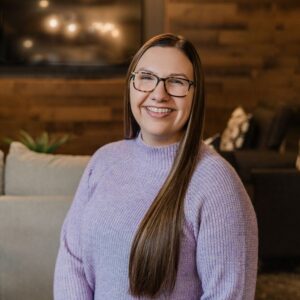
Bri Conn, CFP®: [00:00:00] Welcome to Childfree Life by Design. Today we’re talking about the financial and social legacy of women and what it means for people who are building a Childfree life on their own terms.
I’m Bri, and in this episode, we’re covering how to reclaim credit for your financial journey. And while understanding women’s economic history is vital for designing an intentional future. If you’ve ever wondered how your financial autonomy as a woman is shaped by those who came before you, or how to build a legacy that isn’t defined by motherhood, this conversation will give you the clarity and tools to make intentional decisions that support the life you want.
Intro: From Childfree Insights, this is Childfree Life By Design, the go-to resource for building the Childfree life you want. Every episode gives you practical guidance, clear direction, and meaningful conversations to help you live intentionally and design a future on your terms. This podcast is for educational and entertainment purposes only.
Please consult your advisor before implementing any ideas heard on this [00:01:00] podcast.
Bri Conn, CFP®: Our guest today is a total powerhouse in the world of financial storytelling. With over 20 years of experience, she’s made a career out of taking complex money topics and turning them into narratives we can actually use. You’ve likely seen her work in the Wall Street Journal, Forbes, or Harvard Business Review.
She’s also the author of the brand new book, give her Credit. She’s here to take us on a journey through the women’s banking movement and show us how female financial empowerment has paved the way for intentional lives we’re living today. Grace, welcome to the show.
Grace L. Williams: Bri, I’m so excited to be here. Thank you for having me.
Bri Conn, CFP®: Absolutely. I’m really excited. I was telling Grace right before we started that last year, I got an email and it said, Hey, this book called Give Her Credit by Grace Williams is coming out. You should really read it and do a podcast on it. And we get emails like this for different suggestions all the time, and we’d sometimes take them and run with them and sometimes we don’t.
[00:02:00] But I was like. This looks like something I would be interested in not only reading but also sharing with our listeners. And so that is where things started here and this journey into here. But what I wanna hear from you Grace is you’ve written this book, it just came out in 2025. How did you even start with going down the path of women in financial empowerment when it comes to money?
Grace L. Williams: Wow. Okay. I mean, we could go back so super incredibly far, but I’ll stick to the book. I think that’s probably the best timeline to stick to is with the book. And I was not really a gendered lens writer or reporter for the better part of my career. This was not something I thought was going to be what I went and got into and did.
It is something that chased me down and clubbed me over the head and said, this is what you’re going to do now. And I said, great. Okay. So how? Right. But one of the things that drew me to this [00:03:00] project and this story in general is, so this bank opened up in 1978 in the summertime, and I was born in October of 1978.
Okay. So within my lifetime, if you will, this was something that was going on. Women were needing to open up their own banks. Now, when I was 20, so this is 1998, okay? It’s my first summer in New York City, I get Capital One lets me open a credit card in my own name with a small credit limit and a crazy interest rate of course, because I had no real anything to offer.
But nobody signed for me. Nobody vouched for me. I had very little income at the time and they were like, here, you can have some credit. Isn’t that great? And when I compared those two things that in two decades time, super powerful mover shaker women, in America slash [00:04:00] Denver. That’s where most of it takes place.
They were not being taken seriously enough, so much so that they had to open their own bank the year I was born, flash forward to Capital One. Basically handing out credit cards like potato chips to me. I said, okay, we have to dive very deep into this and we have to learn more. This is an amazing story.
I was like, pinch me. I get to tell it. So it drew me in.
Bri Conn, CFP®: Yeah. I like how you said handing out credit cards like potato chips, because it really is so true and I think many of us don’t realize that it was either in our lifetime or maybe our mother’s lifetime. A lot of these things that we take for granted every day, we’re not the case for so many people.
So there’s a number of incredible women in the book that you talk about who really started this journey into building the women’s bank in Denver. Can you just talk more about what it was like to go through and learn about it and some of the things you learned as well?
Grace L. Williams: [00:05:00] Sure. Okay, so this is a fun one too. These are great questions that are so hard to just give one long winded answer. But essentially there were three original women founders who were the basis of the story that I got. So they were the initial people that I spoke with when I was looking to see, okay, is this a story?
Is this a book? Obviously it belongs somewhere, but is it a book? And what I thought was fascinating was that when I would go to these women and they’re in their eighties and nineties, right? I would go to these women and I would say, tell me about yourself. And you would often get a resume. Oh, I went to this school, or, oh, I did that.
Or, oh, this was what I was big on, or I still do this. It felt very resume like. And then when I would go, well, okay, this is awesome, but tell me who you are. You would get the pause, you would get the oh, and then diving into their [00:06:00] lives. And what I realized was, yes, founding this bank, opening it and being really successful at it. And they were just phenomenal. It’s an amazing bank story. This is partial, but their lives themselves are just so rich and so crazy amazing that you can’t not get into their lives. And so we have entrepreneurs in there.
We have women who worked in finance in there. We have moms in there. We have a woman who walked away from a fiance and a marriage proposal to go and become a businesswoman in there. And a lot of the things that we have to also remember is this was happening so many decades prior to this one.
Now we feel, well, we can do anything, right? These are women, who had very short perimeters that they needed to be in and broke through those perimeters every single time. And I got lost in their [00:07:00] stories. So, A favorite story, I’m trying to think. You want like an example of a favorite story?
Bri Conn, CFP®: You can give me as many stories as you want. I think the book was fascinating and there were things in there that I learned that I wouldn’t have expected to learn about people. So you are welcome to share whatever you might like.
Grace L. Williams: So one thing that was amazing I thought, and very interesting to me, oftentimes in my conversations with people who came of age in the mid to late sixties, let’s say. So this is when you had the Vietnam War, the counterculture, you had the hippies that came out of it. You had the summer of love.
Oftentimes I felt that it got flattened to the students, were just goofing off wasting their parents’ money and, just being ridiculous in certain instances that it definitely felt it got squashed. And to have this woman who experienced Stanford’s campus in the sixties, [00:08:00] talking about staying up, the crazy weather to go see Dr. King speak and then reading some of the issues of the school paper where she was a copy editor. I was like, wow, I can’t believe how flattened it’s become, right. It’s like the movie Woodstock, it’s like peace and love. It’s like so many things and I think, I would be frustrated if my hard work was flattened like that.
And so that was really fun to sort of bring out. Talking about what the demonstrations meant, what it meant for her, and then to just be going on to her life, getting married and then being like, I don’t know if this is what I want for myself. I’m not really sure. It certainly has roots in, I believe, what she experienced in college.
I can’t speak for her to say that for sure, but that’s what I’m guessing. It opened up things to her. I’m trying to think of another really great one where I was like, oh my gosh, this is so incredible. I mean, the stories they [00:09:00] told about their childhoods were just amazing. As older women reflecting on childhood, I think, oh, so Carol Green, that’s another great story.
So the bank started in her living room and tell you nothing otherwise, and, she was somebody who had a thyroid situation that went a little bit haywire in her body and she ended up developing a serious weight condition, that she then was able to combat by going to Weight Watchers, which was getting started in that time period.
And Weight Watchers was like, you’re amazing. We love you. Do you wanna come be a partner? And this franchise that we’re opening, and she’s like, no, actually I think I’m gonna go buy the Rocky Mountain Territory. And moved my family many hundreds of Miles West and she and her husband did. They were super, super successful.
I mean, she really took over and was a big speaker and a big lecturer and gained [00:10:00] a lot of confidence. And one of the things that was interesting was part of the reason why she became conscious of how invisible she was to her bank was that when they went to get that forever home, that was like the status symbol, this beautiful home.
They were told that her income wasn’t gonna be counted on the mortgage because she could get pregnant at any time. And the assumption being, well, you’re gonna leave the workforce to raise kids, right? But she had had her kids by that point. And was like, this is ridiculous. This is absolutely ridiculous. So she learned about a bank that was getting started in New York for women and was like, we could do this here.
So she really was the catalyst to get that started. And that story I just think is so interesting that her wanting to be healthier, wanting to change her relationship to food, her body, and everything else, that it’s part of the reason why we get credit today, is just amazing.
Bri Conn, CFP®: That
was one of them where as I was going through the book, it was [00:11:00] like, okay, Weight Watchers, how’s this gonna work? What playing in? As I’m reading more and listening more, I’m going, okay, now I get it. Now I get how that all plays in together. And I did really like her story.
Is it okay if I read a couple sentences from your book here?
Grace L. Williams: Sure.
Bri Conn, CFP®: So, as you were talking about getting the loan for their house, for Carol Green’s house, one of the things that in the book, I take lots of notes on things, but I put exclamation points around this and I put WTF because as I read this, that’s how I felt.
So this is talking about women and the ability to get credit. And then it says, quote, it was standard practice, for instance, for a creditor or lender to expect access to a woman’s personal information such as whether she planned to have children and what kind of birth control she used questions that were wildly inappropriate and had nothing to do with the actual credit worthiness of the woman inquiring [00:12:00] about credit or an account. That just to me, I could not believe that. I don’t think any, even us as listeners, we can imagine going to a bank and being asked about our reproductive choices before we try to apply for a loan or anything.
Grace L. Williams: Right. And then the other part that’s nuts, which as I was reading that and looking into that particular bit of history, and this is the part that just would make me so angry as a person in general, but just as a woman especially, right. They could still say, well, you don’t get the loan anyway.
Right. So I’ve answered all the questions, we’ve submitted the baby letter. We’ve said, we plan to have four kids, space ’em two years apart because I’m on X, Y, and Z birth control that I’ll go off of per the schedule and then this, that, the third whatever, and then they can look at you and be like, thanks for coming.
See ya.
Just so infuriating. [00:13:00] Right?
Bri Conn, CFP®: It’s like I wanna riot because especially as many of our listeners Childfree, like, hey, we’re not gonna have kids. Period.
Point, blank period. That’s not happening. And so having that in there, I just go, what is somebody even thinking like, what were people thinking when this was part of the law?
Or how invasive would that be too for people who maybe wanted to have kids, but couldn’t. We have listeners who are childless, permanently childless. They wanted to and they couldn’t for whatever reason. And to go in and have to have somebody pry into that information to simply try and do things like buy a house or move forward in your financial
life, is stunning.
And it really to me before I read your book, it felt like that was further ago. I was like, oh, it was a lot longer ago. And then I go, no, it wasn’t. I just don’t think we [00:14:00] realize and really sit down to think, no, this is a recent history and the people who are alive during this time are still living. And that’s who we are right now. It’s not ancient history by any stretch of the imagination. And two, you made another point in there. I think it’s actually on the same page. So you’re talking about in cases of divorce. Where if somebody is going to apply for credit, the woman goes in and any sort of alimony that the ex-husband might be providing is not considered to be credible. And you say, well, if he had to apply, then would it not be considered credible for his? And I like how you end it. Because it’s very to the point and driven home, it says, it didn’t.
Of course not because he was a man. Just because he was a man
Grace L. Williams: Because he was a man. Yes. They wrote the laws for themselves. They wrote the laws for each other, and yeah, the other part that’s frustrating about just the [00:15:00] child assumption, that the law written at the time is making this presumption that all women are going to become mothers. All women are having children, right?
This is what your worth is tied to at the time. And obviously like you say, there were people who couldn’t have children. There were people who didn’t want to have children for whatever reason. Tying worth to that is so handmaids, in my opinion. So Handmaids, no matter what, it was very handmaids.
Bri Conn, CFP®: It is absolutely wild to me. As you were going through writing that you said, it felt infuriating to go through. Did you have to take breaks and go, I need to just step away from this for a while because I’m so enraged by researching this and learning about these things.
Grace L. Williams: I love escaping into things and escaping into this particular project was so good for the soul. I mean, there were parts of [00:16:00] it of course, that I was just like head on the desk, are you effing kidding me? Or WTF with many exclamation points. But in terms of getting the research that I got to do and going into the laws, going into why women were doing this outcry together, this collective outcry, it was more a sense of, I’m digging up treasure. And this is why a book like this matters. This is why a story like this is so pertinent and it resonates. I didn’t know, and I would talk to friends and they didn’t know. And I was like, we all need to know. We need to know where we’ve come from to understand where we’re going.
And so I would be like, holy crap, you’re not gonna believe this. But I didn’t really have to step away with anger because I thought about ultimately, these women succeeded. This was going on, but we’re talking about the solution. We had the problem and I have 50 founding member solution people, so that helped.
MId-Roll: [00:17:00] Hey, let’s talk about money. Being child free gives you unique financial opportunities, but it also comes with unique questions. Are you looking to utilize your assets over time? Do you need help? Understanding what it means to adjust your finances for your child free life. Stop guessing. Take advantage of our child-free wealth checkup today.
It’s a quick focus review designed specifically for your child free lifestyle. Head over to www.childfreewealth.com to schedule your checkup and start designing the future you actually want.
Bri Conn, CFP®: That’s valid to see at the end it was triumphant and it was good, and can go forward and read that. How long did it take, because 1998 is when you said that you were 20, you got that first credit card, and then obviously this book didn’t come out until 2025, so 20 some years difference. During that entire time, were [00:18:00] you thinking like, I need to write a book on this, or was it a combination of all the work that you’ve done in the meantime between that?
Grace L. Williams: So it was a really strange, dumb luck and timing situation. I had always wanted to study feminism. And feminist studies, you can only go into so many of those un marketable type job things where you’re like, I do these studies, but then what do I do? Right? How do I make this work?
Or whatever. Do I want to be a professor? What do you do with this degree, I guess was the question. And so I was like, already journalism, that’s a knock, right? So I had to choose carefully. But I always had just a hankering for women’s studies, a hunger for the history type stuff. The finance, I was a little less excited and stoked about, but that was where I got my bread and butter.
So I had my quote unquote respectable thing going by that point. And I guess, the feminist studies were like, it’s your turn now. [00:19:00] And, this project actually found me through a friend of a friend. She found people who were looking for somebody who could write this story. I wanna say the first three women that I interviewed. They had bumped into them at a Hillary Clinton rally and were like, oh my gosh, this needs to be a book. This needs to be a book. And they had connections and got me hooked in. And so it really was like the weirdest, most amazing, you have to be in this moment at this exact spot if you’re gonna get this and you jump on and grab.
So that’s what happened. I don’t have tons of studies and tons of accolades and tons of things behind me. I freelance now and I was in big financial journalism for a while, so yeah, I was very lucky .
Bri Conn, CFP®: So bumping into them at a Hillary Clinton rally that had to have been in like 2007, 2008?
Grace L. Williams: So they bumped into them, it was probably
- Yeah. [00:20:00]
Bri Conn, CFP®: I think the trauma from that year may be blanked out.
Grace L. Williams: I
just wanna scorch
a lot of this actually. I wanna scorch several four year chunks and a couple that are to come. But yeah, so it was probably 2016 at a Hillary Clinton rally. These three women who were there, they’re part of this larger organization, they haven’t stopped. So they’re part of this larger organization that tries to elect women into political office.
So they were there outside the rally and met with these folks and that’s where the whole thing started. It’s like, oh, what are you doing here? Who are you? And they said, oh, we’re a part of the Selecting Women group, and we used to be part of the women’s bank. Oh, what’s that? And then that’s how the story completely unfolds and blows up because once you start pull the thread to see, okay, what was the women’s banking movement?
It’s so incredible, and I could only cover that little sliver. There’s so much more that could come.
Bri Conn, CFP®: Yeah, it [00:21:00] was just bumping into them and then everything went from there. And it still took a while. ’cause you had to interview everybody. Did you do virtual interviews? Did you go in person? How did this process, ’cause the way you have it written is it’s everybody’s story and it all comes together.
What did it look like to get all that information and then make it into a book?
Grace L. Williams: Okay, so my first initial conversation just to talk about they’re looking for a journalist was in probably like November or December of 2016. So I then am chosen to be the person that’s going to get to tell the story. So I meet the first three women in march or April of 2017. Okay. I then fail spectacularly at writing a book proposal because this was just not something that I was very skilled with.
My agent, who they paired me with she was so great and she tried to help me. [00:22:00] She was very generous with her time. We did several rounds of trying to do that and it just wasn’t working. And I actually ended up going back to audit a class at Columbia Journalism School where I then learned how to actually put together a book proposal. That proposal sold in 2019. Check clears early 2020. So then I’m finally able to start doing more. But to write the proposal, I did virtual interviews with several of the people. Let’s see, who did I talk to? Carol, I did a virtual interview with her Judy. I did a virtual, Gail LaRay. Four or five people I did virtual conversations with, but of course I wanted that in person
connecting thing, which I was able to do one or two trips and then COVID hit. So I like to say the project took a decade at this point, it’s 10 years ago, but we gotta take away [00:23:00] tax for COVID. We have a COVID tax of 18 months to 18 to 24 months. So it’s a combination to go back to your question of in-person interviews, virtual stuff, and then just
Denver post archives, newspaper clippings, meeting minutes that Judy sent to me, which thank God she sent me those minutes. And just trying to put it all in and put it all together. So there was no, today I am gonna do this research. Tomorrow, I’ll do that research. It was like, Oh this Denver Post article is really amazing. Holy crap. Does anybody remember it some of the time and then somebody did. So we’ll talk about it. But yeah, it was patchworked, which you might pick up on that a little bit. There’s definitely a patchworky sense to it where then everything fuses together, I think.
Yeah.
Bri Conn, CFP®: I think the way it was broken up, I liked it because I was like, okay, I can get the sense of what each person is doing, what their role is. [00:24:00] And then at the end I go, okay, now I see how everything fits. It can all pull together and blend together, makes sense now that you’ve explained of it’s finding an article and then having to ask about it and go through and, because you’re not gonna, I guess, know all the questions to ask right away when you first sit down, because there are things, I mean, it’s like doing this podcast.
Yeah. I have questions and things that I wanna ask and prepare for, but there are things that I learn along the way. I didn’t know that this book took 10 years and it started at a Hillary Clinton rally.
So, I also think you should give yourself some credit too, that the pun was not intended, but it worked well.
Grace L. Williams: It’s so great. No, we joke about it. I joke about it with everybody all the time. Feel free always.
Bri Conn, CFP®: It’s a research heavy book, like fiction books, those are you just make up a story and write the book this is research heavy. And to get all those people. It’s amazing that you were able to wrangle everybody too, because I think interviewing one person would be difficult than [00:25:00] interviewing multiple.
Just sounds like a completely different challenge in and of itself. Is there anything else that as you went through, because you talk about the different laws that were passed and all that, was that something that you had to research specifically for the book, did you kind of know some of that
talking about finance already, because even though I’m in finance, some of these laws that were passed way back when, that gave certain rights. They’re not things that we think about frequently or learn, and so I’m wondering, was it something that you frequently had thought about and learned prior to writing this, or was it a learning process along writing?
Grace L. Williams: so this was definitely something I did not have the knowledge about and that I learned along the way. I was so stoked when I Googled the Equal Credit Opportunity Act, right? And discovered, oh, a woman introduced this.
I’m like, okay, genius. This is gold. We’re gonna go here. We’re going here. And this was research that I was able to do also during COVID, right? [00:26:00] I can’t interview her, but I can go through her papers. I can go through her library, I can look through her speeches, all that stuff. These little nuggets and these little happenstance things just make it feel like this is right.
We wanna talk about a woman defending other women, who also, by the way, did not consider herself a feminist, which I find fascinating. I’m like, well. Okay. Lenore Sullivan. She did not. But I had no idea that a woman had to go and argue for this. I had zero clue about it, and I was amazed.
What was some other stuff that was interesting to me? The Mexico City gathering for the un for the year of the woman. That was interesting in terms of what financial constraints, and oppression looked like globally, which unfortunately didn’t make it necessarily into the book, but it was interesting to talk about, could a housewife claim the same financial suppression as like a woman in rural somewhere else?
Could a [00:27:00] suburban housewife claim the same repression? And the answer was, yeah. The circumstances might’ve been different. The details were different, but they were equal in that they were unequal financially. And I found that interesting.
Bri Conn, CFP®: Can you tell me more? I’m really interested in what exactly that conversation was and what that means.
Grace L. Williams: Okay, sure. So I am so spotty on it now, but I can send you, if you wanna see the report, I can send you the report. It’s pretty engrossing. It was all these different women representatives came from all over the globe
to Mexico City. To do an international year of the woman convention, I wanna say.
And so you had delegations from, I think all 50 states. You had delegations from Latin America, delegations from the Middle East, from Africa, from Europe. You had basically everywhere. [00:28:00] And one of the things that was interesting was that from the financial standpoint, a suburban American woman could claim the same financial suppression as a woman anywhere else in the world.
No matter where you put a woman. There was financial suppression for the most part. That was an interesting factoid.
Bri Conn, CFP®: Wow. I wouldn’t have thought about that.
Grace L. Williams: It’s not all over the globe, but in many parts, right? So if you’re not getting credit. If you’re not able to open a bank account, whether you’re the heirs to a platinum mine, or you are in rural whatever, you’re still being seen the same way by the financial world. That fascinated me.
Bri Conn, CFP®: Yeah. That’s true.
Grace L. Williams: Yeah, again, their circumstances are obviously different, right? We can’t put you toe to toe and be like, oh, obviously we’re all just equally oppressed across the board. But in terms of [00:29:00] that one little kernel, that was a sticking point. Some articles revealed that to me, some articles that I read, I was like, I wouldn’t have thought of it either, honestly.
I would never have thought, oh yeah, people have this in common. But yeah, they absolutely did.
Bri Conn, CFP®: Well, I think one thing that I’ve thought more about since reading your book has been you can have a great plan with money and do well with it, but if you can’t actually open your own accounts, and you have to have a man open them for you or be on the account and sign them, it’s been like a thing in my mind is, would I want my dad on my account, but my dad’s, I mean, he’s not gonna live forever.
I’m gonna live longer than him, who would be on my accounts and who would run that for me? Who would manage it and who I trust
to do that. I see so many women all the time who are single and they’re like, I’ve done really well. I’m financially independent. I want to continue doing well, and I don’t have people even to serve in estate planning roles.
Who would [00:30:00] they put down to help them open accounts? And so it, it really, I think, reinforced the idea to me that sometimes marriage was done out of necessity in order to even have access to things
Versus out
of desire.
Grace L. Williams: Yeah. Well, you see sometimes the thing that goes around on the internet that says, well, in my day, women didn’t leave their husbands. And the day was like the fifties. And then the rebuttal is, well, women couldn’t even open up a bank account until the seventies,
Carl, so, calm down. If she coulda, she would’ve Carl. So in your day, women put up with a lot more crap because there were no other choices. Right. I mean, once you start to level that financial playing field including access to credit, which, I’ve spoken to a couple of women who actually used their credit lines to get outta bad marriages and to start over completely. Once you start having that, the appeal of the traditional [00:31:00] role, I think, wanes for a lot of people, and rightly so. When you can choose an adventure, and you can have those options. It’s not like you’re gonna necessarily reject it entirely, but you might put it off or you might do a bunch of other things first or find it later in life.
And how beautiful is that to have those choices? Because people that didn’t, were like, my daughter shouldn’t have to go through that. It’s just really beautiful.
Bri Conn, CFP®: Exactly, and that’s such a big thing. I have used the term feminist for myself too, and at least where I grew up, I grew up in very rural Us, very conservative and the word feminist is such a dirty word there, even to today. To me, it’s not about anything other than what you said was choice.
Having the choice, having the choice to make decisions for you that fulfill the life that you wanna live and not being forced into any sort of role because you don’t have access to things, being stuck in a marriage that you don’t wanna be in. It could be emotionally challenging, [00:32:00] mentally challenging, potentially physically challenging, just depending on the situation.
There are so many things, so having the choice in having the access, and I think it’s another point I wanna make sure to say too, is not only do we have these things now, but it’s important to continue to push and make sure that we don’t lose these choices. Because
any choice you were given
you could always lose.
Grace L. Williams: Yeah. I think one thing I learned too is just how fragile it is. So it took me about eight years to actually write this thing. So we went from one Trump presidency, if you will, to the Biden administration, to this Trump presidency, during that span. And within that span we looked at what happened with Roe v.
Wade. I mean, the world really changed. It changed a lot in that span of time. And not always for the greatest for women, I gotta say not always for the greatest at all for women. And so [00:33:00] it is so important to fight for this stuff and to remember where we came from, again, to understand where we’re going, but also where we don’t wanna go back.
Right? I don’t wanna have to go ask anybody to vouch for me, to a creditor, that just sounds crazy and ridiculous and wild. But it wasn’t that long ago. And we need to remember that. Definitely. You’re so right.
Bri Conn, CFP®: Yeah, ask permission or ask for a letter or any of those invasive questions, just not on my list of things.
Grace L. Williams: We’re going down to the bank to see if we can secure something and we gotta bring the little lady in there too. Yeah. Don’t wanna do that. That’s a no from me. But I also think, what you said about the word feminist is fascinating to me because I grew up also in rural community and, this was during the Clinton administration and Hillary Clinton was out there being very much outspoken feminist. And that [00:34:00] term femin Nazi was definitely spouted on talk radio and whatever else. And when I got much, much older, I mean, I didn’t think either way about it necessarily, I grew up to realize, well this is a pigheaded
attitude. Like they’re afraid of her. They’re clearly afraid of this woman who’s educated and gonna fight for women to get ahead. Why are they so afraid of her? Well, she has amazing influence and reach. She can actually look into a girl’s eyes and be like, what is it that you want? ’cause you can do it.
And you take it seriously. ’cause here she is and look at that, right? So they’re afraid of her. But when I got older and I was able to talk to the women who started Women’s Bank, a lot of times they weren’t really sure if they considered themselves feminists either. And I find this word is very evocative, right?
It’s an evocative word. It conjures up a lot of things that are unfair to actually what [00:35:00] is being attempted, which, like you say, choice, right? The ability to be equal to or to not be equal to, the ability to go here or go there. The ability to be treated fairly, right? That’s all it’s really asking for.
The fact that it got riot in the streets. Isn’t on the women who had to riot in the streets. It’s on the circumstances that brought them there. And who made those circumstances happen? The guys calling them feminazis on talk radio,
The math always circles up and it’s amazing to me.
Bri Conn, CFP®: That is a good point. And I wouldn’t have thought about that of them not calling themselves some feminist. And there are a number of different, there’s first wave feminism, second wave feminism, third wave feminism, and it’s admittedly been a while since I’ve brushed up on all the different waves of them. But it’s really is. Yeah. Just the choice to be equal. [00:36:00] But I can see now that you say that in thinking back through, listening to the stories of why some people might not use that term for themselves, or they think there are people who want to use the term but are also scared to and just don’t feel comfortable, and that’s okay.
It’s a loaded term when I don’t think it should be.
Grace L. Williams: Yeah. Well, so I have a little sticker on my laptop that says feminism, finance, history and justice. And that’s also in my LinkedIn profile. It’s like, big black words on a big white background. And so when I flip that open, I see people look at it like, oh gosh, what’s that about?
And I’m just like, relax. It’s for all of us. It’s for everyone. This is the ball pit, these are great things, have some fun. So,
Bri Conn, CFP®: Yeah. I love that.
Grace L. Williams: I have the sticker. You want the sticker?
Bri Conn, CFP®: Yeah. I’m like, can I get one office?
Grace L. Williams: I can make you a sticker, Bri, I’ll make you a sticker.
Bri Conn, CFP®: Oh my God I would love that.
Grace L. Williams: Nice. I’ll [00:37:00] do that.
Bri Conn, CFP®: Thank you.
So today we’ve talked about a lot about financial autonomy for women and just the journey of it, the journey of the women’s bank in Denver, but also Grace’s journey into what it was like to go through and write this book, and also the word feminist talked about about that, and it really just means having the option and supporting people having the option, and especially women to access credit, access financial things and just have equal access as men.
So we have reached our final segment of Childfree Life by Design called Deliberate Detail. This is a segment where we have our guests share a small, intentional thing they’re doing to design an amazing life. We ask and share what it is, why it matters to us, and what it costs, if anything, and if you’re comfortable sharing the cost.
Grace L. Williams: Okay, sure. So every year for the past four or five years, I want to say I’ve chosen what I call my word of the year, [00:38:00] and it’s often tied to a feeling or a thought or whatever. And this year, for whatever reason, the word of the year has been charm. And I’m like, who in the world? What in the world, how does this even work?
So my word matters because I just enjoy when you have a year that unfolds around this theme. So last year’s theme was worth. And the one before that was power. So you go from power to worth to charm. Right.
Okay. This is interesting. These words don’t cost anything really, in terms of, words are free.
Thankfully still. We got freedom of speech, we got freedom of words. But, certain things that would lend themselves to feeling there’s more charm. So like a fuzzy pair of socks, maybe that’s about 30 bucks ’cause it’s cashmere or maybe, drinks and french fries, martinis, or Prosecco and french fries with a friend over lunch, that might be a little more costly.
What else [00:39:00] have I done? That was super fun and super charming. A couple of museum dates just to go waste an afternoon in a museum and get lost in whatever the art or books or whatever is there. I enjoy doing that a couple times already this year. I try to budget it carefully. I don’t wanna spend more than about 50 bucks a month on it at max.
Just because there’s so many cool, charming things already around us that if we’re looking, it’s looking for us too. I really believe that. So it’s the year of charm, and that’s my one thing.
Bri Conn, CFP®: I love it, that’s such a fun thing and a different thing that we’ve typically heard. We’ve typically heard like, oh, well, you know, this specific thing I purchased. But making it a year of charm and then doing things to bring more charm into your life. I love that.
Thank you so much for joining us today, Grace, and sharing all your insights.
Where can our listeners find out more about you and your work?
Grace L. Williams: So if you go to my LinkedIn profile, it’s just Grace L. Williams, [00:40:00] there’s definitely some stuff there. I do not have a current website that I’m working on. But I will hopefully have something soon. It’s just gonna be with my name. And in terms of the book, it’s available pretty much everywhere. If you have a favorite independent bookstore, you can order through them.
You can get it on Amazon, you can get it. Barnes and Noble, I think, has it. I saw Target had it apparently, so it’s everywhere. But I would say if you have a favorite independent bookseller order through them. Give them the biz.
Bri Conn, CFP®: Wonderful. We’ll make sure all of that stuff is linked in the show notes, and I hope you do read the book listeners ’cause it has been really fun. That’s all for this episode of Childfree Life by Design. Remember, intentionally choosing to invest in moments of joy is just as important as investing in your future.
Until next time, happy designing.
Outro: You’ve been listening to Child-Free Life by Design. Make sure you [00:41:00] follow the show. Leave a rating or review and connect with us on social at Child-Free Insights. For more resources, guides or upcoming events, visit child free insights.com.