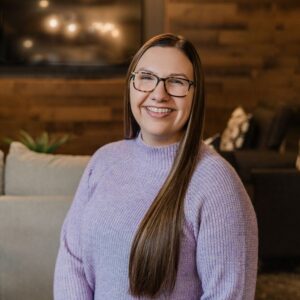
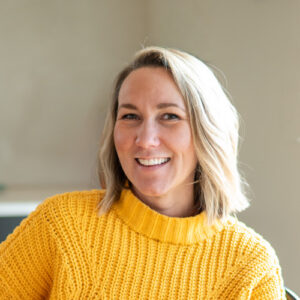
Maddy Roche: Welcome to Childfree Life by Design. Today we’re talking about the importance of care plans and what it means for people who are building a Childfree life on their own terms. I’m Maddy Roche here with my friend Bri Conn, and in this episode, we are talking about why traditional estate plans aren’t enough and why care plans are so important to compliment them.
If you’ve ever wondered how people will know what your wishes are, this conversation will give you the clarity and the tools to make intentional decisions that support the life you want.
Intro: From Childfree Insights, this is Child-Free Life By Design, the go-to resource for building the child-free life you want. Every episode gives you practical guidance, clear direction, and meaningful conversations to help you live intentionally and design a future on your terms. This podcast is for educational and entertainment purposes only. Please consult your advisor before implementing any ideas heard on this podcast.
Maddy Roche: So Bri, we are hot off of a webinar about care plans and folks can find that on our website in the future. I would love to hear from your perspective, Bri, what the difference is between estate plans, the traditional things like POA, will, trust and what care plans really are. Can you distinguish those two for our audience?
Bri Conn, CFP®: Estate plans are something that they’re legal documents and they really say, who do you want to make decisions for you? And also gives them the power to make decisions for you. So these are very formal, but they’re really just talking about the who and then giving the power. That’s usually what they’re limited to. Sometimes you can put a little bit of information in there in things like advanced directives or living wills regarding what you may want for some of your medical decisions. However, care plans are more informal documents that outline what does it actually look like for somebody to make decisions for you? What are the decisions that, if you were given the opportunity to make them, what would you make? How are they gonna take care of you? Where can they get in? Many childcare people have pets. How are they gonna get into your house? Where can the information be found? What does it look like? So when we’re talking about the two of them, a quick and easy estate planning gives the who and gives the powers, care plans gives where and how.
Maddy Roche: Love it. Why don’t you go a little bit more in depth about this wearer component, because there could be a lot of things in a lot of places, and I think you have a whole bunch of examples to share with our listeners.
Bri Conn, CFP®: The where is, I often like to say, it sounds so silly, but if somebody needed to get into your house, I’ve got a dog. How is somebody to get into my house? Where are they gonna find a key at? Where are the codes? I’ve got cameras and alarms on my house. How are they gonna get into my house and not set those alarms up and have the police show up because they don’t know the code to be in there. That’s not a fun time. You’re trying to just take care of a pet. So it’s putting down all of that information. Another big thing, mailboxes. It used to be a lot of mailboxes, were right in front of people’s houses. Now that’s not necessarily the case. You might have to go find a mailbox if you are incapacitated. Somebody is stepping in for you and they’re expecting something to come in the mail, where are they gonna actually find that mailbox to find that important piece of information that they might need for you? Where’s it located? Where’s the key for it? What’s the number on it? ’cause the numbers don’t always match the house numbers, because they just number them, however it seems like at times. But all of those different things, it’s just we do them so naturally every single day of our lives. But somebody else isn’t gonna know that if I went to Maddy’s house, I would have no idea where her mailbox is. Her dogs, I know they like raw meat, but I don’t know anything further than that. It’s documenting all of that information and making sure that somebody stepping in to take care and run your life can do it effectively.
Maddy Roche: Yeah. Beautiful. And folks, feel free to pull out a piece of paper and start jotting down some things that you might wanna include in your care plans. I started thinking about while Bree was talking, where are some of my most coveted pictures? Where are some of the things in my house that I would want people to know, where to identify them to then protect them? As my grandma aged, she had some jewelry that I knew were very precious to her, and that might be something that she explains that maybe it’s not in the safe deposit box, but maybe downstairs in the crawl space, there’s X, Y, and Z that you want to let people know about so that the proper action can be taken on them. So, really think about the where in terms of how you navigate your space. Maybe some things are not on your property. Maybe you have a storage facility that holds varying different things for you. And that’s something that you’d wanna include in that care plan. And then keep updated as you need.
When we think about your medical history, this is also something to keep living and breathing in your care plans. Not just what has happened in the past. Maybe you had surgery, maybe you have scoliosis and you have rods in your back. These are all things that we have understood that physicians crave to know about an individual if they’re working with them. And the care plan is where you can really start outlining not just your wishes around your medical treatment and your preferences, which we’ll talk about in just a moment. But you can talk about things like, Hey, I’m allergic to sulfa or penicillin, or I have a really bad response to X, Y, and Z. Or, I had X diagnosis and this doctor is who gave it to me. The following prescriptions are what I’m using and relying on on a daily basis, things like that. But then you can go around your preferences. And Bri, I’d love for you to talk about what life with dignity means and how you would coach people to think about it.
Bri Conn, CFP®: When we’re talking about life with dignity, some of the things is, do you have a specific cultural preference or a religious preference? Is that important to you to live a good life? Are you enjoying your life every day? For me personally, life with dignity is not being somewhere where I don’t know my name anymore or being unable to control my different actions. That is not a dignified life in my purview. And for you it might not be the same, it might be different, and that’s okay. But explaining what that means and what it is for you. I’m L-G-B-T-Q, being in the specific place that did not honor that and allow me to live fully as myself. It wouldn’t be dignified for me, it would be humiliating and upsetting. And so making sure you have those preferences in there, whatever they may be, is important because at the end of the day, we wanna make sure you’re fully honored and fully able to be yourself. I guess, the thing that keeps coming in the back of my head is fully known, as well.
Maddy Roche: Well said. I was just out to dinner with a pal who works in the emergency room, here in Bozeman. And I was telling him about what we were building and what it would include and things like the care plan. And he gave the example of frequently seeing people being resuscitated when he could just instinctively know that maybe that wasn’t their wish. And that happens because people’s plans aren’t documented. And Bree will go into a bit more detail about what happens if you don’t have a care plan in place. But this is where you would indicate do you wanna do not resuscitate? And if you’ve identified someone other than Childfree Trust® as your professional fiduciary, in Childfree Trust®, you’re gonna be able to craft your care plans. You could print those out and hand them to people. I think one of the issues that we see a lot is that yes, you may have identified and nominated someone to act on your behalf, but do they even know you well enough to be able to know what you want? And that’s where you get to really be selfish and start describing the things that you want. If you were incapacitated or had cognitive decline. How do care documents help support decision makers in knowing how you would decide on something, Bri?
Bri Conn, CFP®: A great example is, when it comes to care, we’re talking about, being L-G-B-T-Q and wanting to be in a place that would allow for that. That would be something I would wanna document in my care plan. Say, Hey, I know that this particular place will, it might be near me and it might be facility that’s near me. It’s not something, or not a place that I wanna go to for care. Because it’s not safe for me and who I am. That’s okay. So putting that information in there and really calling that out, saying like, these are the places that I would not wanna go, but these are the places that I would wanna go, that’s gonna give people instructions. It’s almost like a instruction manual for your life. It’s, these are all the decisions that I would make writing them down. Filling out your care plan is really making all the decisions that a decision maker would need to make, but making them today and making ’em yourself, and then providing that information to the decision maker, so they’re not gonna have to go and try and decide what you might want guess. They just say, nope, this is what they’ve decided and this is what they want. This is what we’re gonna go ahead and do.
Maddy Roche: Beautiful. I love your example, Bree, and was just at the leading age conference and attended the LGBTQ plus meetup at the start of that. And so many of our LGBTQ elders were sharing the experience that when people go into long-term care or senior living environments, people have to go back in the closet. Just how upsetting that can be for someone’s aging process is something you consider. And to think about your religious preferences as well. I know individuals who want to be at predominantly Jewish long-term care and senior centers. Please go ahead and write down who are the people you wanna be around so that your POA is able to make executive decisions on your behalf that can meet you where you wanna be. There’s location preferences as well. When we think about being in rural America, maybe you wanna stay at home as long as you can, but in the case of needing to transfer out, what’s the next town or bigger city that you wanna be at? And Bri often gives really beautiful advice around, be proactive and go visit those facilities and go visit those cities and begin to make your plans around where you will go. We know that the senior living community space requires a lot of preparation to get into it at the right time. And so which ones have you viewed? Which ones do you feel comfortable with? Which ones have you put your name on the wait list with? Maybe you have a deposit down already. All of those things can be included in your care plan. Other stuff, Bri.
Bri Conn, CFP®: It could be your specific routine. Do you prefer to have ice cream for dessert all the time? Is that something that’s really important to you? I’ll tell you right now that if I’m offered cake, I could take it or leave it, not really my thing. But if you want me, get me going, pie and ice cream, those are the things that I love and have loved for my entire life. So that might be something I’d wanna put in my care plan. Is that really important to me to have those things, and I like to have a routine Monday, Wednesday, Friday. I want those things offered. Is that something that’s important to you? We’ve seen that with other elderly parents as well. Dr. Jay’s talked about it before on multiple different things of the client whose mom, all she wanted was chips and the long-term care facility and the hospital facility just said, nope, we’re not gonna give you chips. It’s like, no, give her the chips. That’s okay, to provide that. Another big thing is pet caretaking. A lot of us have pets. How are they gonna be cared for? Maddy’s dogs like raw meat. My dog has her routine of she likes to go here and likes these toys. What are those things that are important that people need to know and make sure our furry friends are taken care of as well?
Maddy Roche: So Bri, I think part of the Care Plan documentation also includes people keeping these documents updated around the team they’re building around themselves. And that’s a topic you and I talk a lot about is who’s on your team. But as people age, you’re going to need to identify the individuals you want to act on your behalf. Yes, the Partner Trust company here at Childfree Trust® will be able to act on your behalf and follow your wishes. But, let’s identify the individuals ahead of time and the team that you want to be working with you so that you can really trust that the people that you have identified are the ones that will be doing some of that support for you. So Bri, give us a couple examples of who that team would be.
Bri Conn, CFP®: When you’re putting together these documents, we’re gonna ask for things like, do you have a financial planner? If so, who is it? If it’s somebody and you’re working with us already, we’re gonna know that pretty easily. But if you have a different financial planner, we wanna make sure that information is in there and we know that. Do you have a CPA that you like to work with? Is that somebody we can go and talk to? Because, even throughout your life, even if you’re incapacitated, tax returns still need to be filed and completed after you pass a final estate. A tax return needs to be completed as well. Are those people in there? Who are your doctors? Do you have a doctor? Because sometimes people do have a doctor that they prefer. Some people are okay with whoever, but making sure we’re calling out who are those doctors? Who are those specialists? You may want to work within Aging Care Managers. Is there somebody who can advocate on your behalf and be around to help identify different things that you might need, whether they come in and check in on you, or they’re working on, hey, things are progressing. It’s time where you might need to be moved into a facility for long-term care and they can really be that person liaison that you’ve worked with for years and know and can help get you through that transition and get you in there. And then also maybe you want them to check in on you and the ice cream example that I gave earlier. Maybe I’d want somebody to check in and make sure that I am getting my ice cream Monday, Wednesday, Friday as well. What does that look like?
Maddy Roche: And Bri, I think that’s point is so beautiful that this is your opportunity to really define what you want your plan to be and what you want your experience to be. Then to be able to give yourself some reassurance that you are working proactively on identifying the people to help you succeed at that. And if you are able to be proactive over the course of your life in identifying different teammates and senior care managers, which are real people, this are the profession that people have. They can help you identify which senior living communities would be best suited for. These are the people that will have the boots on the ground to support you. That if you can start doing that ahead of time you can live with a lot of confidence. The care documents and care plans are more than just where things are and how things are. I think this is also a place where you can really start talking and making plans for when maybe death comes.
Midroll: As a child-free individual who’s going to manage your affairs if you can’t. Traditional estate planning often falls short for our community. That’s why we created Child-Free Trust. It isn’t just about a will. It’s about providing a fiduciary solution to protecting your assets, your legacy, and your wishes. With people who understand the child-free path, don’t leave your future up to chance. Learn more and get started on securing your peace of mind at www.childfreetrust.com.
Bri Conn, CFP®: Yeah, this can be something where if you have not been around death before or really not seeing it much at all. It can be hard to go ahead and know what to decide. I remember very vividly a conversation with somebody who said, I’ve actually never been to a funeral before, and so I don’t really know what to put down for this. Is there a funeral pinterest ward? And to me, that just made me smile a little bit because I hadn’t thought of something like that. I’ve been to average of one funeral per year in my life, and so if you’re coming from different backgrounds, you may not think of it. But what I have found is there are a number of different morticians now who are creating content around what does it look like at the end of life and after you have passed, what are the different decisions that you can make? There’s sort of death coaches on those sides. Guide you in the different decisions of this is how I would want my body to be used after I passed. We’ve had conversations with clients before. They say, Hey, I wanna donate my body to science. Well, do you fully know what donating your body to science means? These are all of the different uses that it could be used for. And is that okay with you? Sometimes after those conversations, clients will decide that actually they don’t wanna donate their body to science anymore, and that’s okay. It’s really deciding, is that right for you? Is it a decision that you feel comfortable in or is it something where, maybe you need time to take in a little bit more learning on there. You can go visit, I know in the Pacific Northwest there’s some different human composting places. You can actually go visit there and see what that process looks like. And it’s also online. If you search human composting, you’ll be able to find different videos as well. But maybe that’s something you’re interested in. Memorials and funerals are celebrations of life. I’ve seen everything from a traditional funeral to people saying, Hey, take the money in my account. Go to the bar and have a good time. Those are options as well for you. Obituaries or announcements, do you want people to know? Is that something that’s important to you? Do you want a standard written obituary or do you wanna write it yourself? Every once in a while you’ll come across one where somebody has written their obituary. Is that important for you? A guest list. It sounds strange to think about a guest list for your funeral, but it’s not necessarily naming out every single person that you’d want there. It can be as simple as saying, Hey, I want this to be private to friends and family only, or these certain people, or, Nope, I’m okay if it’s open to the public. That’s all right, too. Along those same lines is there anybody specifically that you want notified of your death? I’ve got friends all over the country and should something happen to me, their specific friends, that I want to make sure that they are notified of my deaths. Because I want them to have the option to come to my funeral as well. Is that something that’s important to you? That’s a great thing to put in there. Another thing that we often will ask we want to know is, do you have anybody that you’re responsible for who’s dependent on you, but is not a child? So maybe it is a disabled sibling or family member that you are caring for. Maybe it is a parent that you’re caring for. Who are those people that should something happen to you, they’re relying on you and you need to have a backup plan for that as well.
Maddy Roche: I encourage folks to think about what communities they’re involved with as well. This is where you might be involved with your garden club. You might have a book club. You might be involved in your rotary. You might be really involved in your alma mater. These are all different areas and individuals and organizations that your contacts can contact and let them know something has happened on your behalf. And then the reality is that some people may be estranged from their family and there might be people that they don’t want notified if something has happened or invited to the memorial or something like that. And so again, this is where you get to be yourself and your true self around what your wishes are. And I really encourage you to just think broadly about your life as you begin to document some of this. So Bri, I think it’s important to talk about what happens if you don’t have a care plan in place.
Bri Conn, CFP®: If you don’t have a care plan in place, whoever you have listed is going to have to make the best decisions that they can with the information that they have available, and that information might not be a lot. If you’re a member of Childfree Trust®, we have a standard of care there, and we can make decisions based off of what you have in your legal documents to those estate documents, but we really want you to have as much information as possible listed in your care plan as well to help direct those decisions. If you’re not a member of Childfree Trust®, but you have your documents done already and you have people listed, they’re gonna have to make decisions based off of what they know. Maybe that’s a lot of information. Maybe that’s not a lot. Something that I don’t often talk about with my friends is, yes, I talk about estate planning at work all the time because I love it, but I’m not going around with my friends and having a conversation and saying, Hey, guess what? If I die, you better not put roses on my body because I do not like roses. I want peonies on there, they’re not gonna know that information. That’s something that needs to be written down. If you don’t have any sort of estate documents done and the state has to step in and then appoint somebody, if you’ve got family, it might be somebody that you haven’t talked to or estranged from. Maybe they just don’t really know that you exist, not because of anything bad. They’re gonna have to try and make guesses, and that’s not a lot of fun. Pretend something happened to me, Maddy and I are not related at all, but let’s say we were, and she was named and we were long lost sisters that we didn’t know about. Maddy, how would you make a decision for me?
Maddy Roche: if I didn’t know anything about you, I would probably go with my own cultural and religious preferences and thoughts on how people should be treated, and I’d like to believe that I have a nice concept of that, but it might be in stark contrast to what Bri’s life is.
Bri Conn, CFP®: Exactly. And I do know that some of our preferences in life will we align on a lot of things, there are some things that we’re not exactly aligned on and that’s okay, but I want to make sure that my life is honored and the decisions regarding my thoughts and feelings are taken into account. Maddy’s a wonderful human, but in this example, Maddy doesn’t know me and is making decisions based off of what she thinks. And so that’s not something we want. We wanna have as much information documented as possible.
Maddy Roche: And I think it’s a good thing to think about that, in so many cases people nominate people as their POA and never even tell them, and so then they’re receiving a phone call that you’ve been indicated as X, Y, and Z’s, power of attorney. They’re here at this hospital they’re about to go into surgery. And then a question would be presented to them. That’s a big phone call to get. And I think, part of this conversation that we’re gonna have long-term with our audience is around preparation and adopting a culture of preparation in these areas. And to think about if you’re gonna identify someone or Childfree Trust® as your POA, the other half of it is that you give them the directions. And one way to ensure that your wishes are followed is that you have outlined them and you’re able to really communicate with people and your chosen fiduciary about what you want out of life. And that’s really the only way you can expect that your wishes will really be followed. And it’s been so fascinating to hear some people’s ideas of what an ideal memorial looks like and what people’s definitions of life with dignity are. And we’re all very unique individuals and I think that this is something that even if you’ve been married to your partner for 45 years, you two may have very different desires about how to honor your life and what that obituary says. And maybe one of you is very private and the other one’s a big party. You don’t have to feel like you have to follow anyone’s rules with this. But what’s most important is that it is documented, everything from where the safe deposit boxes to what your wishes are.
Bri Conn, CFP®: Being sure to give people that information is one thing, just over and over, we wanna reiterate because it is so important. Make the decisions, but give people the information as well. Don’t just make the decisions, write it down, and stick it in a corner to never look at it again.
Maddy Roche: Exactly. And Bri, you’ve done a fair bit of coaching on this estate planning topic. I know it’s one of your favorites, but how have you coached people to really start thinking about the care plans for themselves? And what advice do you have to our listeners? I.
Bri Conn, CFP®: The first thing is be okay with it taking time. There are times where I’ve worked with clients and they are in such a rush to get some of this done, and they’re panicked and they’re worried about it, and I always say, no, no, no, it’s okay. Take a breath. It doesn’t have to be absolutely done super immediate. Let’s take some thought and don’t be afraid to make a decision and write something down in a care plan and then decide six months, a year, a couple years down the line that the decision that you made at that time is not the decision that you would make today. I think a lot of people get hung up on the idea of, I have to make this, it has to be perfect. It does not have to be perfect. You can constantly change it and make sure that it fits who you are now. We’ve all made decisions in life that we made the best decision with the information we had available to us at that time, and then as we’ve gained more information, we recognize that maybe we wouldn’t have made that decision again. That’s okay. With a care plan as long as you are healthy and able, you are able to be continuously update this. It is not a set it, forget it, put it in the corner. It is a living, breathing document. Where as something changes, as your life changes, whether it be a life circumstance, marriage, divorce, new friends, new organizations, a pet either passing or getting a new pet, anything like that, you can go in and update those documents. Make sure that they’re reflective of you and your life now. So updates are gonna matter a whole lot more than speeding through and getting it done. And we want it to be something that’s simple for you to go through and build, but also to keep everything current. Great example of it is not only within the Childfree Trust® system, have we built this for you to have all the information. But if you have all those documents at home, in my past life, I worked in marketing and one of my jobs was I worked at a dealership, sold a bunch of different things, trailers, campers, cars, all these things, and I remember very vividly instances, where people will be wanting to sell cars on the behalf of somebody who has passed. However, they did not have the title. They did not have a death certificate. They didn’t have any of these things. Death certificates, you can obtain them, but titles are harder to obtain. Making sure that information is stored securely. The people that you have listed and give ’em the power to make those decisions for you, know where that information is, is gonna be incredibly important If they ever need to come to the point where they might need to sell something on your behalf. So not only is it having it all written down, but it’s also having it organized and easily available and people know where it’s at.
Maddy Roche: So, Bree, we’re at the point in our podcast where I am going to attempt to sum up what we talked about. So let’s see if I can do it. I think three main takeaways is that one, care plans are, I think, equally as important as those estate documents. Yes, you’re giving legal responsibility over to those individuals in your state documents, but your care plans are what your wishes really are. I think the second big takeaway is that you wanna begin to develop the team around you to support you as you age. That includes everything from having a great financial planner to a great prescribing doctor, to maybe aging care managers, that will help you identify the communities that you should be involved with as you age. Then finally, I think the takeaway is to keep it all updated, that we really want you to think about your care plans as being a place that you revisit regularly and update as you age, because our wishes today as young women, will not probably be the same as we age over the next 20 or 30 years. So, audience members please keep these documents updated and feel encouraged to do so. Bri, did I miss anything with those three summary points?
Bri Conn, CFP®: I think you really hit the nail on the head there with a summary. Fantastic job Maddy.
Maddy Roche: Thank you. Audience, I know that these are not always the easiest things to think about. I hope that both me and Bri are able to neutralize some of this for you. I think there’s so much power in being able to be prepared and having a culture of preparation adopted as a mentality for aging. There’s never a bad time to be prepared with what your wishes are and what kind of plans you have in place in the case of an emergency. So please welcome our invitation to embrace that attitude. Look at this as a way you can inspire others to do it. Maybe your friends and family who you’ve been trying tirelessly to get to complete their estate documents. Maybe you can inspire them with your actions. So, with that folks that is all for Our Child Free Life by Design episode. Remember, intentionally choosing to invest in the moments of joy is just as important as investing in your future. Until next time, happy designing.
Speaker 2: You’ve been listening to Child-Free Life by Design. Make sure you follow the show. Leave a rating or review and connect with us on social at Child-Free Insights. For more resources, guides or upcoming events, visit child free insights.com.