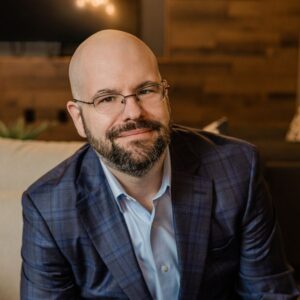
Dr. Jay Zigmont, CFP®: Welcome to Childfree Life by Design. Today we’re talking about reimagining your life, your legacy and leadership, and we’re gonna do that with one of my new favorite friends and talk about a secret project that I’ve been working on in 2025. So I’m Dr. Jay Zigmont here with a special guest, Drew Blickensderfer, competition director of Front Row Motor Sports.
In this episode, I’m gonna take you behind the scenes of the secret project I worked on in 2025, where while legacy and leadership, particularly in the context of NASCAR. You don’t have to be a NASCAR fan to enjoy this talk as you’ll find Drew’s perspective to be enlightening to all.
Intro: From Child-Free Insights, this is Child-Free Life By Design, the go-to resource for building the child-free life you want. Every episode gives you practical guidance, clear direction, and meaningful conversations to help you live intentionally and design a future on your terms. This podcast is for educational and entertainment purposes only. Please consult your advisor before implementing any ideas heard on this podcast.
Dr. Jay Zigmont, CFP®: Drew, I’ve been looking through my notes, like you and I have been working together almost three years. You and your wife and I and you are a two time Daytona winning crew chief. Which to people outside NASCAR, that’s the super bowl of NASCAR. I don’t mean to blow you up, but you’re kinda a big deal. What does it mean to be kind of a crew chief in NASCAR and how’d you get there?
Drew Blickensderfer: I took an unconventional path here. I was a stick and ball sports guy growing up. I went from, from that to racing cars in high school and getting infatuated with the competition of cars. I had some family members that were mechanics and owned a service station, so I had that side and I also had the sports side when I went off to school. I went off school to wrestle at college. I can go off to, to get an education. I think about halfway through I thought, oh no, I’m gonna have to work through a for a living here soon. So, I told my parents I’m going to North Carolina and I’m gonna work on race cars, and they thought I was crazy.
And the whole goal was to become a crew chief. I knew enough about it to know the crew Chief is basically the head coach of the team. that’s where I wanted to be. My father was a coach. I’d been around good coaches. I had wanted to be that. I just wanna throw in a racing element to it. So I came down south, kind of on a prayer really found pretty hard goings of trying to get a job in the sport. Finally got into the sport. Made pathways and ultimate goal be a crew chief. I wanted to run a race team being part of the adrenaline rush on Sunday, be a part of the decision making on Tuesday of how you were going to go to the racetrack, and also building the team and being around a team at.
Dr. Jay Zigmont, CFP®: we’re gonna dive into that because actually as we get in a whole discussion about, you know, crew Chief and identity and how that works, but I mean, you’ve been doing this how many years?
Drew Blickensderfer: I’ve been down south in NASCAR since I moved here in 99, got my first job in NASCAR in 01, and been a crew chief since 2006.
Dr. Jay Zigmont, CFP®: Yeah. And come to find out, crew chiefs don’t normally last that long. Is that fair?
Drew Blickensderfer: That that is fair. I think not having children allowed me to be able to travel a little more than most people. They wanna go to that little league game. I wasn’t missing little league games on Saturday, so I was able to follow my dream and pack a suitcase every Thursday and fly to a different city.
Dr. Jay Zigmont, CFP®: For those that don’t know NASCAR, they’re on the road. 36 plus weeks. A year, and I’ve, I went to a few race, I dunno, half dozen, 10, whatever. Was, and I was exhausted. I mean, it is a heck of a life.
Drew Blickensderfer: It is, it is you’re packing every Thursday or Friday getting on a private jet with your team flying to whatever city you’re at, and as soon as the race is over on Sunday, you are hustling back to the airport to get on that jet and fly back here. Then back to work on Monday. So, yeah, for 36 to 38 weeks a year, it’s all but seven days a week. And, it’s, a lifestyle that takes a toll, that’s for sure.
Dr. Jay Zigmont, CFP®: So when you and I first started kind of chatting about some of this legacy stuff, you were in an interesting spot, and let’s just say it that way. So you were working at Stewart Haas Racing, and for those that don’t know NASCAR, they have different teams that run these cars. at the time, Stewart Haas had said, yep. We’re going to be selling off a bunch of our company and, good luck on what’s next for you. I mean, talk to me a little about that.
Drew Blickensderfer: I’ve had a couple times in my career through COVID being a semi entertainment sport, the Stewart Haas Selloff, where you’re like, oh no, this could come to an end pretty quick. The good news is there’s so many cars that are gonna race every single weekend. So if Stu Haas went away, other ones were joining and , through that time we worked with uj, my wife and I. We would sit down and we would have every meeting where we were going into it to talk about finances. And it ended up being an hour of coaching, Drew through what was his next decision in the sport, whether that’s still being a crew chief, whether that was doing tv which I had a side gig doing, whether that was being a competition director and we talking through all of those decisions with possible opportunities on the table. I ended up back at front row motor Sports where I was before I went to Stewart Haas.
Dr. Jay Zigmont, CFP®: Yeah, and full transparency. I didn’t know much about NASCAR before. I’ve hung Drew and Lori. I just gotta call that out. You know, I’ve been fortunate that Drew and Lori have been able to answer some really dumb questions I’ve asked over time, trying to understand it. And I think what’s interesting to me is, whatever your job is, it’s really about kind what do you want to do with your life? Where do you want to go? And one of the questions I had asked Drew is one of my favorite for clients, which is what I call the obituary question. Is, what’s the second line? Obituary. The first line is like, Jay died at this location. The second line is usually like father of three leaves behind Jack, Joe, and John. And I asked you, I said, Hey, does your obituary say crew chief? I mean, that is what his Wikipedia page says. And you said, no. Tell me about that.
Drew Blickensderfer: Yeah, it’s something I’ve struggled the last few years as you know, Jay, what would my second line of my obituary be and what do I wanna be known for? And through it all it caused some soul searching. I have been known as NASCAR guy, crew chief, like I said, for almost 20 years now. 17 of ’em at the highest level of the sport. So my identity was wrapped up in that, but I don’t see myself in that. So there was a internal struggle that went pretty hard, and I would sit down with my wife and we would talk about why are you nervous? Take a new role as a competition director eventually. Well, , I’m known as crew chief, you know, my mom’s friends know me as the crew chief. My relatives know me as a crew chief. My everybody knew me at that, but I don’t wanna be known directly as that. So my response to you after a little thinking about what would my second line be? I hope it says leader, leader of men. And I wanted to be known as someone who, did the morally right thing, was honest with people and led men to improve themselves, not only in the sport of NASCAR, but just all around be a better man after coming in contact with me. That was my goal what I wanted my second line to be. So it became more clear to me the steps I need to do. Some of them I’ve already been doing, but what did I need to do to make that clear.
Dr. Jay Zigmont, CFP®: this is one of those weird things for me when somebody says, Hey, I wanna be a leader of man, or I wanna be a good man, and I, that’s my focus. And you’re gonna do that in the NASCAR world, which by the way, let’s be clear. I mean, it has a very kind of classical family focus around, , legacy and kids and all that. And you’re gonna say, I wanna make an impact on a slightly different, and let’s figure out kinda like how to meet good men. like that’s just meaty topics to dig in. And Drew, I have to say like that is one of those, like as a researcher, I’m like, Ooh, I gotta know more. And I think the reality check is that’s a great awareness for you to know, hey. I’m not gonna be kind of known as the crew chief or that’s not what I want, but that does take a shift in your mindset.
Drew Blickensderfer: Yeah, it does. And you know, there’s a part of, when I look back at my career there’s parts like the Daytona 500 wins that I’m super proud of and I wanna be known a little bit for that. But I also, when I go down and put my head down at night, I want people to say I did the right thing for them to help their careers. And that’s kind of what has caused me to move outta the crew chief role now and be super energized into my new role. And some of the joy I’ve had recently is sitting down with employees that have other opportunities to go to different teams and talking them through that. Not being a used car salesman and telling ’em why they need to stay with me and front row motorsports, but saying these are the things we can offer you in the future. Can they offer you that, what do we need to do? and helping them make the decision for them and their family and feel comfortable about it. And at the end of the day, I was very fortunate, like you said earlier, two years ago when we were going through what is Drew gonna do next, when the team was shutting down, I had a few other opportunities and they were all with teams that I had either worked with before or had opportunities with before. And it made me kinda realize I’m leaving kind of a mark with these people of the right thing. I did the right thing for them either want to give me an opportunity again or have a chance to go back and work at a place for a second time.
Dr. Jay Zigmont, CFP®: For everybody listening, so this was an interesting experience. I’ve been working with Drew Lori for a couple years, gotta know him pretty well and I’m like, Drew, you’ve got an amazing story to share, especially if you wanna share, kinda like. The transition, what is it like to shift to that next career, that next life cycle? I mean, as a crew chief, you do age out. There’s a point where you do and you have to make the shift, but like, I don’t wanna either, you know, like how do you find that balance? And Lori and I, I be frank, probably teamed up a little bit too much on Drew, and we’re like, Hey. How about you, let me kind of watch this be alongside you, be embedded with the team, and eventually maybe write a book about this, about what does it mean to leave a legacy without lineage or a legacy of leadership? And Drew, you weren’t really loving that idea at first. Is that fair?
Drew Blickensderfer: It is. I did TV once a week for a long time. People think I was going for the media spotlight a little bit, and it’s not really me, Jay, you’ve been around me enough to know I, I’m kind of a watcher , from a distance. And then within my circle we’ll make change, not kind of search and look for it. So I was pretty skeptical about some of the putting myself out there in, in that element.
Dr. Jay Zigmont, CFP®: Well, and. I think the hard part is from the outside. I’m watching this, I went to a race in Nashville, and I’d never been to a race before. Like it’s overwhelming. I mean, if you have not been to a NASCAR race, there’s just a feeling, the noise, the smell, like the, it is Drew Blickensderfer: it is sensory overload. All of your sensory, like the touch, the feel, the smell, the scene of it. It’s, it’s overload.
Dr. Jay Zigmont, CFP®: right? So I’m there and Drew’s, Drew’s one of those, like he’s been in the industry for long enough that. It seems like everybody knows it. Like just so you’re walking through the pits. Everybody says hi. he’s got, he’s got a celebrity. You know, people are gasping for signatures. And I watch him and we’re lining up with the cars and his driver, Noah was there and Drew picks out somebody from the audience. I have no clue what this was. Some kid 10 years old says, Hey, you need to come over here and meet Noah. I was like, all right, what is this? I asked Drew Hedrick, he goes, oh yeah, that is the, you know, one of the sons of one of my crew. And that made his father look like a, I dunno, the big guy, but Drew knew this kid, knew his name, knew what happened, and knew went over there. I’m like, that’s the core of a leadership that matters that we need to share about you Drew and. I swear you looked at me. I was crazy. But that is something about leading good men. That makes sense.
Drew Blickensderfer: Yeah, I think I always thought of myself as a leader and I was able to stay a crew chief for a long time. there’s a lot of crew chiefs in the sports. Some have engineering backgrounds, some don’t. And I was able to mix both worlds a little bit and I want to be educated about both sides of every aspect of my job. I was very fortunate as a young man to be around really good leaders. Didn’t know it at the time. My father. State champion basketball coach in high school. All of my coaches in high school, the men and people around me taught me right from wrong and things to do. I didn’t realize that growing up, and I just kind of wanted to do these things as I got older. And then working with you Jay, it really opened my eyes. It’s easy for me to read a book about leadership and habits and every other, you know, self-help type book around there , and take something from those. But what I’ve learned in the last three years of, leadership changes we’ve had a struggles that you have and I have worked through of. How am I gonna lead this person versus that person? And , what helped me learn and be better at 25 might not be what this generation’s 25-year-old needs to help and to bring the best out of ’em. And the ultimate goal in the leader is to bring the best outta someone, right? So. Really looking in deep on learning how to make changes in my leadership style to adapt. I always thought I was good at either giving a hug to a person who needed it or a kick in the butt to a person who needed it, and knowing when and where to do that. It’s deeper than that though, right? Those are the surface level reactions to get the most outta someone, but then working with yourself. It’s really helped me understand there’s other ways to do it as well. They learn differently than I learned, not only because of this generation, but because everybody’s different. So trying to not, just, oh, I can’t teach that person. How do I teach that person and dive in deep and, my wife has, I will get off the phone with you Jay and I’ll be frustrated or you’ll see it in person when I’m frustrated and then you know, she’ll talk me through it and she knows how to exactly say the right thing to catch me onto it. And. I’ll think about it for a few days and I’ll come back to you both and say, I, you’re right, and this is how I’m gonna go do it. So, the thing I’ve learned through this whole process is great leadership. You have to learn and adapt constantly to be on top of your game. You what? ’cause what worked yesterday might not work today.
Dr. Jay Zigmont, CFP®: Yeah. And so Drew decides, Hey, yeah, I’ll go ahead and let you wander and follow me for a year and we’ll dig into this topic and then. We picked the wrong year to do it. Let’s be real Drew, like it was a rough year and you got to learn more than probably you wanted to at times. And I got to learn more than I wanted to. And like, let’s just say 2025 for front row and for you was a challenge. Is that fair?
Drew Blickensderfer: It is extreme challenge, biggest challenge I’ve had in my career through a season of just bad things happening. Some self deserved and some just wrong place, wrong time.
Dr. Jay Zigmont, CFP®: Yeah, and for those that aren’t NASCAR followers. So, beginning of 20 25, 2 teams sued NASCAR for monopoly or anti-competitive rules. And one of those was Drew’s team. And Drew got to lead during a bit of chaos. Let’s call it that. And by the, kind of the halfway through the season, I forget the exact stat, but I’m sure you’ll know off the top of your mind. But at one point it was like you had crashed in like 14 out of 18 races or something like that.
Drew Blickensderfer: Yeah, it was something ridiculous. I think it was over 50% of the races. By years end, we had crashed.
Dr. Jay Zigmont, CFP®: As a leader, there’s a difference between saying like, oh my God, things are gonna go bad. And like literally having, smoke and fire and cars destroyed in the middle of it. And I think the hard part is, when you wanna talk about leadership, people think about like, oh my God, you’re gonna win the race, you’re gonna do the things. And one of the things Drew taught me was that in NASCAR there are essentially, you know, 35 losers every race. So unlike, , stick and ball sports where you know, you got kind of like a 50 50 chance at least to win a game at a race. Most times you don’t win. And that to me is really interesting as a leader. Like how do you lead somebody during rough times in where winning is like, I don’t know, almost impossible. What do you think about that, Drew?
Drew Blickensderfer: Yeah. it’s something I had done in the past and you helped accelerate that Jay was making small victories. Right. If you have a team that their average finish for the last historical data last few years is 20th, 18th is really good result. You know, for an average finish for that team, you’ve moved up two spots. You’ve gotta start taking those. And that’s one thing that I’ve done in my past is what’s better if this team qualifies 21st every single week on average, how do we qualify in the top 20? And when we start doing that, that’s a win everybody. We need to celebrate that and we need to then , make the next mark that we need to hit. So you’ve even taken that a little smaller and kept dosing it down for me throughout the, this year where we would get into crashes. They weren’t our driver’s fault. They weren’t really our fault. We were this wrong place, wrong time. And you brought up, what if you were one car better? How can you control your destiny a little better? And then just us getting on board with, if we were one car better, we would’ve missed that crash. Well, we can affect one car because when the crash happens and you’re just driving along and someone spins out and hits you, doesn’t seem like it’s your fault. But if we were a car ahead of them instead of next to them, wouldn’t have hit us. We would’ve been able to be, okay, so how do we start controlling one car better? How do we take our qualifying effort, one car better? And then just starting, building little building blocks like that we can share and kind of promote through a miserable season so that people, like we said, this tough schedule can keep showing up every Friday, Saturday, Sunday, trying to give 1% more than they gave the week before.
Dr. Jay Zigmont, CFP®: Atomics Habits made that very popular. It’s been around forever. it’s not like a surprising idea, but it’s interesting that as a leader in sports where like the goal is to win the race, but you can kinda shift the team and say. We get one car better and we may have a chance. And when you and I first talked, you said, hey, to win a race, you have to have a fast car. Good team that executes and luck. And that luck one has bothered the hell outta me. It still does. And then I watched, yeah, we were at the homestead race and the qualifying and Noah, it was the first. Place doing very well. And what happens is each driver goes out, does a lap, gets a score, and then everybody takes turns afterwards. And Noah was in first place, his time was good. And then I watched you Drew, come out, you look up and then your, you shake your head and go down. ’cause a stupid cloud had come in and you knew that was the end. And I’m like, I didn’t believe you on luck until I saw one cloud come in. And destroy, like you gotta have a third place, but like destroy your chances. I think when we talk about luck, we often like wanna blame things, but I don’t know how you lead people through where one cloud can change your entire outcome.
Drew Blickensderfer: Yeah. it’s looking at the positives, right? The positive is we qualify. Third, you can still win the race from that. We had a great effort. We did our job, we got a little unlucky with the cloud. How do we fix that? They also set you out in qualifying based off how you finished the week before. So we went out fairly early ’cause we didn’t finish well the week before. Well, we need to fix that, finish better the week before, go out later. Those are things we can help do to keep building momentum. So. It’s taking the group and saying, okay, these are the good things that we did this week. What do we need to fix for next time? And it’s just building on those little building blocks every single week. If not, man, it would be a miserable, miserable 38 weeks getting on that airplane.
Dr. Jay Zigmont, CFP®: I’ve always been one of those, like the harder I work, the luckier I get is kinda the way I look at it and it probably in my job, it’s probably closer to the truth. In your job, it’s not so much, I mean, somebody could spin out next to you and you’re wrapped up in something that I don’t know how you lead teams through that when you’re like, yep, you did great and somebody else messed you up.
Drew Blickensderfer: yeah. Talladega too is, is a perfect example. We know we’re pretty good at Talladega. Noah’s leading the race at Lap 40. And the guy behind us runs in the back of us, spins us out and crashes us from first. So can’t get one car better. We were leading the race. But we can’t control the guy behind us either, you know? So what can we control in those situations? Okay? We learn from it. We know that guy’s an aggressive pusher. How do we get better for next time? But you gotta just go on and, that’s one thing. This sport will beat you up. If you can’t, switch to say, okay, what was positive? What can I take from that? We need to go on to the next week and keep building on it. Because if you’re just thinking about what, what happened and what went wrong, some of it, like you said, out of your control, it feels like, it’s, you wouldn’t be around for, for very long.
Speaker: As a childfree individual who’s gonna make decisions for you if you can’t. Traditional estate planning often falls short for our community. That’s why we created Childfree Trust. This isn’t just about a will. It’s about providing a fiduciary solution to protecting your assets, your legacy, and your wishes. With people who understand the child free path, don’t leave the future up to chance. Learn more and get started on securing your peace of mind@childfreetrust.com.
Dr. Jay Zigmont, CFP®: don’t know about you all that are listening, but one of the things I didn’t know about NASCAR is they have data on pretty much everything. Like you can see real time data, if you are a data nerd, you should go see behind the scenes at, at NASCAR. I mean, you guys simulate everything and you have, data real time from the races, but even then you sometimes just gotta go with your gut.
Drew Blickensderfer: Yeah, there’s, there’s a lot of data, a lot of analytics that are involved in it. But there’s always this gut feeling too, of how it’s been playing out recently. What are, your feeling of, is NASCAR throwing cautions a lot or are they letting cars spin that don’t touch anything and not throwing cautions? There’s a lot of things. So there’s a gut reaction to when a caution comes out. Do we pit, do we not, do we put two on it or do we put four tires on it? And, and through all of that, that’s experience. You know, we do our best analytically to look at all of the possible outcomes. And then you have to make a decision. And you know, there are times when I’m going strictly with analytics and, then there’s other times when my experience tells me there’s a little bit here, Drew, that, that says it hasn’t been going that way in the last a hundred laps of this race. We need to take a chance and, to be around. You gotta do that. Better than, better than most of saying two tires, four tires. And it also comes down to relationships. You know, when you’re pitting or not pitting and some of the gut reactions you’re making during the sporting event, you’re also knowing the relationship you have with the guy driving the race car of what is he feeling? Is he gonna be on board? Because if he’s on board with this, it makes me feel a lot better about it. If he’s not on board, I gotta talk him into it. And we have to have this relationship of making these gut calls for the benefit of the team.
Dr. Jay Zigmont, CFP®: And let’s talk a little about that relationship. So one of the fun ones to watch is, you and I are both kind of Gen Xers by core. I mean, hard work is probably most important thing I’ve ever heard from you. Like, I mean, that is matters to you. And then you get kind, when you’re working with those younger crowd or someone more on the neurodivergent scale where. That’s not what gets them there. You and I had some great talks about how do you reach people that learn and are led by different principles than what you go by.
Drew Blickensderfer: Yeah, it’s pretty hard, I was a former wrestler and football player and like I said, my dad was a coach when you messed up. You just practiced, right? It’s the old right on the chalkboard a hundred times. It’s sit at the free throw line and shoot free throws until you don’t miss. It’s, it’s do that. So that’s the things that have, trained me. You know, working with people that don’t learn that way. And it was, it was completely foreign to me to begin with. I didn’t understand how, they don’t understand that. Just like they don’t understand how writing their name a hundred times would, make them not misbehave, right? Like, so we would go back and forth. There was a infamous dinner that you were at with my wife where I kind of freaked out and was like, why do I have to change all the time? And then I do my normal, I I get quiet and I think about it and ultimately I want the best for myself and everybody around me. And if it takes me changing to help that. That’s what you need to do as a leader. And that’s what I would do. It just felt, felt completely unnatural to me to think about it differently than, than just hard work. You know, your knuckles need to be bleeding by the time you get this right or you’re not working hard enough at it. So you working with me to understand some of that and then seeing some of the fruits of that later in the year of trying to get. To the root of, of some of the questions on what drives others to do this and wanna work and how do you get them to click on something and get some of these small gains that we were just talking about. Some of the metrics of, Hey, how can we energize this team, whether it be let’s do this, this weekend really, really well, and trying to get a younger kid involved and doing this really well, and then seeing how that can pay off to get, to get small gains for the betterment of the team.
Dr. Jay Zigmont, CFP®: Yeah, and kind of the frame. Work I use there is, we talk about kind of the golden rule versus the platinum role. The golden rule is treat people how you want to be treated. The platinum rule is treat them how they wanna be treated. And I think it, it is a huge culture shift for those of us, that come from a different world. I’m not saying better or worse, like I, I’m not judging better or worse. And then to shift their mindset, and you’re right Drew, you know, that moment, I thought you were gonna throw things at me when I’m like, Drew, I think you need to change the way you’re approaching this. You about lost your mind on it. And I think the hard part is, as a leader, we have to make those tough choices to do what’s right for our team, even if we don’t agree with it.
Drew Blickensderfer: Yeah, I did not agree with that. Way to, to go through and help others , as the manager leader of the group. But what I was doing wasn’t working right. So I had to, adapt a little bit and seeing some of the benefit of understanding if I adapt , we can grow as a team. And, and those were the things I thought I’ve done really well in my career was understanding. How each person on my team needed to grow. We reached some challenges in the last year or two where I didn’t understand at all, and I was out of my comfort zone. I didn’t understand how, I couldn’t have someone come in my office, sit down in a chair and talk to ’em, and they would get better. It didn’t work that way. So we had to figure out other ways to, not talk to ’em that way, but go around at this angle how, okay, let’s try it this way. You know? And you and I worked through on weekly occurrences on how to, react to people that learned differently than I did. And ultimately I had to, as the leader, figure out how to get the most out of ’em. And, and we had some successes at the end of the year by doing that.
Dr. Jay Zigmont, CFP®: So let’s swing back to the legacy. So towards the end of the year you and I had a good conversation. You’re like, look, it’s been a rough year. I’ve been thinking about kind of where I want to go with my life, and I’m more ready to leave the crew chief time now than I ever have been. you remember that moment?
Drew Blickensderfer: I do. I do.
Dr. Jay Zigmont, CFP®: So I think that’s a hard thing to admit. I mean, you started off with, that was your goal. That’s why you moved to North Carolina. That’s what you wanted to do and to go and say, yeah, I’m ready for something else. It’s not necessarily bad, but it’s like it a huge mind shift.
Drew Blickensderfer: Yeah, and, and as much as I didn’t want my second line of my obituary to say two time Daytona 500 champion crew chief, I, I also had this. This perception with me, ’cause I’d done it for so long, almost 20 years. That’s what came after my name. Everywhere I went, I knew that role, like the back of my hand. I know what a crew chief does on January 12th. I know what he does on August 3rd. I know every day of the year I know what a crew chief does. ’cause I had done that role for so long. So there was some fear of doing something different. Deep in there. And there was also this, thing I had in my head of that’s my identity. I’m known as a crew chief. I’m known that when my parents talk to their friends, we have one son that does this and one son that’s a crew chief, and it’s just been the same forever. And it was like, if I’m not the crew chief anymore, what do I do? It, it was, weird. Someone. Came up to me recently and asked me what I did for a living. And I usually tell him I, I work in racing and just kind of leave it like that. And he is like, oh, well what do you do? And it was the first time in 20 years I said something besides crew chief and it was very awkward. I told Lori afterwards, it f felt weird to me that describe but I also knew there was a part of me that was really enjoying the team building personal leadership aspect. Of being a crew chief and wanted to go deeper into that without having the day to day what Right rear spring. Are you gonna run at Charlotte? What? Helping build teams maybe with a little less fingerprints on making race cars Go fast. Giving people what they need to make those race cars go fast. There was an energy in me that was seeing that the last few years. I really liked, I really liked being in a leadership role of helping make the decisions of how to make this team be faster, not this actual race car. Be faster. And that’s what ultimately made me come to you and say, I think I’m closer than ever now. Me saying that, Jay, I think I was still only 20% there. When I went the whole way there, it was a little fearful, but it’s been pretty exciting in the last couple weeks doing this new role.
Dr. Jay Zigmont, CFP®: I think there’s a, reality check there and let’s be real, it is something that the data says is hard on men. Most men have their identity wrapped around kind of their work or their job title or wherever else it is. And shifting that identity, even if it’s the right thing to do, even if it’s the right thing for you, even if it’s the right thing for the team, is hard.
Drew Blickensderfer: It is, through all of it I felt like I had something to give to more company wide than just one singular team. For those of you that don’t know racing and team wise, the way it’s set up, there’s three car number race teams that run for my company in the Cup series and two of them in the truck. So I was only involved with one of those teams, and that’s how I had done my whole career. The ownership group here and myself came to the realization with my experience, I can help the whole global aspect of the company. Do more good for the whole place than I can just for one team. That’s what kind of made me be okay with it. How, how do I have my fingerprints a little bit on the entire place instead of just one team and leading the entire group? And it’s gonna be challenges, right? It was a little intimate, a little. You know, in your face challenging with a small group of people. Now you have a large group where you have to have different leadership challenges than, than I’ve had for the last 17 or 20 years.
Dr. Jay Zigmont, CFP®: It swings back to that legacy question, you know, where if your legacy is not about being a crew chief, but it is about being a leader and creating people, you may not be used to currently saying you’re a competition director, but that’s probably the right path as far as your legacy.
Drew Blickensderfer: Yeah. You know, the text messages and conversations I’ve had since it was announced, I took the new gig have been super supportive and good. And to hear people say, you’re a good leader and that’s gonna be great for you. People that don’t even know that we work together, and this is kind of. A big part of my life the last couple years in leadership and legacy have reached out and said really nice things. I’m super fortunate. My wife is probably the, you know, I, I was very fortunate as a young adult to have a lot of good leaders in my, in my life. She’s a leader in a different setting in a, in the tech world. So to, to see her relate to my leadership style and what I do in a sports environment. More locker roomy, you know, environment than anything that, that people in the business world. And how we bounce ideas off each other in the evening and talking with you, with each other on car trips about leadership and how you would do it if you were a CEO of a tech company versus how you would do it if you were a CEO of a race team and trying to merge the two worlds. It’s super fun and exciting to, to have those conversations with her as well.
Dr. Jay Zigmont, CFP®: The bonus is your new position you don’t have to be on the road as much. Now, there’s a little bit of better quality of life when we call it encore career, where you draw the curtain on the first career you’re in, you move to something that’s a little better balanced for you and that fits your purpose. Is that fair?
Drew Blickensderfer: Yeah, 100%. One of the first things I did, you know, I’m one of those, I go to bed at nine, I wake up at five every day. I have done it my entire working career. No matter what my job was, I started it early. I went to bed early. Those are the hours I’ve always kept and doing that. I miss Monday through Thursday Coffee with my wife in the morning. ’cause she gets up a little later. I miss that movie she wanted to watch at 8:00 PM ’cause I’m in bed at nine. Some of what this job will afford me is the ability to show up to work at seven 30, which is a little more normal, and have that coffee at 6:00 AM with her instead of me being here already and getting home a little later when she’s done with her day of work and being able to spend a little quality time and. For people that don’t know most of the time. We go on Thursday or Friday, we race on Sunday. There’s support, practice, qualifying type stuff. On Friday and Saturday. There are certain races. I won’t go until Sunday now. So I will, get to enjoy a farmer’s market on a Saturday. I’ve always thought they were fake when they had the signs up in town that there was a farmer’s market on Saturday. ’cause I’ve never enjoyed one. I’ve never seen it. So being able to spend a Saturday afternoon in town with, my wife and things like that, and then go on just, just on Sunday, it’s gonna allow me to enjoy both professionally and personally my life a little more.
Dr. Jay Zigmont, CFP®: We call that the file lifestyle. It’s kinda like dialing back to the right work at the right time, the right place. But Drew, if you had to kind of come up with one set of advice for somebody in your position, so somebody who is like looking into that next chapter of their life, trying to figure out what’s next, trying to do this, what advice would you give them?
Drew Blickensderfer: The advice I would give would be to separate the, what you think your identity is. Versus what you want to do. And that’s what I ended up doing, writing down on a piece of paper what I think other people would think Drew Blickensderfer is. And I would write down crew, chief Daytona winner, all these things that I think people think about me. And then I gave it to my wife and said, what do you think people think about me? And let her write things down because I think. Deep down what I think people probably see me as isn’t what they see me as. So I had to kind of separate that a little bit. And through that, what did I want, what did I want for myself and Lori, my wife, what did I want from for a career? And, the pros was this next chapter for sure outweighed by a lot, but there was this stigma of Well, I thought people thought of me that I was kind of stuck in and scared to leave and I had to separate the two and, and separating the two made, it made it pretty clear of, of what direction I needed to go.
Dr. Jay Zigmont, CFP®: And it sounds like from the text messages you got and the messages after the announcement. see you as a whole lot more than just a crew chief.
Drew Blickensderfer: They do, they, they see me as more, and I think they saw me as the things we’ve talked about this whole time as a leader that was ready to make this move. , crew chief was the pinnacle as a, as a young man moving from Illinois to North Carolina. That’s what I wanted and I didn’t see anything after that. Throughout my career, I saw there needs to be something after that. There could be something after that you know, I had to sit back and say, what do others think I could do good? And look at my, my strength and weaknesses and being a manager of a group is, is probably a better thing for me at 49 years old than just one singular team.
Dr. Jay Zigmont, CFP®: I really appreciate you digging into this and for everybody listening over the, next year you’ll hear random things from me. ’cause Drew and I are still working together. We’re working on this leadership stuff, we’re doing some speaking really digging into this legacy question ’cause I think. That is the harder one. Your whole point about like, how do people see me, how do I see me? How does that fit? We all have a lot of head trash around it and I really appreciate your vulnerability. Willing to both dig in and share it.
Drew Blickensderfer: Yeah, it’s like you said, it’s head trash and you don’t think of it until we started digging in and you and Lori on calls like this were, would, would be questioning me like, what do you want, Drew? It’s like, I don’t know what I want. I wanna win races. That’s the easy thing to say when you’re an NASCAR crew chief. I wanna win races. That’s the easy thing. What do you really want? And through some unfortunate circumstances of my old team shutting down and going back to a team I was at before, we were able to kind of lay out what was the best path for me to, flip the script and turn the chapter, that, possibly something else. There were some struggle times working through it, but we worked through it and it’s, it’s been been really good so far. I, I enjoy it.
Dr. Jay Zigmont, CFP®: And, and let’s be real Drew. Your wife Lori and I were kind of working together and you were there in the meetings, but then when it shifted to like, here, let’s help Drew, I don’t know that that was something you really wanted. Is Drew Blickensderfer: it, it is fair. It’s I’m, I’m, like I said, it’s my learning style as well. It’s. You need to do this, Drew, no, you’re not gonna tell me I need to do this. I’m gonna do it my way. And I might come to the same answer you, you told me I need to do, but I’m gonna go do my own research and figure it out my own way. So there was some stubbornness there that, that definitely sat in. And I had to come back a week later and think about it and talk about it some more and, developed my own way to do it, but it usually came back to what you and Lori had said.
Dr. Jay Zigmont, CFP®: Well, Drew, I appreciate you joining us and you as listeners will hear more about this story as we’re going along. We kept it kind of quiet for a year ’cause we weren’t sure where we were gonna go with it. This is one of those, when you try something, who knows what’s gonna happen. I think we’re gonna learn more about Drew and his life and. We’ll check back with you, Drew, in a year or so to see how this new life is. A, director of Competition is going for you, but I have a feeling I know it’s gonna go well.
Drew Blickensderfer: I appreciate that and I’m sure we will talk in that year about every little experiment we’re trying. One at a time that you’ve got me going on and, and working to try to improve.
Dr. Jay Zigmont, CFP®: Yep. Drew’s gotten used to it. I look at it as, you know, in the podcast we’re talking about doing things by design and we call ’em experiments. With Drew and I, you know, whatever it is, there’s always a way to do that. So thanks for joining us, Drew.
Drew Blickensderfer: Thank you, Jay.
Speaker 2: You’ve been listening to Child-Free Life by Design. Make sure you follow the show. Leave a rating or review and connect with us on social at Child-Free Insights. For more resources, guides or upcoming events, visit Childfree insights.com.